


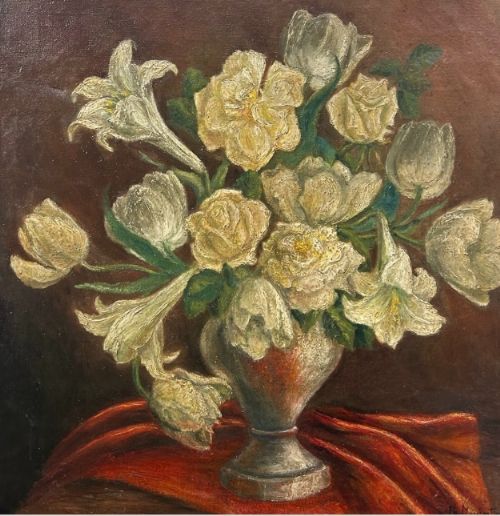


Vintage Silver Vase
A vintage silver vase brings weight and reflection to a room, shifting from Victorian glass to Art Deco metalwork.
Vintage Silver Vase
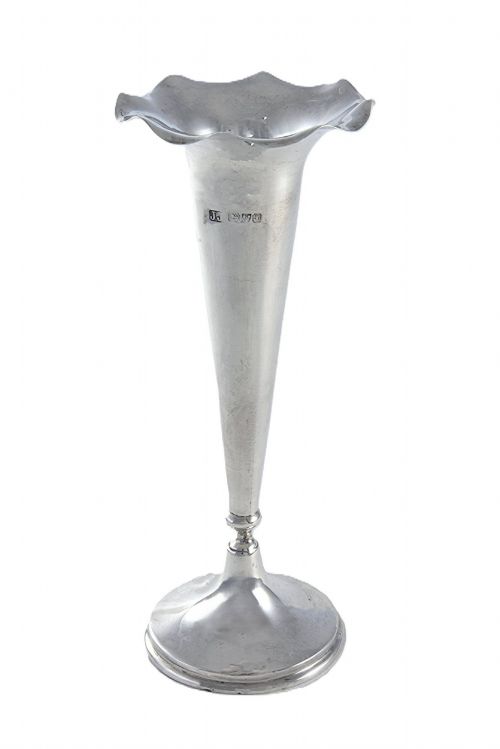
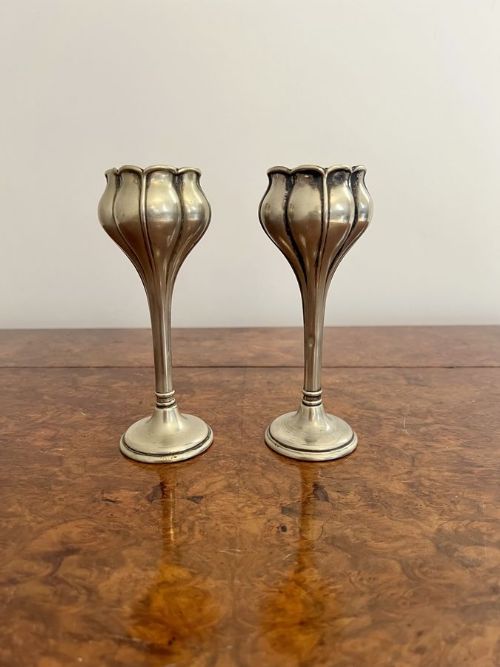
A vintage silver vase spans multiple eras, taking the form of sterling silver trumpets, silver-plated spill vases, and glass vessels mounted in metal. When you search for a vintage silver vase, you encounter pieces originating from the Victorian and Edwardian periods through to the Art Nouveau and Art Deco movements. Many examples combine precious or plated metal with cut glass, cobalt glass, or enamel.
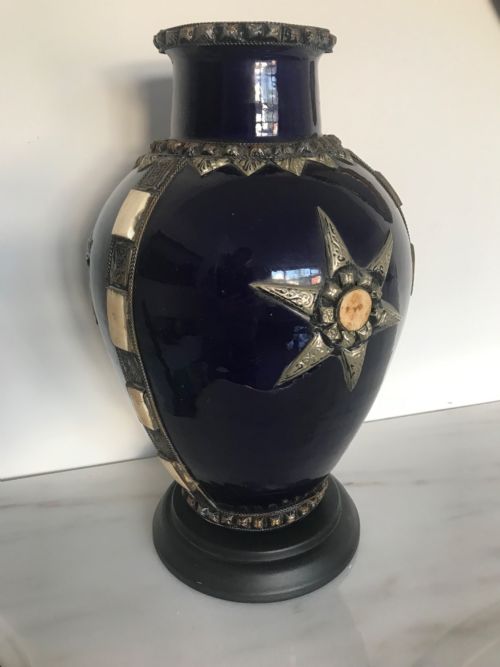
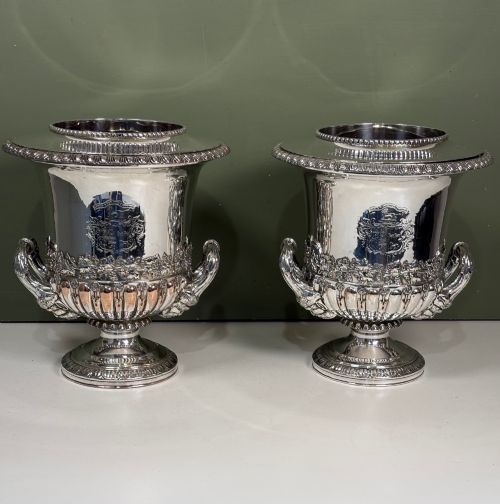
The objects on this page range from modest posy vases and vanity glassware to large centrepieces, wine coolers, and floor-standing champagne vessels. Forms vary from simple flared cylinders and urns to panelled bodies with scroll handles. You will also find regional variations, including Moroccan terracotta pieces with silver cabochons and Japanese cloisonne enamel work.
Materials and construction
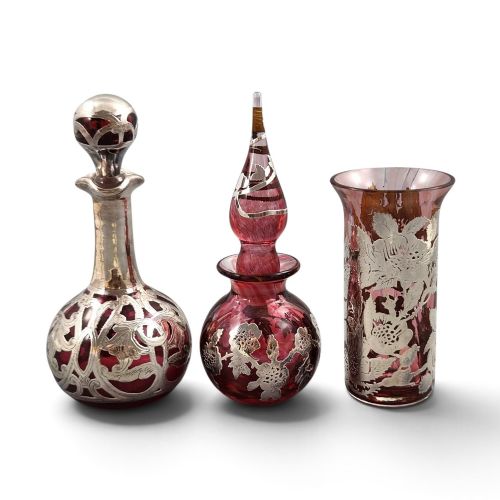
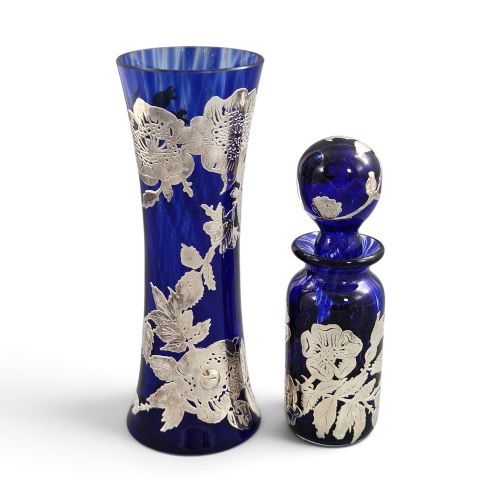
Makers utilised solid sterling silver, silver plate on base metals, and chrome, often pairing them with transparent, mercury, or coloured glass. Overlay techniques were common, applying sterling silver or pewter directly onto glass bodies in floral and geometric motifs. Enamel work, such as ginbari red enamel and basse-taille, added colour beneath fine wire cloisonne.
For structural support and decoration, pieces incorporated cast mounts, applied silver cabochons, and hand-cut glass flutes. Silver-plated items relied on a durable base metal core beneath the plated layer, while ceramic and terracotta vessels received metal collars and mounts.
Some posy vases spent their early days holding stiff Victorian rosebud arrangements before finding new life on twentieth-century mantelpieces.
Evaluating craftsmanship
Quality rests in the precision of the metalwork and the integration of mixed materials. Superior pieces display crisp detailing in Art Nouveau tendrils or Art Deco geometric facets, where mounts fit flush against glass or ceramic bodies without excess solder.
The weight of the metal and the clarity of the glass dictate the calibre of the vessel. Heavy gauge sterling silver, substantial silver plating over durable base metals, and deep hand-cut glass indicate higher manufacturing standards than thin, pressed alternatives.
Gorham·Laugharne Glass·Johann Loetz·Ando Jubei·WMF·Joseph Rodgers & Sons·Daniel & Arter·Beldray Ltd·Hukin & Heath·J. Gloster Ltd
The Vintage Silver Vase Glossary
- Sterling silver
- A silver alloy containing 925 parts of silver per thousand by mass. This standard material is marked with hallmarks indicating the assay office and year.
- Silver plate
- A layer of silver applied to a base metal core such as brass or copper. It offers the appearance of solid silver at a different scale of production.
- Silver overlay
- A technique where silver is bonded to a glass or ceramic body in decorative patterns. It requires precise cutting and adhesion.
- Cloisonne
- An ancient technique for decorating metalwork objects with coloured material held in place by metal strips. Japanese examples often feature fine wirework on enamel.
- Epergne
- A large ornamental centrepiece used for holding fruit, flowers, or sweets. Many Victorian and Edwardian examples feature multiple glass trumpets supported in silver or plated frames.
Vintage Silver Vase: Frequently Asked Questions
How do I clean my silver vase?
Use a soft cloth and a specialised silver polish designed to remove tarnish without scratching the metal surface. Avoid abrasive pads that can wear through silver plating or damage glass and enamel overlays.
For pieces with glass inserts, remove the glass before polishing the metal components. Rinse and dry thoroughly to prevent moisture retention in crevices.
Are these vases suitable for holding water?
Many metal and glass vessels hold water safely, particularly solid sterling silver and glass forms. However, silver-plated items and those with historic joins require careful handling to prevent interior corrosion.
If a piece has delicate silver overlay or a porous ceramic body, use a small glass liner inside rather than filling the vessel directly.
How can I tell silver plate from solid silver?
Examine the piece for hallmarks, which indicate solid sterling silver stamped by an official assay office. Silver plate typically displays maker marks, manufacturer initials, or specific plating designations rather than standard hallmarks.
Inspect areas subject to wear, such as rims and bases, where a different base metal colour might show beneath worn silver plating.
What is the difference between Art Nouveau and Art Deco styles?
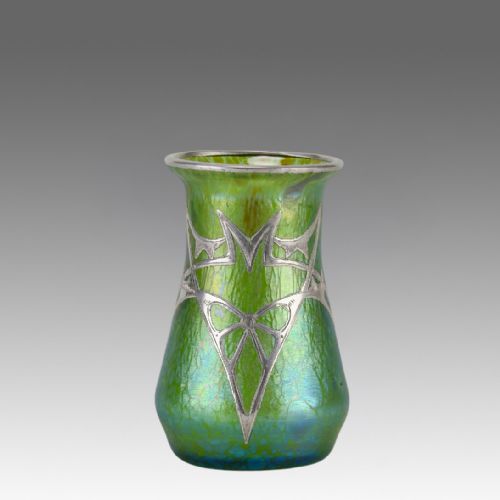
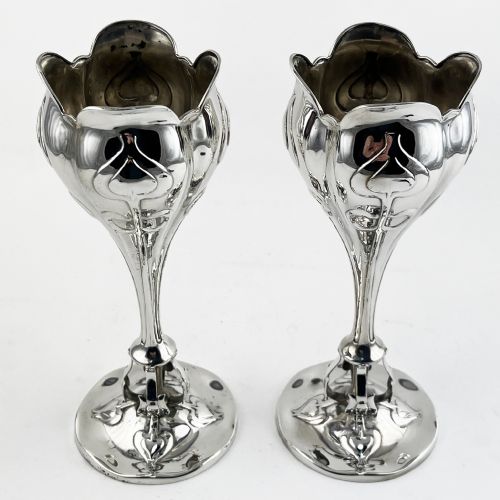
Art Nouveau designs, prevalent around nineteen hundred, feature organic forms, flowing plant motifs, and asymmetric whiplash lines. Makers utilised fluid curves in both the metal mounts and the glass bodies.
Art Deco emerged later, favouring symmetry, rigid geometric lines, stepped patterns, and streamlined industrial shapes. Chrome and clean-cut silhouettes dominated this later period.