

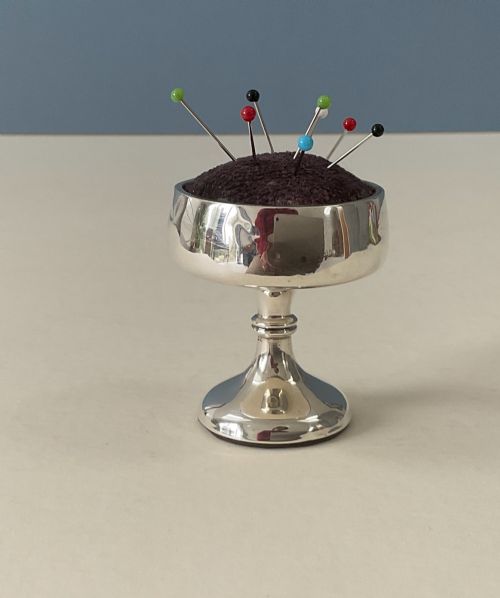


Vintage Silver Goblet
A vintage silver goblet brings drinking vessels of character to the table, offering tactile weight and historic form.
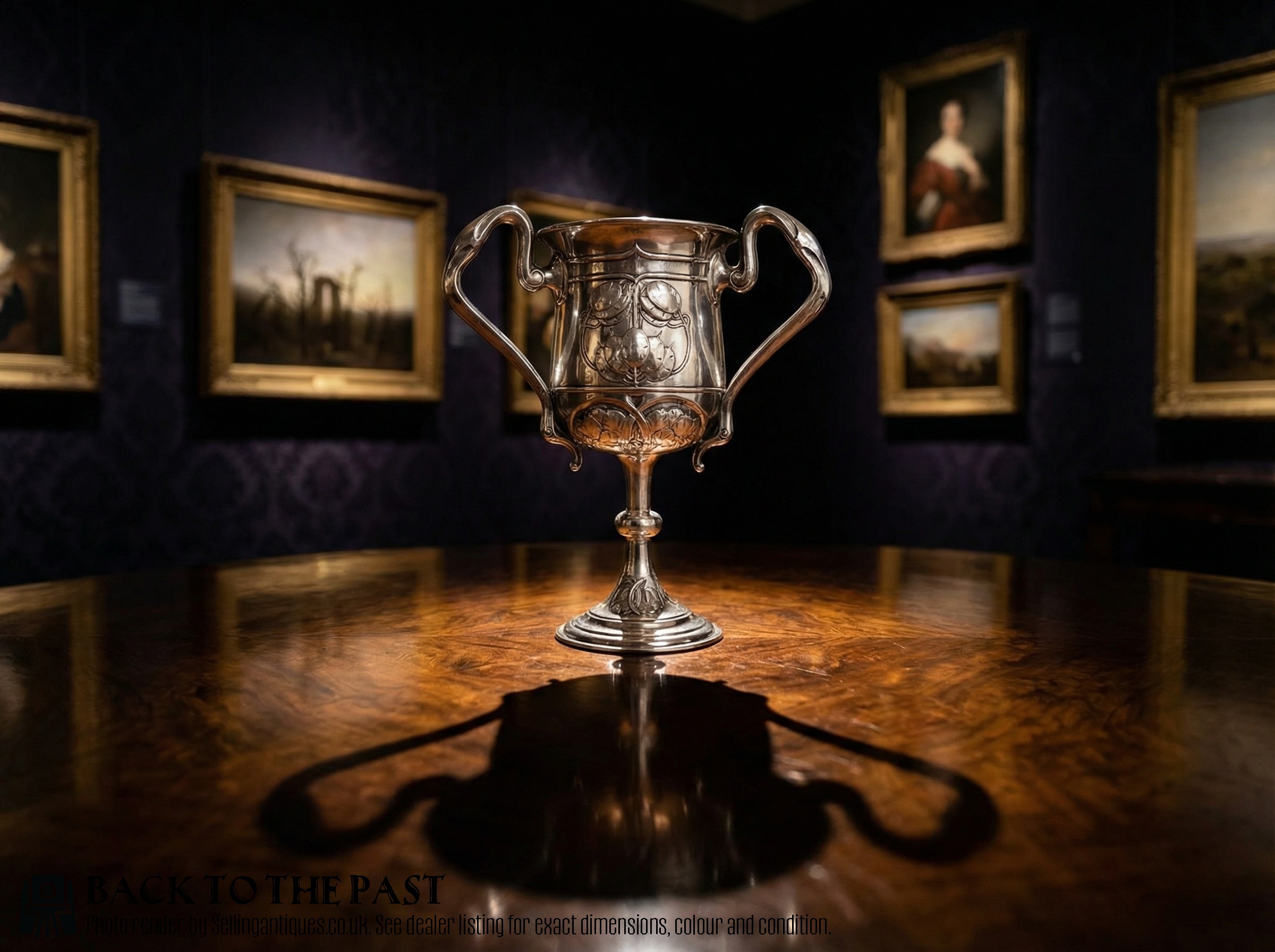
Vintage Silver Goblet
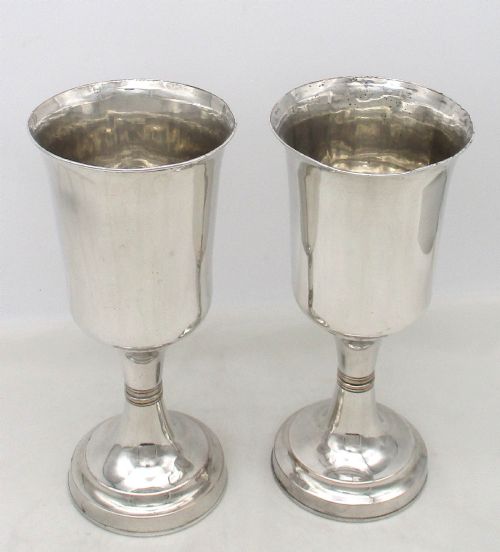
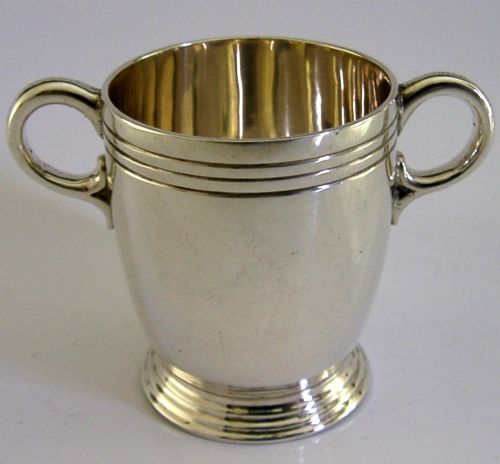
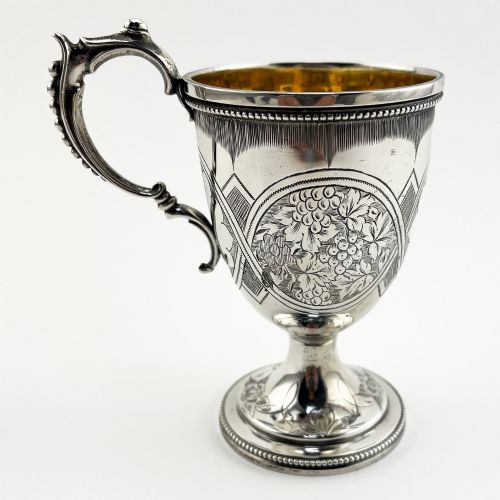
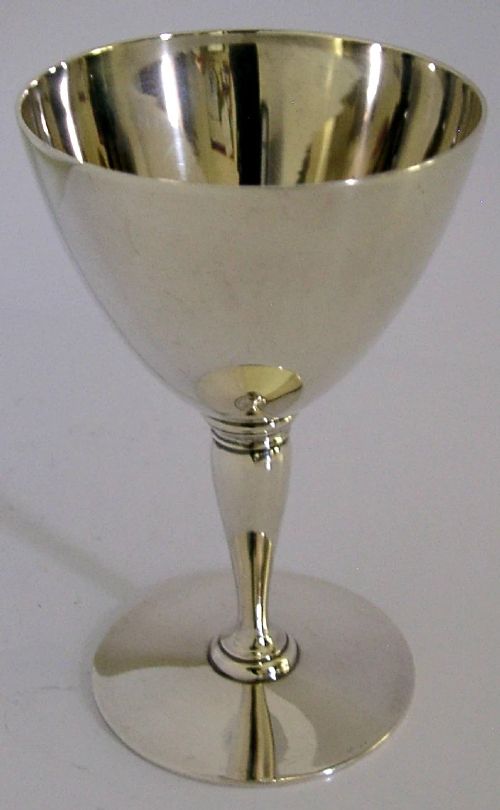
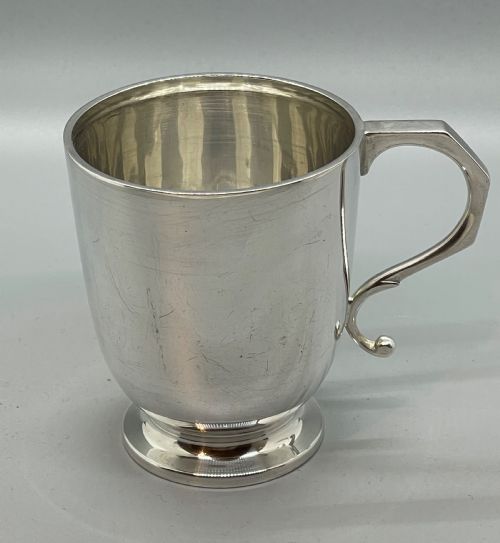
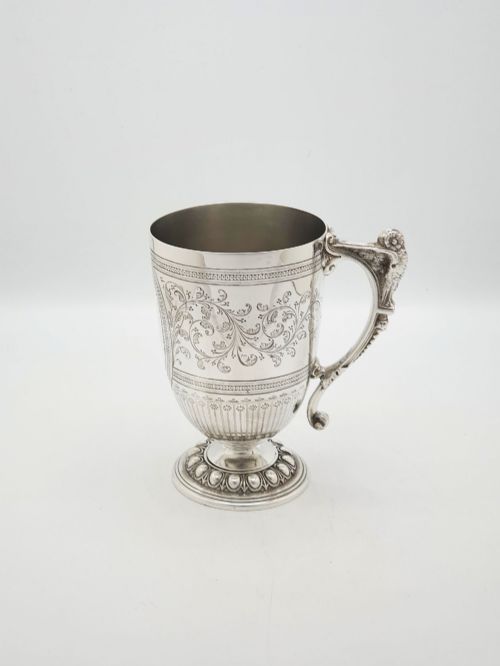
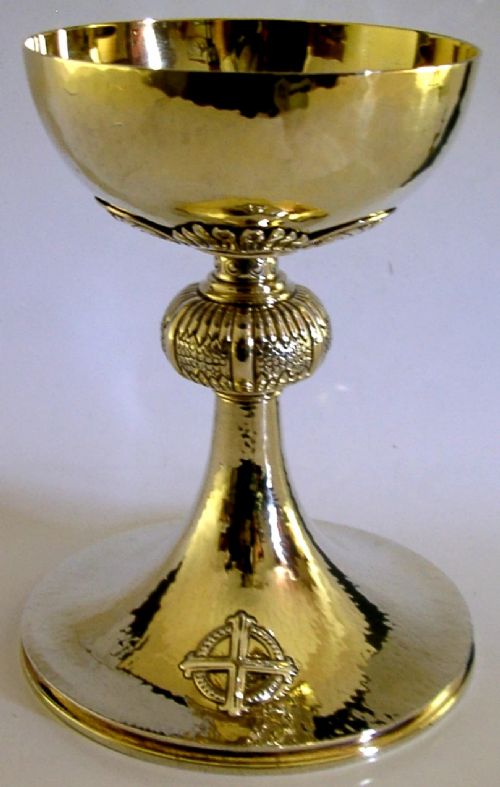
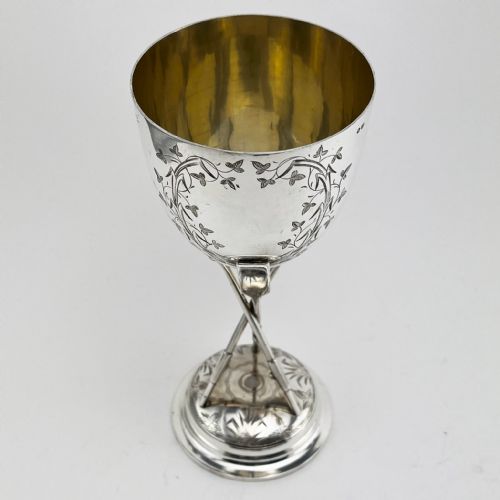
When searching for a vintage silver goblet, collectors encounter a diverse group of drinking vessels, communion cups, and commemorative tankards spanning multiple eras. The pieces on this page range from nineteenth-century church chalices and Victorian christening mugs to twentieth-century Art Deco barware and presentation trophies.
Most examples meet on this page as solid sterling silver or silver-plated creations, varying from simple domestic vessels to ornate ecclesiastical chalices. Buyers find traditional forms alongside specialised items such as Kiddush cups, loving cups, and novelty pin cushions shaped like goblets.
Origins stretch across English, American, Chinese Export, Russian, and Czech workshops, capturing stylistic shifts from Georgian bright-cut engraving to Mid-Century Modern simplicity. Each piece carries the distinct hallmarks or plate marks of its maker, anchoring it firmly in its period of origin.
How they were made
Makers shaped these vessels primarily from sterling silver, silver plate, and Old Sheffield plate over copper, employing hammering, spinning, and casting techniques. Metalsmiths formed bowls and stems separately before soldering them together, often adding applied cast handles shaped like animals or classical motifs.
Surface decoration required skilled handwork, utilising embossing, chasing, and bright-cut engraving to create intricate patterns across the body of the cup. Many pieces received interior gilding, known as silver gilt, to protect the silver from corrosive acidic drinks.
Vintage Silver Goblet Retail Price Guide 2026
Typical asking prices for vintage silver goblet among the pieces listed under this phrase on Sellingantiques today, from the lower quarter to the upper quarter. They describe what is for sale here now, not the wider market.
What varies in quality
Substantial metal weight and gauge thickness set superior drinking vessels apart from lighter, purely decorative counterparts. A solid sterling silver construction with a heavy, balanced base feels entirely different in the hand than a thin silver-plated alternative.
The precision and depth of hand-engraved or embossed ornamentation distinguish master silversmith work from standard commercial output. Crisp hallmark stampings and cleanly soldered structural joints further indicate the original standard of workshop production.
Tiffany and Co·Elkington Mason·William Eaton·James Deakin and Sons·Joseph Rodgers and Sons
The Vintage Silver Goblet Glossary
- Sterling silver
- A silver alloy containing ninety-two point five percent pure silver and seven point five percent other metals, usually copper, ensuring structural durability.
- Silver gilt
- Sterling silver or another metal coated with a thin layer of gold on the interior or exterior surface.
- Old Sheffield plate
- An early fused plating technique where a layer of silver is fused to a thicker copper base before shaping.
- Hallmark
- An official stamp applied to precious metal items indicating the maker, purity standard, assay office, and year of testing.
- Chalice
- A large ceremonial cup, typically used in religious communion services, featuring a distinct stem and wide bowl.
Vintage Silver Goblet: Frequently Asked Questions
What is a vintage silver goblet used for?
These vessels served diverse practical and ceremonial roles throughout history, functioning as domestic drinking vessels, christening gifts, and athletic presentation trophies. Religious ceremonies also utilised specialised forms like chalices and Kiddush cups.
Today, collectors repurpose them as barware for cocktails, display them as cabinet pieces, or continue their traditional ceremonial use during family holidays.
How do I clean a silver goblet?
Maintenance requires gentle washing with warm water and mild soap, followed by thorough drying with a soft microfiber cloth to prevent water spots. Avoid harsh abrasive cleaners that strip away thin plating or soften crisp hand engravings.
When tarnish accumulates, apply a specialised silver polish sparingly, working in straight lines rather than circles before rinsing away the residue completely.
How do I date a silver goblet?
Dating relies primarily on reading the stamped hallmarks, which reveal the assay office, city, and specific year letter code for British pieces. Maker marks and registration numbers provide additional chronological markers for unmarked or plated items.
Stylistic indicators, such as the geometric lines of Art Deco pieces or the heavy ornamentation of Victorian examples, help narrow down the period when official hallmarks are absent.