


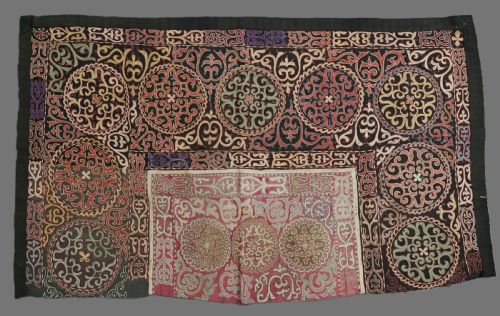


Vintage Silk Suzani Tapestry
A vintage silk suzani tapestry brings Central Asian needlework into a modern interior, offering rich textile history and bold patterns.
Vintage Silk Suzani Tapestry
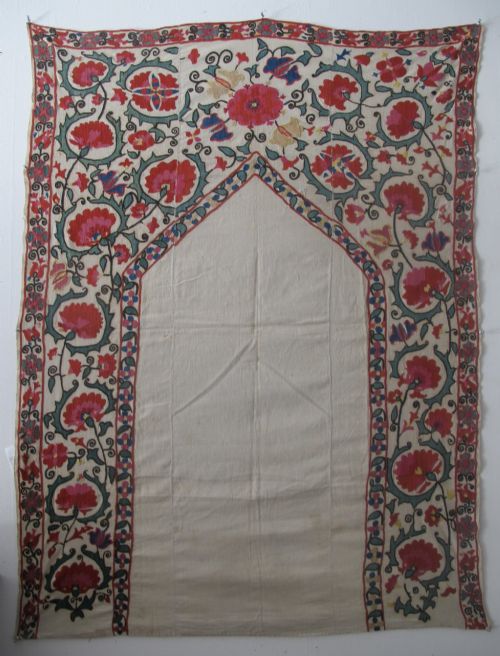
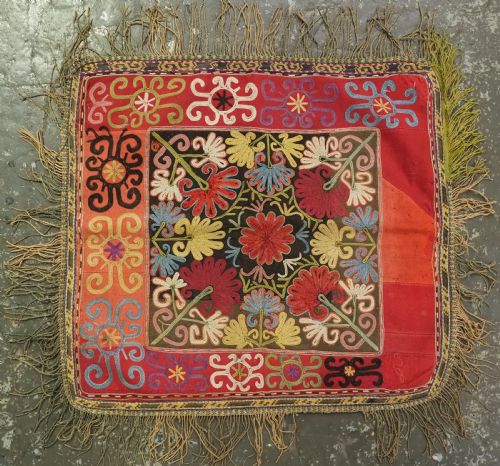
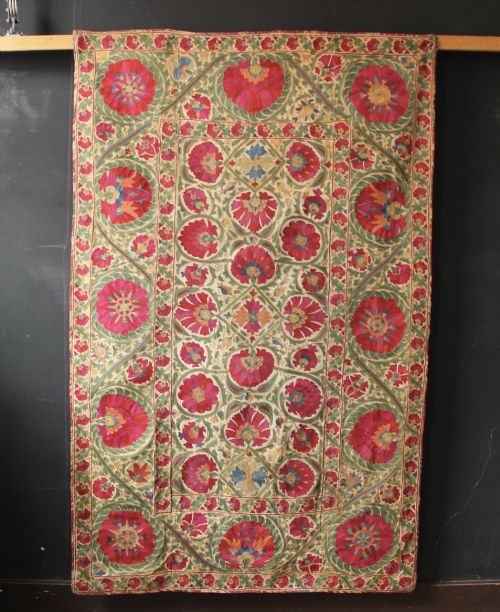
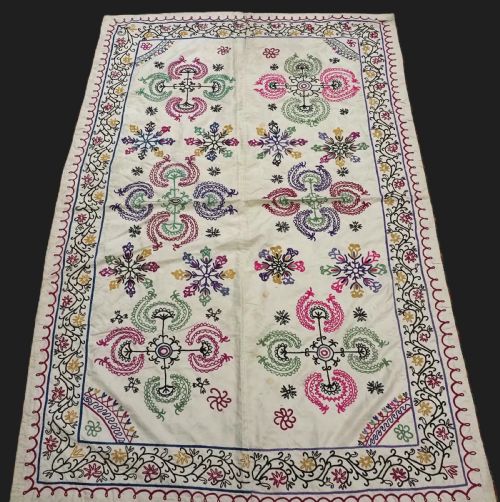
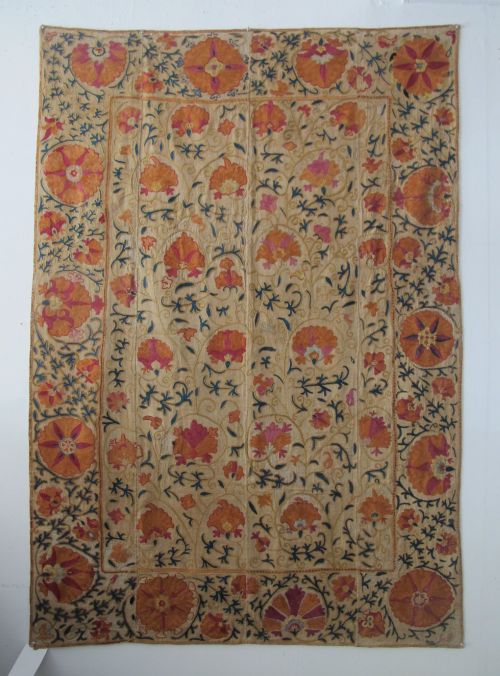
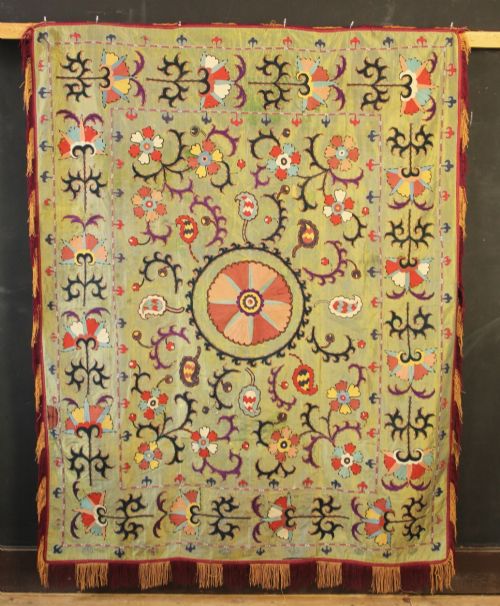
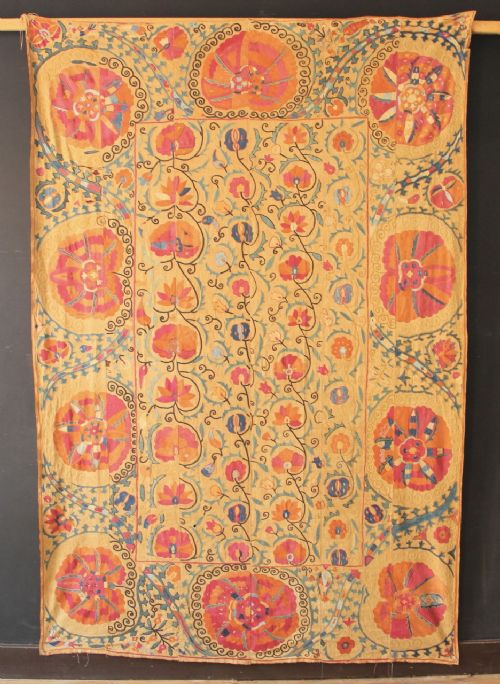
A vintage silk suzani tapestry represents traditional embroidered needlework originating from Central Asian regions including Uzbekistan. Buyers exploring this page will encounter various formats, from large medallion wall hangings and prayer formats to smaller nim suzanis and dowry items.
The selections span from the mid-nineteenth century through the early twentieth century, showing influences from specific tribal groups such as the Lakai and Tajiks. Common regional variations include pieces from Bokhara, Tashkent, Samarkand, and Shahrisabz.
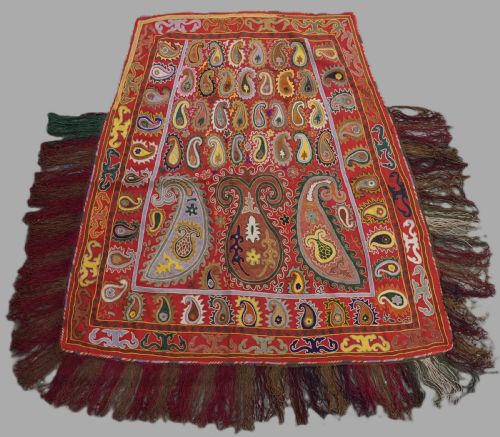
Makers utilised diverse layouts, incorporating architectural designs, central stars, and dense floral motifs. These textiles served multiple domestic and ceremonial purposes, functioning as wall decor, bed covers, or horse and saddle covers.
How They Were Made
Artisans executed these embroideries primarily using fine silk thread applied to a woven ground of cotton, wool, or silk. Certain examples appear on contrasting coloured grounds such as yellow, black, or red cotton.
Stitching techniques vary from delicate partial work to dense, fully embroidered surfaces often described as full work. Regional workshops developed distinct stylistic signatures through thread density and specific repeat patterns.
Several nomadic pieces served as ceremonial horse and saddle covers, proving that historic livestock enjoyed better interior design than most humans.
What Varies in Quality
The density of the needlework largely distinguishes finer examples from simpler ones, with fully embroidered panels requiring immense labour. The complexity of the layout, such as elaborate medallion variants or architectural motifs, also elevates a piece.
Condition and colour vibrancy play significant roles in determining visual impact. The survival of rich, saturated hues on the silk threads and the structural integrity of the base fabric indicate careful historical preservation.
The Vintage Silk Suzani Tapestry Glossary
- Suzani
- An embroidered tribal textile originating from Central Asia, traditionally worked by women as part of a dowry. These pieces display vibrant silk stitching on cotton or silk foundations.
- Nim Suzani
- A smaller version of a standard suzani wall hanging or cover. The term denotes half-scale formats that fit domestic spaces easily.
- Palak
- A specific style of suzani featuring a fully embroidered background, often dominated by a large central star or celestial motifs. Tashkent workshops are well known for producing this type.
- Ilgich
- A small embroidered hanging associated with the Lakai tribe. These items were traditionally created as dowry pieces.
Vintage Silk Suzani Tapestry: Frequently Asked Questions
How were suzanis originally used in Central Asian homes?
Families utilised these textiles as wall hangings, bed covers, and ceremonial items during weddings and major life events.
They formed an essential part of a bride's dowry and reflected the social standing and artistic skill of the household.
How can I care for an antique silk suzani?
Protect the textile from direct sunlight to prevent the natural silk threads and dyed grounds from fading over time.
Mount the piece professionally on a padded backing if hanging it on a wall to distribute the weight evenly across the fabric.
Which regions are most famous for these embroideries?
Cities and regions such as Bokhara, Samarkand, Tashkent, and Shahrisabz developed distinct traditions in design and colour palette.
Nomadic and tribal groups like the Lakai also produced highly individual pieces with unique geometric and pictorial elements.