


Red Floral Embroidered Textile
A red floral embroidered textile brings rich colour and traditional needlework into a room through historic wall hangings, panels and covers.
Red Floral Embroidered Textile
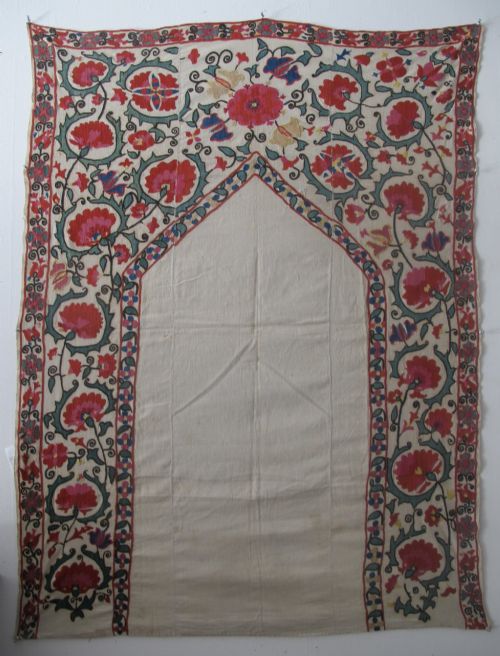
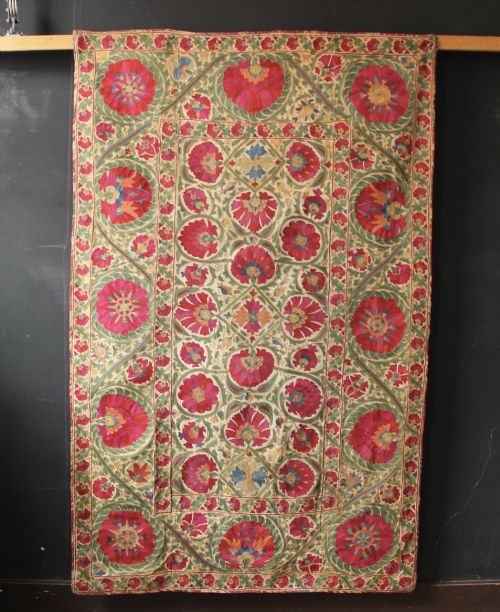
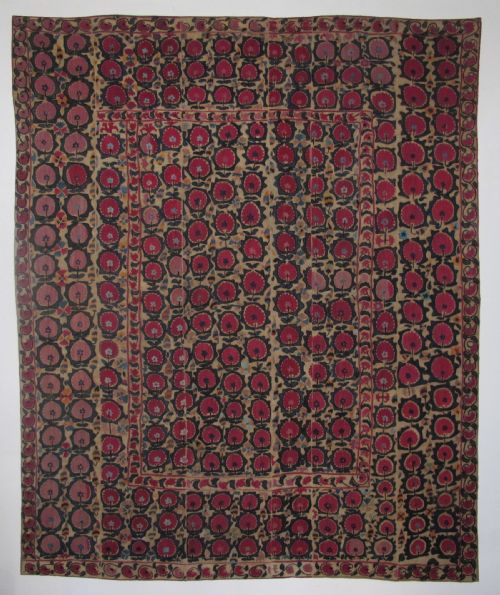
A red floral embroidered textile encompasses traditional wall hangings, textile panels and covers originating primarily from Central Asia and the Ottoman Empire. These works include pieces from regional traditions such as Bokhara, Nurata, Shahrisabz, and Lakai, alongside Persian Rasht embroideries.
Buyers will most frequently encounter Suzani panels and embroidered covers from Uzbekistan, dating from the mid-nineteenth century through to the early twentieth century. These textiles display distinct floral designs executed upon red grounds of cotton, linen, silk or felt.
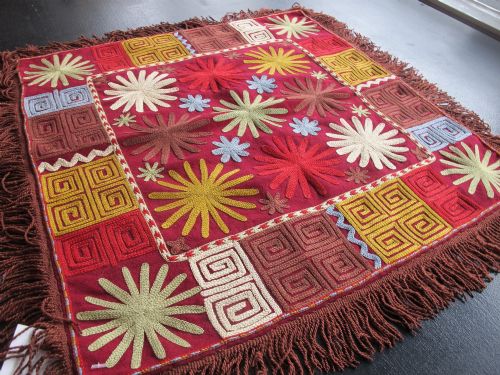
The selection also reaches back to eighteenth-century Ottoman fragments and includes smaller square formats like Lakai embroideries. Each type serves historically as domestic decoration, furnishing fabrics or ceremonial covers.
How they were made
Makers utilised natural textile grounds including cotton, linen, silk, and wool felt, frequently applying a vibrant red foundation to highlight the needlework. Silk thread forms the primary medium for the intricate embroidery stitches that build the floral motifs.
Techniques combine delicate surface embroidery with appliqué work, particularly in Persian Rasht examples where silk is set upon a red felt ground. Certain pieces integrate metallic thread to accentuate the linear patterns and botanical designs.
Needlework methods vary from fine tambour or chain stitching in Central Asian Suzanis to layered textile placement in tribal pieces. This construction yields a textured surface that holds its visual weight across large wall hangings and narrow fragments alike.
The listings span periods from the mid-eighteenth century to the early twentieth century, incorporating materials such as silk, cotton, wool felt and metallic thread.
What varies in quality
The standard of a red floral embroidered textile rests upon the precision and density of the needlework across the field. Fine examples display tightly controlled silk stitches that maintain clean botanical contours without crowding the red ground.
Design coherence separates standard workshop output from superior regional work, seen in the balanced placement of architectural elements, medallions or floral sprays. The sophistication of the natural dye palette on both the ground fabric and the embroidered threads determines visual depth.
Condition and completeness influence the standing of older pieces, particularly given the vulnerability of silk thread and cotton or felt grounds over generations. Intact borders, original dimensions and minimal textile loss preserve the integrity of the composition.
The Red Floral Embroidered Textile Glossary
- Suzani
- A type of embroidered and decorative tribal textile made in Tajikistan, Uzbekistan and other parts of Central Asia. The word derives from the Persian term for needlework.
- Rasht embroidery
- A traditional Persian textile technique involving inlaid wool felt decorated with fine silk chain stitch embroidery. These panels frequently employ rich red grounds beneath intricate floral scrollwork.
- Lakai
- Pertaining to a Central Asian Turkic group known for distinctive small-scale embroideries with bold geometric and floral motifs. Their work often utilises vibrant silk threads on contrasting dark or red grounds.
- Nim suzani
- A half-sized Suzani textile, typically smaller than the large full-scale wall hangings. These pieces were often produced as dowry items or specific domestic covers.
- Appliqué
- A needlework technique in which smaller pieces of fabric are sewn onto a larger foundation ground to build up a pattern. This method appears frequently in Persian Rasht textile panels.
Red Floral Embroidered Textile: Frequently Asked Questions
How were these textiles used originally?
Historic Central Asian and Persian textiles served primarily as domestic furnishings, wall hangings, and ceremonial dowry items within the home. They were hung on interior walls or used as decorative covers for beds and seating areas.
Larger Suzanis often marked significant family milestones and were preserved as heirlooms. Smaller formats functioned as specific covers, door hangings or decorative panels within traditional nomadic and settled households.
How do I care for an antique textile?
Protect antique embroideries from direct sunlight to prevent the fading of red cotton grounds and silk threads. Keep them away from high humidity and heat sources to preserve natural textile fibres.
Mount wall hangings professionally using a supportive backing that distributes the weight evenly across the fabric. Avoid hanging pieces by direct pinning, which stresses the historic threads and ground materials.
How do I distinguish regional embroidery styles?
Uzbek Suzanis from centres like Bokhara and Nurata typically feature expansive floral vines and medallions embroidered in silk on cotton grounds. Persian Rasht pieces are readily identified by their distinctive silk-on-felt appliqué construction.
Lakai embroideries present smaller, more concentrated compositions with lively geometric interpretations of floral themes. Examining the density of the stitching and the specific palette helps locate the piece within its geographic tradition.
What is the difference between a full Suzani and a nim suzani?
A full Suzani is a large-scale wall hanging or cover designed to span a significant portion of a room. These substantial pieces require extensive collaborative needlework over long periods.
A nim suzani measures roughly half the dimensions of a full-scale work. The prefix nim denotes this smaller format, which was suited to compact domestic spaces or specific ceremonial functions.