


Cream Silk Suzani Hanging
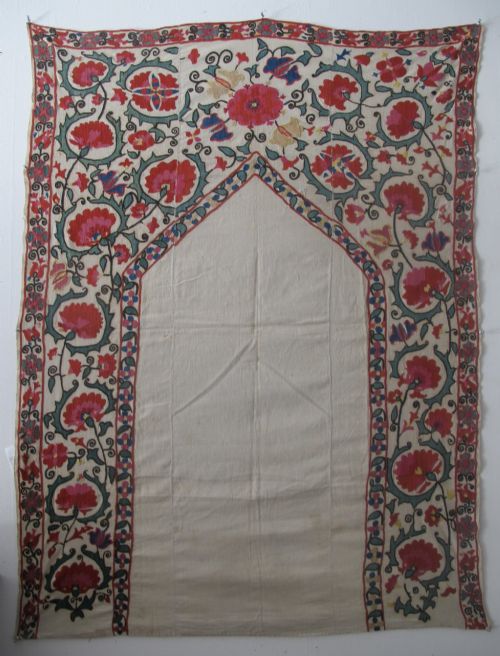
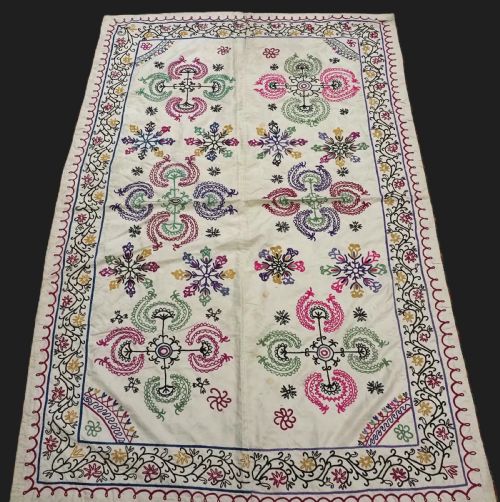
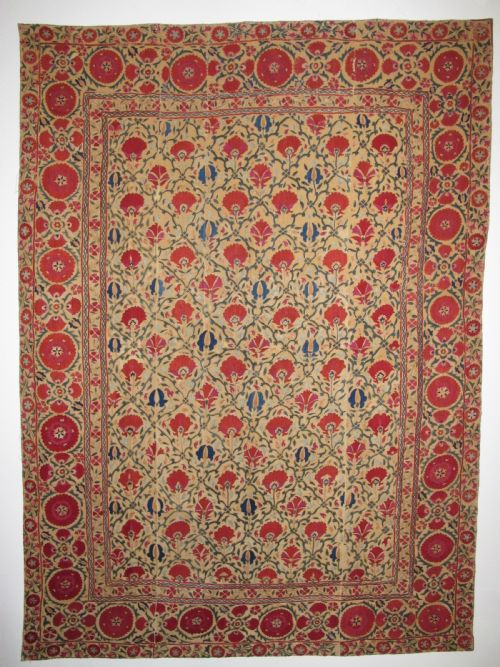
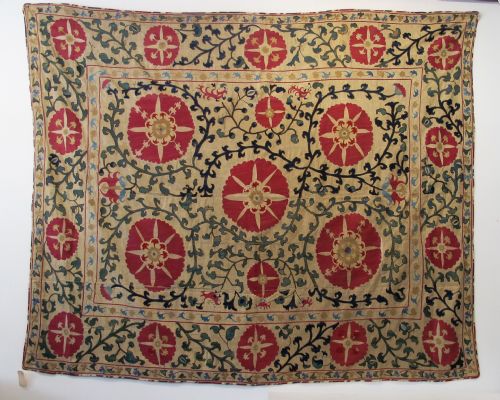
These cream silk suzani hanging pieces are Central Asian textiles worked in silk thread on grounds of cotton, linen, or silk.
Cream Silk Suzani Hanging
A cream silk suzani hanging is a Central Asian textile, originating from regions such as Uzbekistan, Bokhara, Samarkand, Nurata, and Ura Tube. These wall hangings and decorative textiles span periods from the mid-nineteenth century through to the early twentieth century, including items dated around 1850, 1860, 1870, 1880, 1900, 1910, and 1930.
The selections encountered here display regional designs, including architectural motifs, prayer formats, and traditional folk art patterns. Formats range from smaller mounted panels and nim-suzani pieces to larger wall hangings exceeding two metres in width, reflecting the diverse domestic and tribal outputs of Central Asian makers.
How they were made
Makers utilised silk thread to work detailed embroidery upon base fabrics of cotton, linen, or silk. This needlework defines the surface texture and visual depth of each textile.
Stitching traditions followed Uzbek folk art methods, encompassing specialised regional styles from towns like Bokhara, Samarkand, and Nurata. The execution relies entirely on hand embroidery rather than mechanical weaving.
Every embroidered vine and blossom was stitched with the quiet hope that the new household would flourish.
What varies in quality
Quality rests on the density of the silk thread embroidery and the precision of the traditional design. Pieces originating from centres like Bokhara exhibit notable variations in scale, ranging from compact mounted panels to large wall hangings.
The clarity of regional motifs, such as architectural elements or prayer formats, distinguishes standard examples from finer works. The condition of the ground fabric, whether cotton, linen, or silk, also influences the integrity of the hanging.
The Cream Silk Suzani Hanging Glossary
- Suzani
- A traditional embroidered Central Asian textile, usually worked in silk thread on a cotton, linen, or silk ground. These pieces were historically created as dowry items and household furnishings.
- Nim-Suzani
- A half-size or smaller variant of the standard suzani hanging. These smaller formats often suit domestic wall display spaces.
- Bokhara
- A prominent historic centre for textile production in Uzbekistan. Pieces attributed to this region often display distinct architectural or traditional folk designs.
- Nurata
- A specific town and regional style known for particular embroidery characteristics within Central Asian textile traditions. Nurata pieces frequently appear in mounted formats.
- Prayer format
- A compositional layout featuring a mihrab or arch design reminiscent of prayer rugs. These formats hold specific symbolic roles within the textiles.
Cream Silk Suzani Hanging: Frequently Asked Questions
What is a suzani?
A suzani is a type of embroidered textile originating from Central Asia, traditionally worked by hand in silk thread on a foundation fabric.
These pieces served functional and decorative roles within households, frequently forming part of a bride's dowry before later entering the collector market as wall hangings.
How were suzanis used?
Historically, these textiles functioned primarily as wall hangings, decorative covers, or interior furnishings within Central Asian homes.
Today, collectors mount and display them as textile art, utilising their scale and intricate embroidery to anchor room schemes.
Where do these textiles come from?
They originate from Central Asian regions and cities, notably Uzbekistan, Bokhara, Samarkand, Nurata, and Ura Tube.
Each urban or tribal centre developed distinct design vocabularies, reflected in the architectural motifs and folk art patterns found across the pieces.
How should I care for a hanging?
Protect antique textiles from direct sunlight to prevent the silk threads and ground fabrics from fading over time.
Mount the pieces carefully to avoid placing undue physical tension on the historic cotton, linen, or silk foundations.
What is a nim-suzani?
A nim-suzani is simply a half-sized version of the traditional Central Asian textile.
These smaller formats provide an accessible scale for domestic interior display where full-sized wall hangings might prove too large.