




Vintage Satinwood Side Cabinets
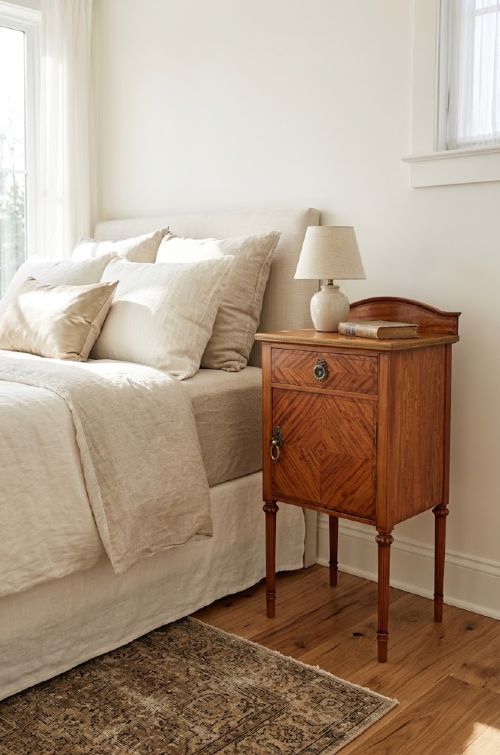
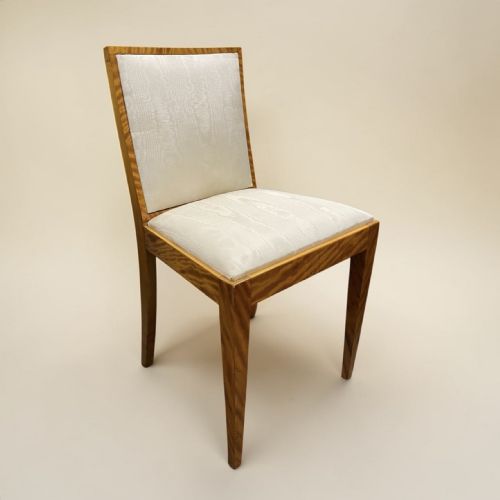
Vintage satinwood side cabinets bring light timber tones and refined marquetry into a room, offering practical storage with distinct period character.
Vintage Satinwood Side Cabinets
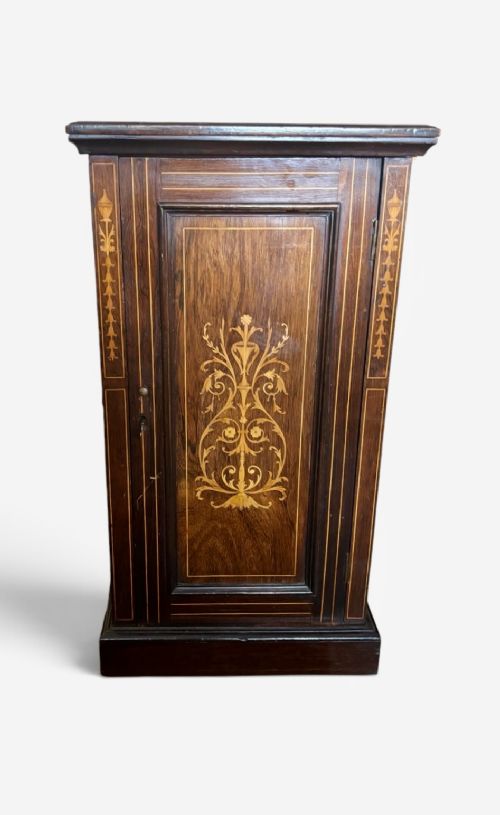
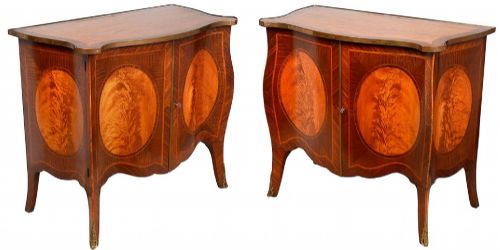
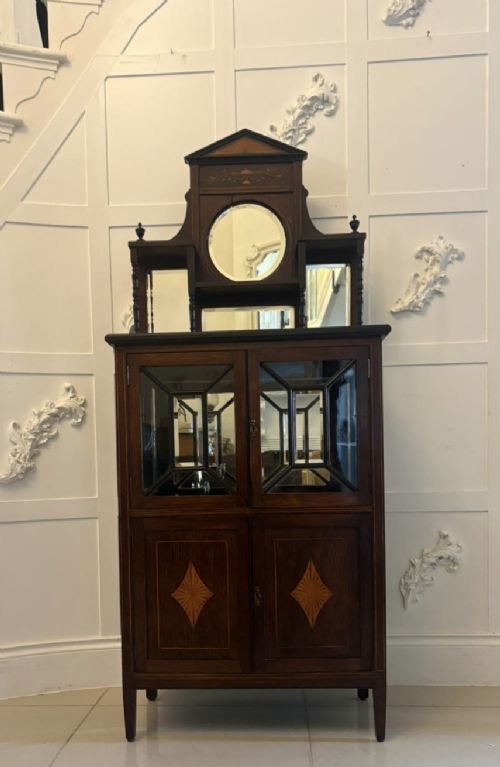
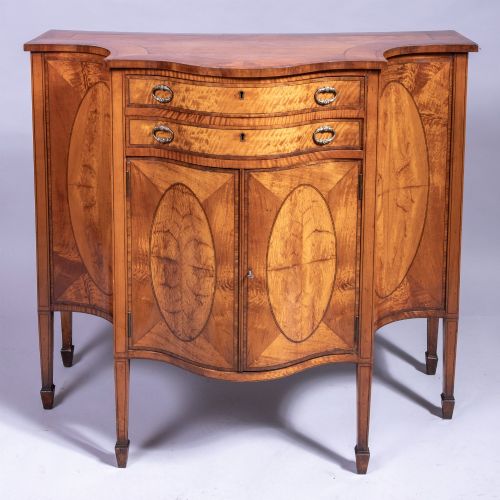
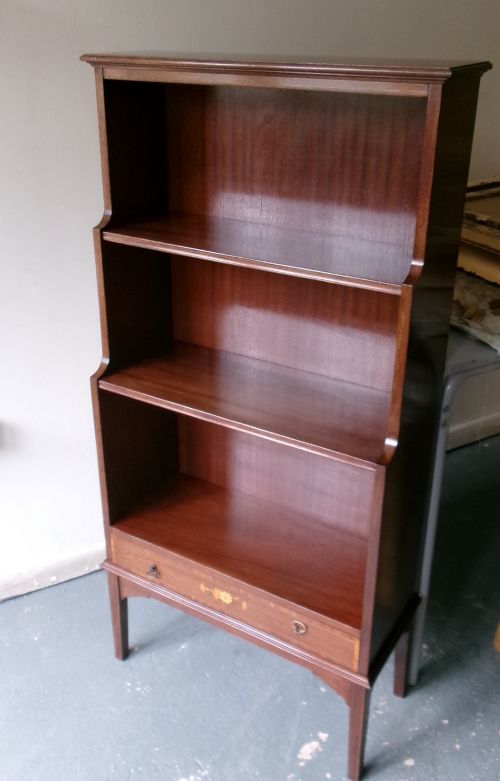
Vintage satinwood side cabinets comprise pieces designed for domestic storage and display, appearing frequently across Edwardian, Victorian and Art Deco periods. Buyers seeking vintage satinwood side cabinets commonly encounter bedside variants, serpentine commodes and compact display furniture from the early twentieth century.
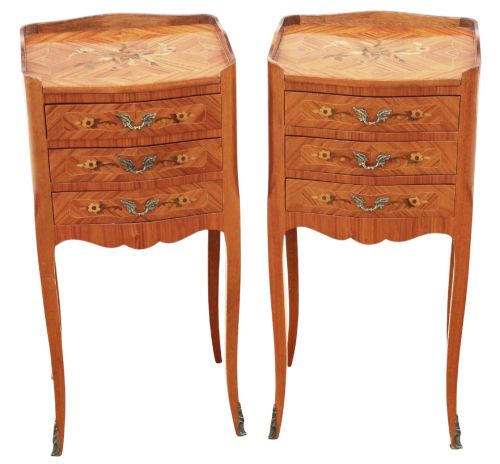
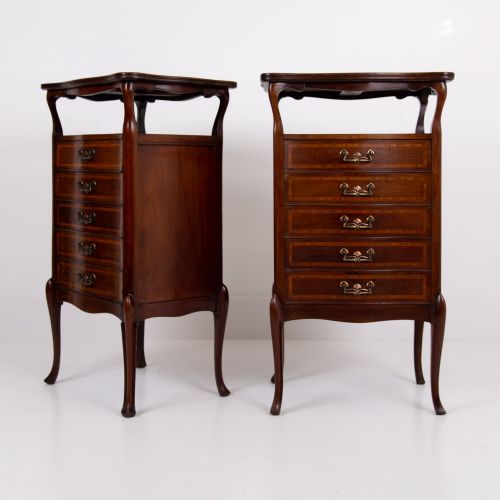
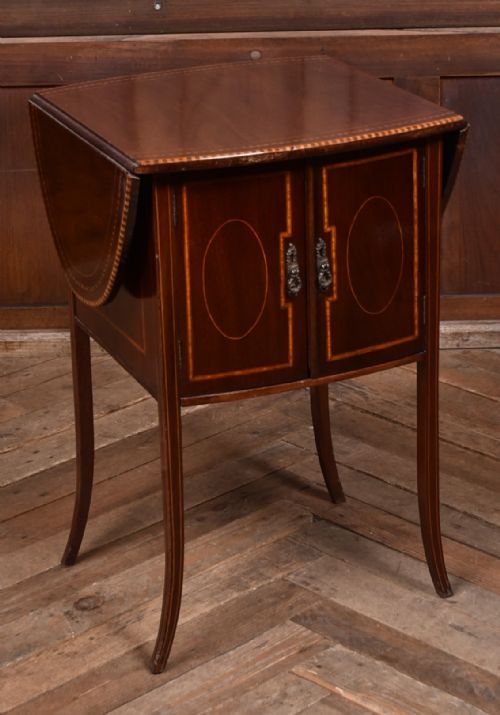
The physical forms span demi-lune commodes, bow-fronted cupboards and tall bedside chests. Makers utilised mahogany or walnut carcases overlaid with pale satinwood veneers, often embellished with boxwood stringing or intricate marquetry panels.
Origins trace principally through British workshops of the Edwardian era alongside continental revival movements. Pieces range from formal Sheraton Revival side cabinets to clean-lined Art Deco bedside tables.
How they were made
Craftsmen built these cabinets using solid timber carcases of mahogany or walnut, applying fine satinwood veneers to exterior surfaces. Contrasting timbers such as boxwood and rosewood were introduced for delicate stringing and inlaid geometric borders.
Surface decoration frequently relied on marquetry pictorial work, hand-painted floral motifs and parquetry patterns. Structural stability was maintained through traditional joinery, complemented by brass handles and hinges.
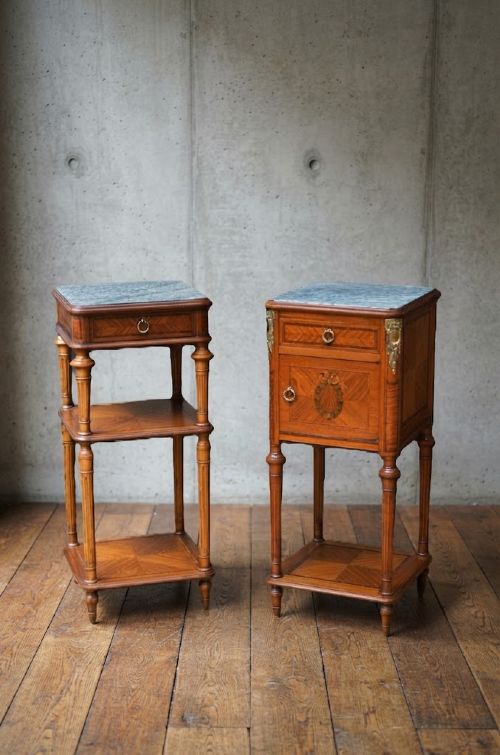
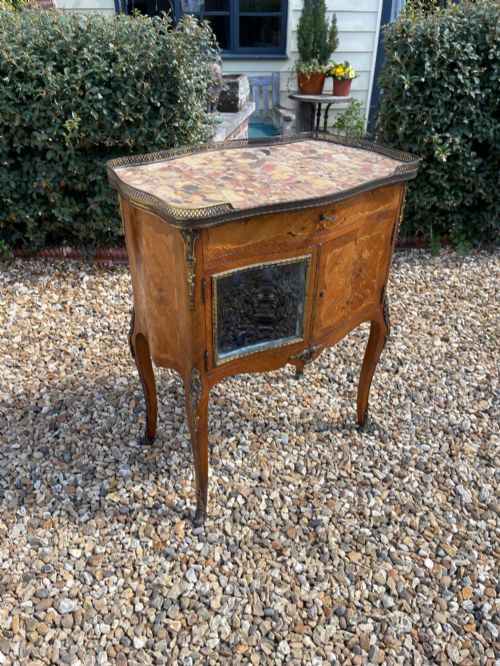
Marble tops appeared on specific utilitarian designs to provide durable surfaces, while mirrored backs and glass panels enhanced display cabinets meant for formal reception rooms.
The listings on this page span the Edwardian and Art Deco periods, featuring satinwood combined with mahogany, walnut, and marble.
What varies in quality
The distinction between standard commercial output and superior cabinet-making lies in the precision of the veneer work and the complexity of the inlay. Master workshops executed tight, symmetrical parquetry and subtle shading within marquetry flowers, whereas simpler items relied on printed or minimal decoration.
Hardware and interior secondary timbers also indicate grade. Solid mahogany drawer linings, substantial brass mounts and hand-cut dovetail joints separate high-tier examples from later or more utilitarian production.
Bath Cabinet Makers·Collinson and Lock London·Harris Lebus·Gillows·Edwards and Roberts
The Vintage Satinwood Side Cabinets Glossary
- Satinwood
- A hard, yellow timber valued for its lustrous sheen and smooth grain. It forms the primary decorative veneer on many Edwardian and revival cabinets.
- Marquetry
- The art of forming decorative patterns by fitting together small pieces of coloured veneers. Artisans used contrasting woods to create floral or architectural scenes.
- Demi-lune
- A half-moon shape characteristic of commodes and side tables designed to sit flush against a wall. This profile became prominent during the Sheraton Revival period.
- Serpentine
- A curved outline featuring a convex centre flanked by concave ends. It adds dynamic movement to the front elevation of side cabinets.
- Parquetry
- Geometric mosaic woodwork formed by small veneer tiles arranged in repeating patterns. It frequently decorates the top surfaces of lamp and bedside tables.
Vintage Satinwood Side Cabinets: Frequently Asked Questions
How do I clean satinwood?
Dust surfaces regularly with a soft, dry cloth to prevent particulate accumulation. Avoid silicone sprays or heavy liquid polishes that can penetrate old veneer joints.
Apply a traditional microcrystalline wax sparingly twice a year to nourish the timber and maintain its natural lustre. Buff gently with clean cotton cloth after application.
Are these cabinets suitable for modern bedrooms?
Compact footprints and pale timber tones make these cabinets adaptable for contemporary interior schemes. Bedside versions fit beside modern bed frames while offering concealed storage.
Their reflective satinwood surfaces brighten smaller spaces, contrasting well with neutral walls and minimalist decor.
How do I distinguish Sheraton Revival from original pieces?
Sheraton Revival furniture dates primarily from the late nineteenth and early twentieth centuries, mimicking the lighter neoclassical styles of the Georgian era. Look for twentieth-century secondary timbers, machine-cut elements and modern hardware fixings.
Original eighteenth-century items show distinct hand-tool marks, oxidation patterns and structural wear consistent with earlier cabinet-making techniques.
Why do some cabinets feature marble tops?
Marble surfaces provided durable, water-resistant areas on bedside cupboards and washstands where jugs, glasses or washing equipment rested. This stone protected the vulnerable satinwood and mahogany veneers from liquid spills.
Most surviving examples retain their original white or variegated marble slabs fitted securely into the cabinet frame.