



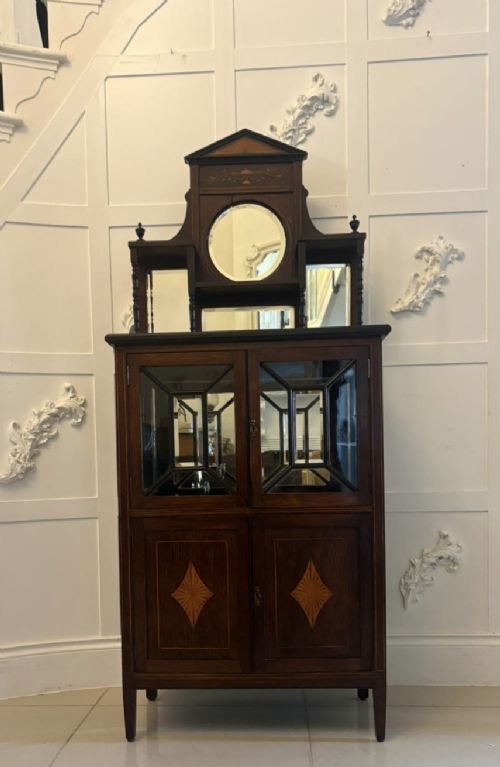
Vintage Satinwood Cupboard
These vintage satinwood cupboards bring light-grained timber and refined inlay to bedrooms and reception rooms.
Vintage Satinwood Cupboard
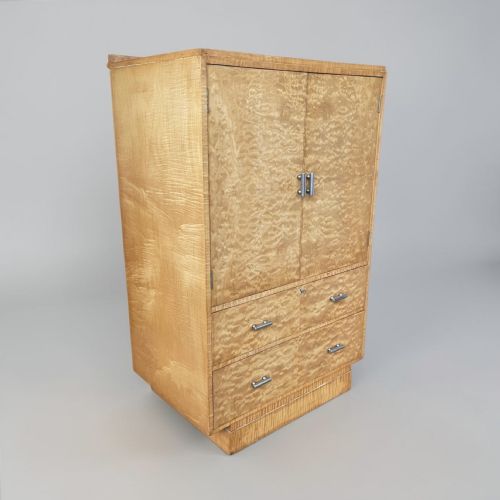
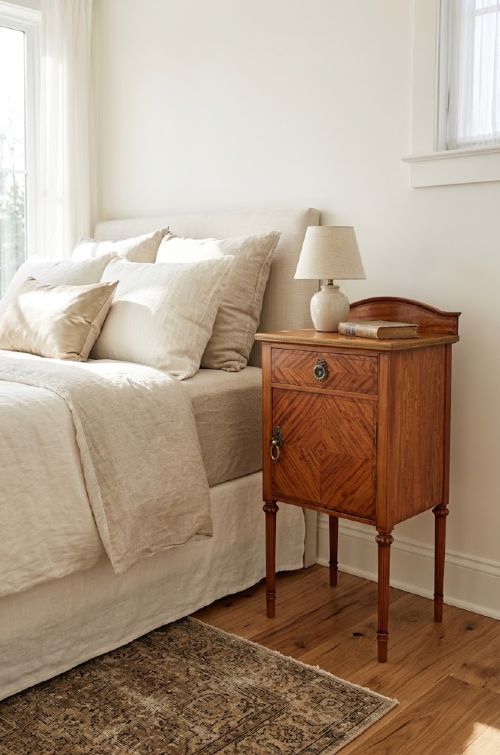
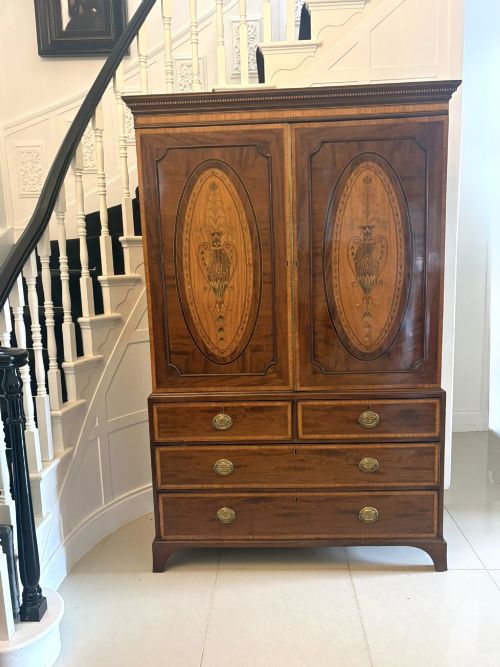
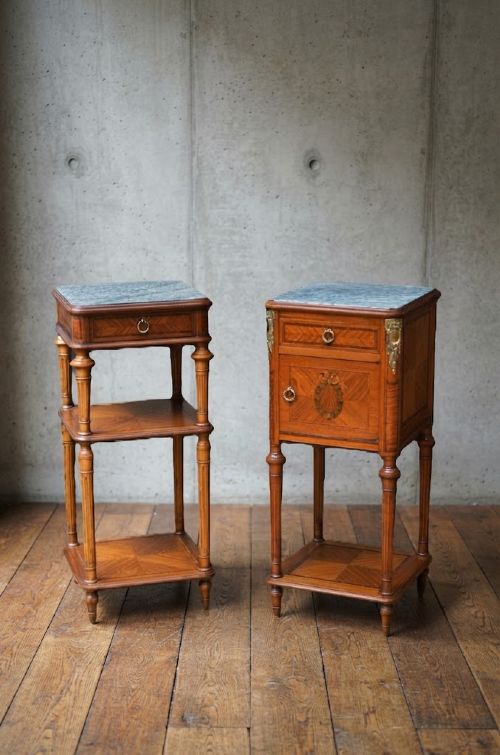
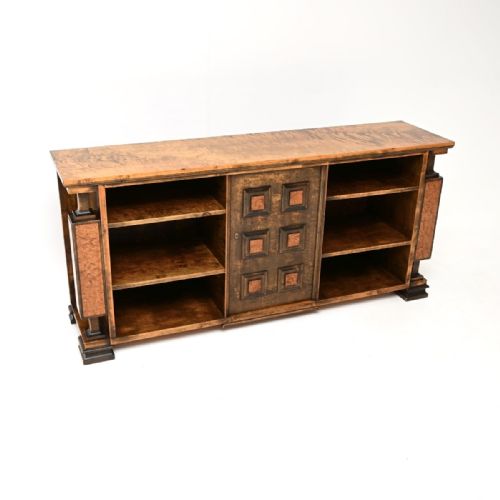
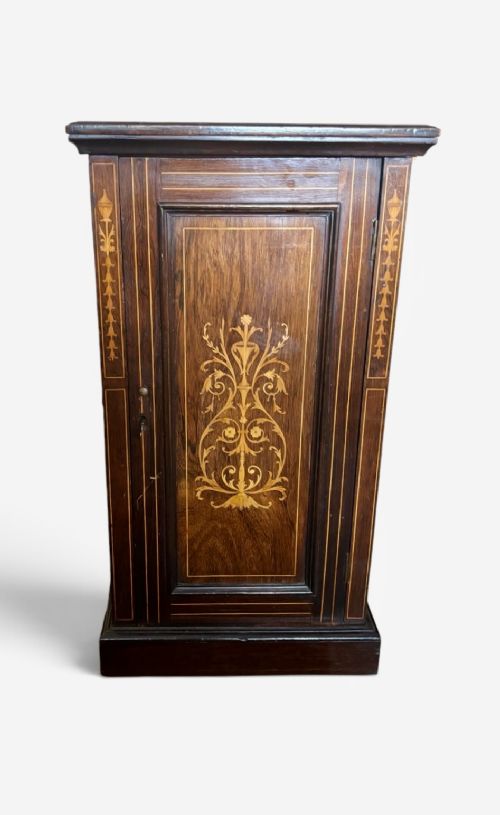
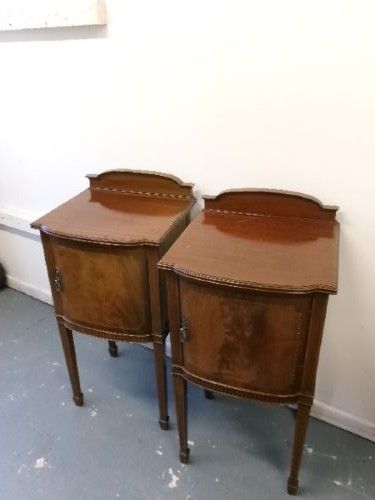
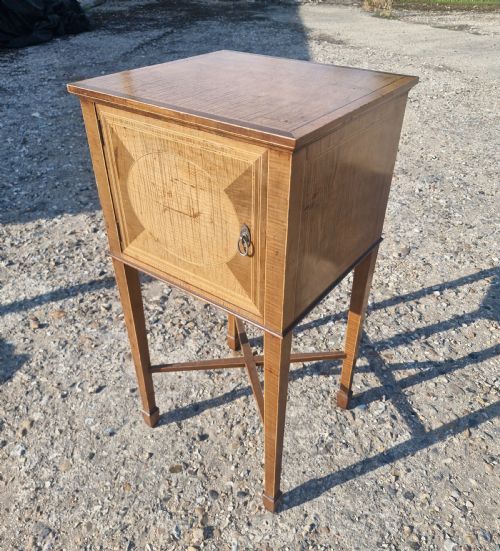
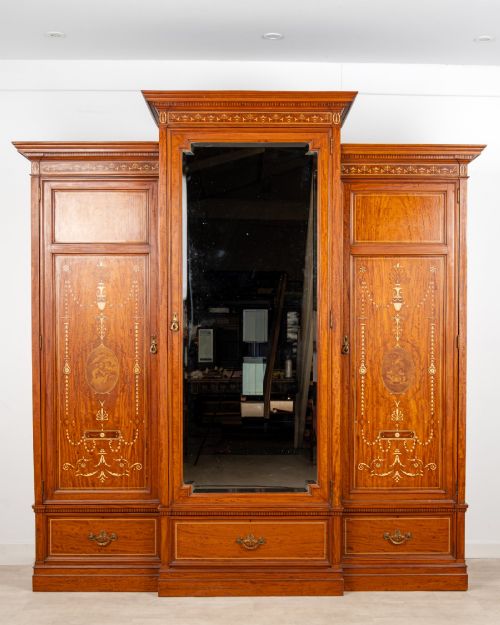
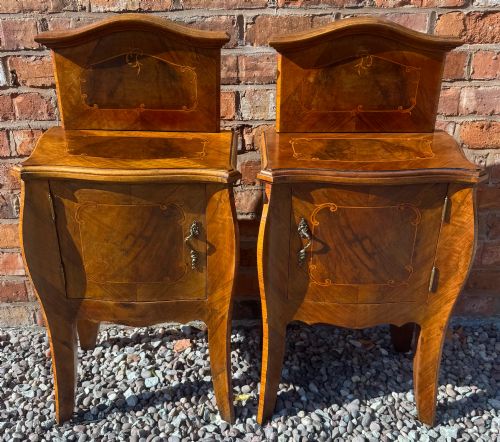
A vintage satinwood cupboard encompasses a variety of storage furniture designed for domestic use, predominantly originating from the Edwardian period and the early twentieth century. Buyers searching for a vintage satinwood cupboard frequently encounter compact bedside cabinets, display pieces with glazed doors, and taller linen presses or wardrobes.
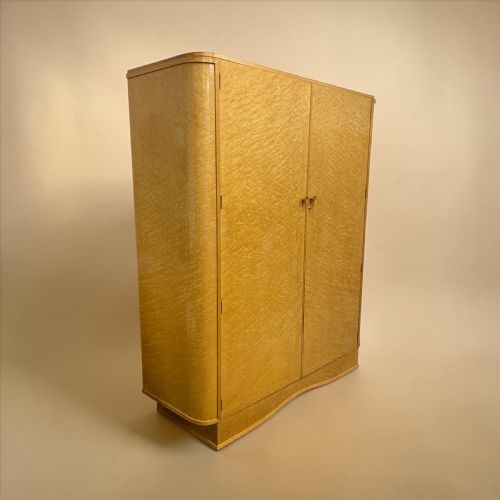
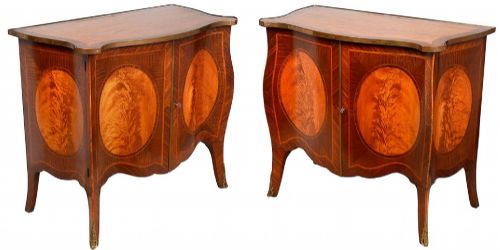
The selection ranges from smaller bedside chests and tables to grander side cabinets and display cabinets executed in Sheraton Revival and Art Deco styles. Edwardian examples often feature delicate mahogany frames with satinwood inlays, whilst Art Deco pieces lean towards clean geometric lines and contrasting wood veneers.
Materials and construction
The primary material is satinwood, valued for its luminous grain, frequently paired with mahogany, walnut, and boxwood for contrasting stringing and marquetry details. Cabinets often incorporate brass hardware, glass panels for display doors, and occasionally marble tops on bedside pieces.
Joinery techniques reflect the prevailing tastes of the nineteenth and twentieth centuries, utilising solid timbers alongside finely cut veneers applied to carcases. Painted surfaces appear on specific decorative items, whilst inlaid motifs draw heavily on classical and revivalist repertoires.
Materials recorded across the selection include satinwood, mahogany, walnut, boxwood, marble, and brass.
Judging the standard
Quality in these cabinets rests upon the precision of the cabinetwork, particularly the execution of the inlay and the crispness of the mouldings. Superior examples demonstrate careful matching of timber grains and harmonious proportions across doors and drawers.
The integrity of the original hardware, the stability of the timber carcase, and the refinement of secondary woods all contribute to a higher tier of craftsmanship. Pieces retaining their original glass, brass fittings, and painted decoration command greater appreciation.
Morant and Co·Maple and Co·Druce and Co·Waring and Gillow·Collinson and Lock·Betty Joel
The Vintage Satinwood Cupboard Glossary
- Satinwood
- A durable, light-yellow timber with a natural sheen, used extensively for cabinetmaking and decorative veneer work. It provides a bright surface that reflects light well in domestic interiors.
- Sheraton Revival
- A late nineteenth and early twentieth century design movement that reinterpreted the elegant, classical furniture forms of George Sheraton. These pieces often feature delicate inlay and tapering legs.
- Marquetry
- The art of applying pieces of veneer to a structure to form decorative patterns and pictures. Craftsmen utilise various coloured woods to create intricate floral or geometric designs.
- Linen Press
- A tall piece of furniture traditionally used for storing garments and textiles, combining upper cupboard space with lower drawers. They often feature panelled doors and substantial cornices.
- Demi-Lune
- A half-moon shape utilised for the design of small commodes and side cabinets. This curved form sits flush against a wall whilst offering a softer profile.
Vintage Satinwood Cupboard: Frequently Asked Questions
Where should I place a bedside cabinet?
These compact cupboards suit bedroom spaces beside standard bed frames, offering enclosed storage for small personal items.
Their varied heights and marble or wooden tops allow them to hold reading lamps and night-time accessories securely.
How do I care for satinwood surfaces?
Maintain the timber by keeping pieces away from direct heat sources and strong sunlight that might fade the grain.
Dust regularly with a dry cloth and apply occasional gentle wax nourishment suited to antique furniture.
What is the difference between Edwardian and Art Deco styles?
Edwardian examples draw heavily on eighteenth-century revivals with classical inlay, delicate tapering legs, and polished mahogany framing.
Art Deco items embrace twentieth-century modernism through bold geometric shapes, contrasting veneers like walnut, and streamlined silhouettes.
Can I use a display cabinet in a living room?
Display cabinets with glazed doors function well in reception areas for exhibiting glassware, ceramics, or books.
They protect delicate items from dust whilst introducing polished timber tones and reflective glass to the room.