



Small Side Credenza
A small antique side credenza brings compact architectural presence and rich timber grain to a room, offering refined surface space and discreet storage.
Small Side Credenza
A small antique side credenza sits low against a wall, serving as a compact station for display and storage in a dining room or drawing room. When searching for a small antique side credenza, buyers encounter related forms such as chiffoniers, pier cabinets, and diminutive sideboards spanning the Georgian, Regency, and Victorian periods.
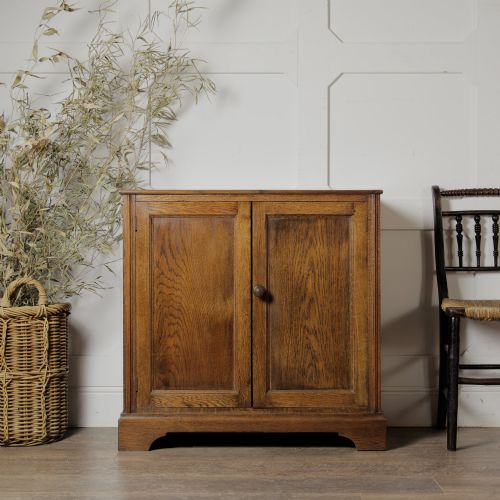
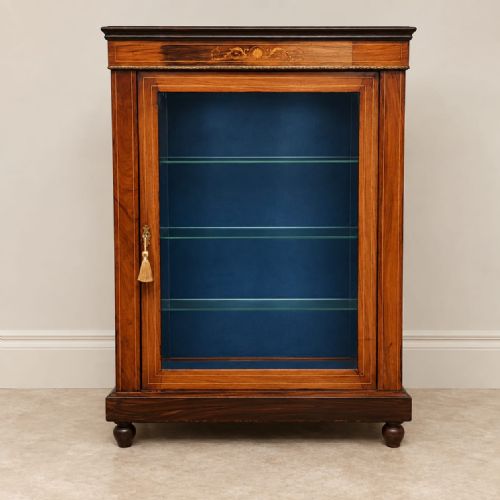
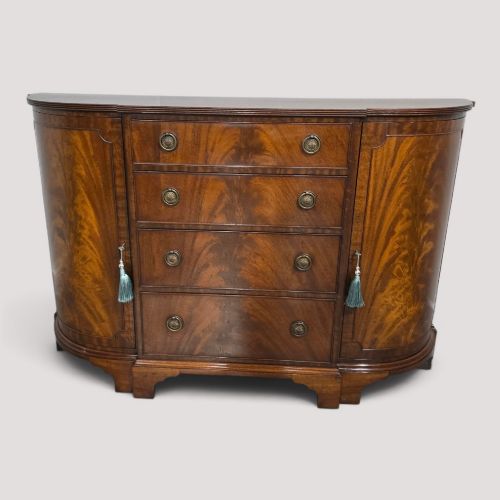
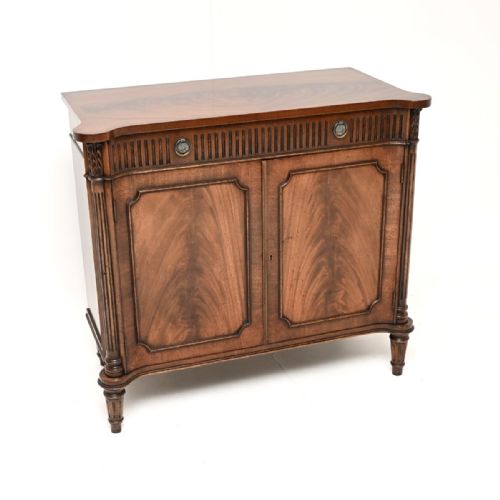
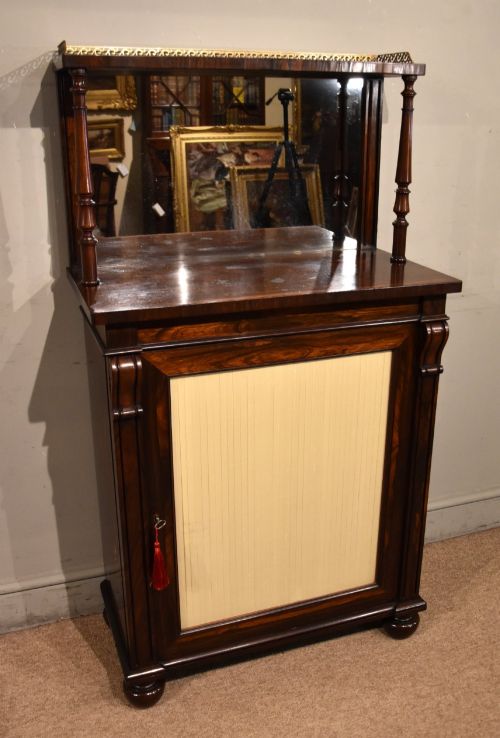
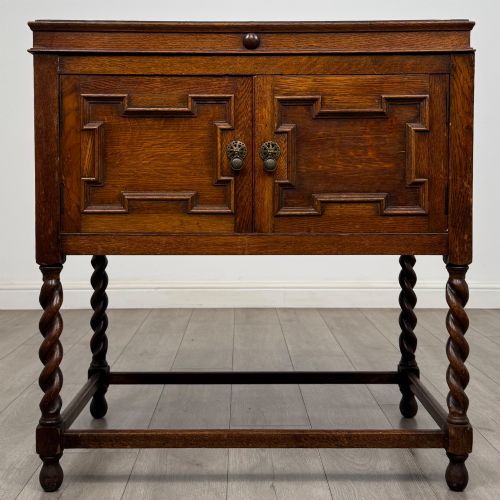
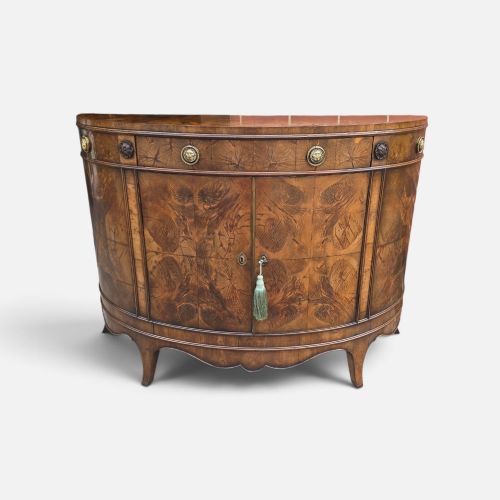
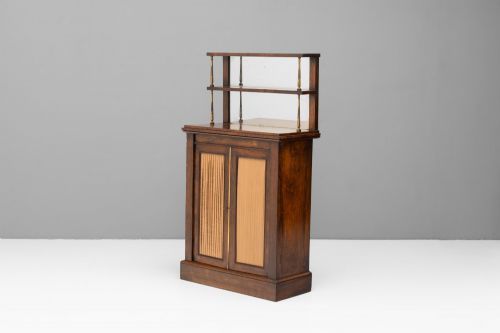
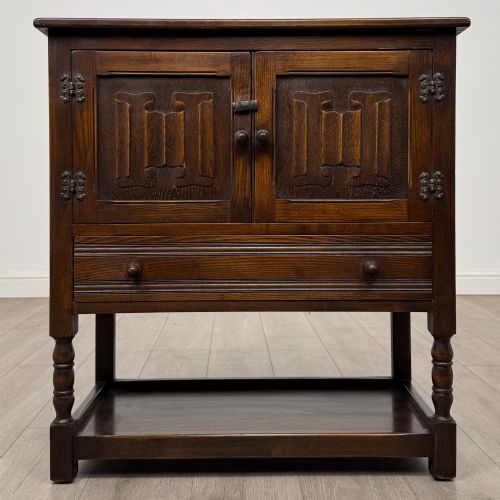
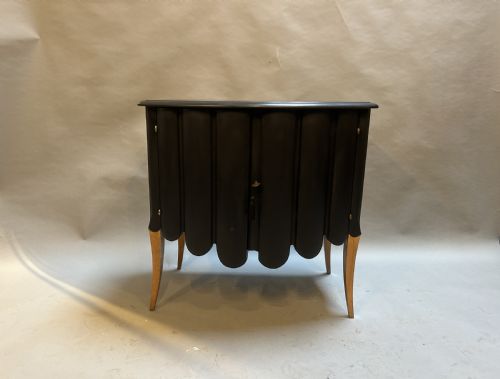
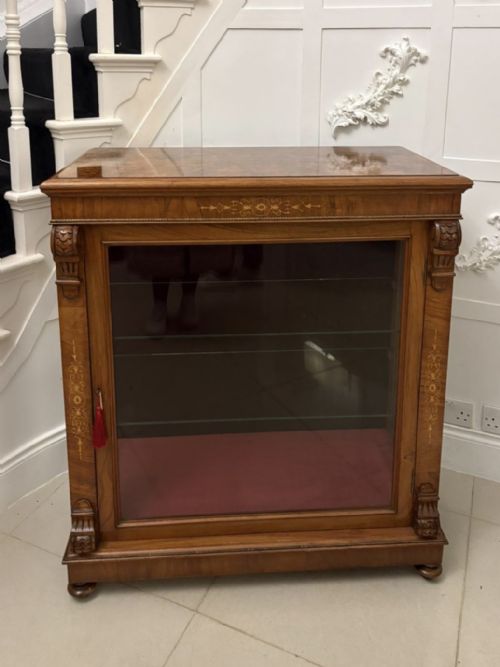
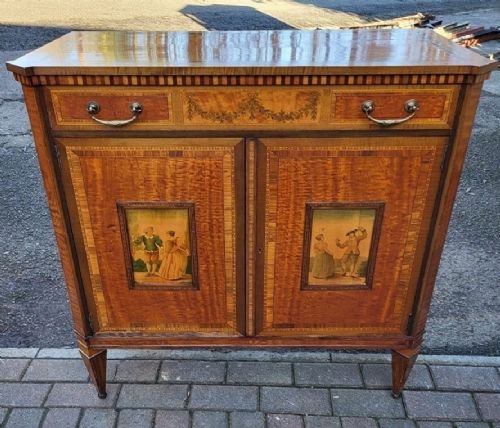
The pieces appearing here include serpentine-shaped walnut credenzas alongside mahogany sideboards and rosewood chiffoniers. These items range from simple oak cupboards to intricately inlaid satinwood and burr walnut cabinets adorned with ormolu mounts.
Materials and construction
Cabinet makers relied heavily on dense timbers such as mahogany, walnut, and rosewood, often applying fine veneers like burr walnut or satinwood over secondary woods to create striking grain patterns. Carved oak and solid pine also feature prominently, particularly in vernacular pieces from the Georgian and early twentieth-century eras.
Decorative detailing involved precision techniques including marquetry inlay, ebonisation, and brass or ormolu mounts. Glass doors appear on display-focused pieces like pier cabinets, while campaign styles incorporate functional brass hardware for portability.
Listings span multiple eras from Georgian and Regency to Victorian and early twentieth-century revival styles.
Distinctions in craftsmanship
Quality rests in the selection of timber veneers and the precision of the marquetry or inlay work. Superior examples display seamless matching of wood grains across doors and drawers, alongside crisp, deep carving rather than shallow machine work.
Construction methods also separate standard items from finer workshop output, evident in the tightness of dovetail joints, the weight of cast brass mounts, and the integration of secondary timbers within the carcase.
Maple and Co.·Gillows
The Small Side Credenza Glossary
- Credenza
- A low cabinet or sideboard designed for display and storage, often featuring glass panels or marquetry inlay. Originating in Italy, the form evolved significantly in nineteenth-century Britain.
- Chiffonier
- A compact sideboard or cabinet typically fitted with shelves or a small superstructure on top. This form gained immense popularity during the Regency and Victorian periods.
- Pier Cabinet
- A narrow display cabinet built to stand in the wall space between windows. These pieces frequently incorporate glazed doors and velvet-lined interiors for porcelain.
- Marquetry
- The art of applying decorative veneer pieces in wood, metal, or shell to form intricate patterns. Master craftsmen used this technique to ornament the doors and tops of fine cabinets.
- Ormolu
- Gilded bronze mounts and ornaments applied to furniture surfaces. The technique adds architectural definition and metallic contrast to dark woods like rosewood and walnut.
Small Side Credenza: Frequently Asked Questions
Where should I place a small credenza?
These compact cabinets suit narrow hallways, dining rooms, or living spaces where floor space is limited. Their low profile allows art or mirrors to hang comfortably above them.
They also function effectively as media units or side storage in bedrooms, combining practical surface area with enclosed shelving.
How do I distinguish Regency from Victorian pieces?
Regency furniture often exhibits clean classical lines, rosewood veneers, and restrained brass inlay inspired by ancient Roman and Greek motifs. The proportions tend to remain light and architectural.
Victorian cabinets generally feature heavier timber construction, darker finishes, and more elaborate ornamentation such as extensive carving, ebonising, or ormolu mounts.
What is the difference between a credenza and a chiffonier?
A credenza is typically a low, symmetrical cabinet designed for living and dining spaces, often featuring multiple doors and elaborate marquetry. It presents a uniform, architectural facade.
A chiffonier is generally smaller and frequently incorporates a raised shelf or gallery back above the main surface, originally intended for serving or displaying silver.
How should I care for antique polished wood?
Maintain the timber by dusting with a soft, dry cloth and avoiding modern silicone-based polishes that build up over time. Natural beeswax applied sparingly helps nourish antique surfaces.
Keep the cabinet away from direct sunlight and radiators to prevent the wood veneers from drying, warping, or cracking.