
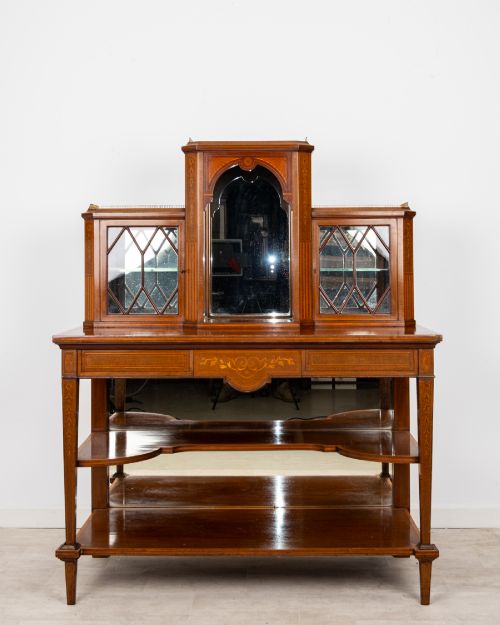


Vintage Satinwood Console
A vintage satinwood console brings a bright, figured timber and classical elegance to a hallway, drawing upon Georgian and Edwardian design traditions.
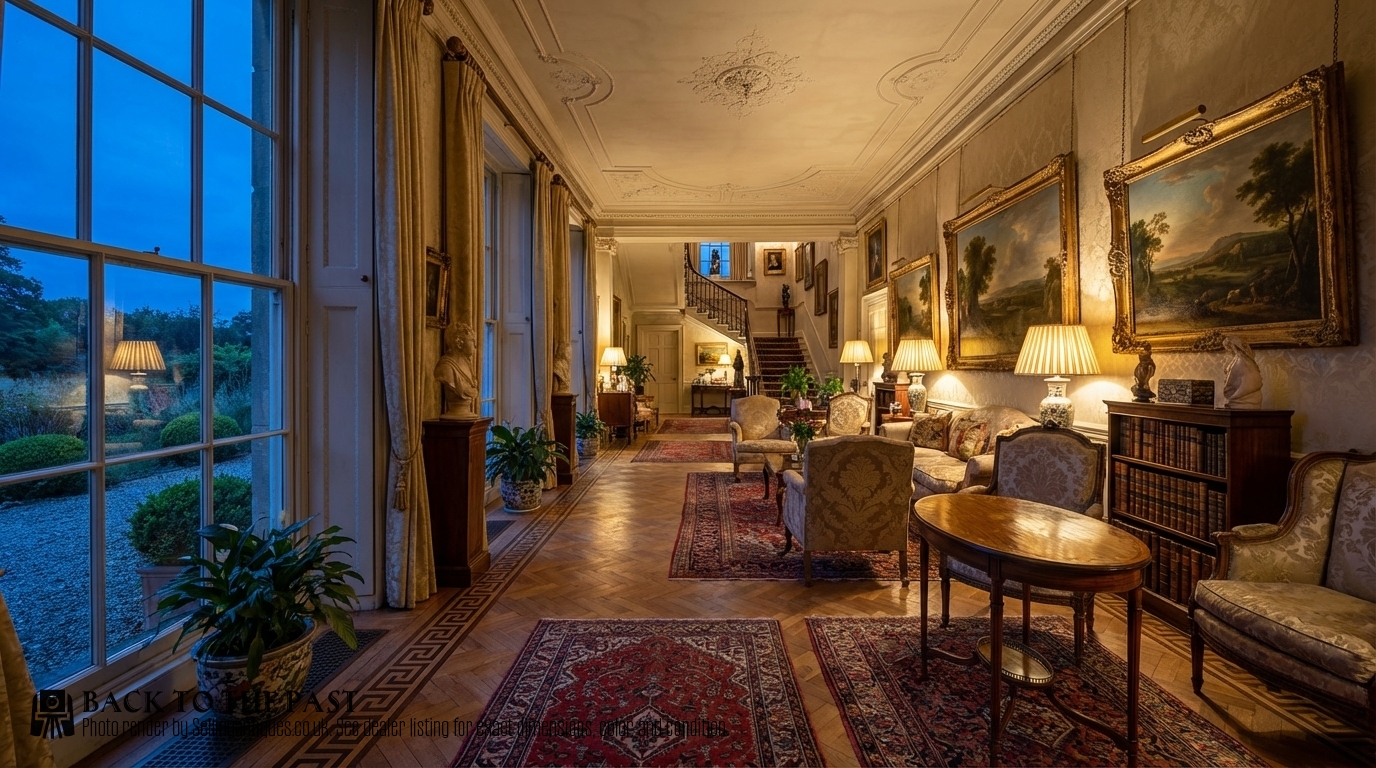
Vintage Satinwood Console
When you search for a vintage satinwood console, you encounter tables and side cabinets shaped by 19th-century and Edwardian craftsmanship. The selections on this page span console tables, demi-lune cabinets, and side tables executed in the Sheraton Revival and neoclassical styles.
The material identity rests upon satinwood, often paired with mahogany, rosewood, and boxwood stringing. Pieces frequently adopt half-moon demi-lune proportions suited to narrow spaces against a wall.
Origins stretch from the 18th-century George III period through Victorian revivals and into the early 20th century. Edwardian examples demonstrate a particular fondness for painted decoration and marquetry inlay upon satinwood surfaces.
Materials and construction methods
Cabinet makers utilised dense exotic timbers, pairing satinwood veneers with solid mahogany or hardwood carcases. Surface ornamentation relies on contrasting boxwood and rosewood inlay, creating geometric banding and intricate marquetry motifs.
Painted details on satinwood define many pieces, transforming simple side tables and demi-lune cabinets into decorative works of art. Brass hardware, such as handles or castors, frequently complements the golden tones of the timber.
Structural stability is achieved through traditional joinery, supporting marble tops or panelled wooden surfaces. The interplay of giltwood, paint, and polished veneer reflects the revivalist aesthetics of the Edwardian era.
Materials appearing alongside satinwood include mahogany, rosewood, boxwood, marble, and hand-applied paint.
Factors of distinction
The refinement of the hand-painted decoration and the crispness of the marquetry inlay separate standard productions from exceptional specimens. Superior examples display meticulous control in the brushwork and precision in the timber cutting.
The choice and figuring of the satinwood veneer dictate the visual depth of the top and drawer fronts. Rich, natural chatoyancy in the woodgrain combined with well-matched banding elevates a piece considerably.
The integrity of the structural form, particularly on curved demi-lune consoles and cabinets, demonstrates the maker's skill. Clean lines, intact original mounts, and preserved surface patination anchor the higher tier of these tables.
MAPLES OF LONDON
The Vintage Satinwood Console Glossary
- Satinwood
- A durable, lustrous tropical timber with a golden-yellow sheen used extensively in fine cabinet making. Its reflective grain makes it highly desirable for decorative veneering.
- Demi-lune
- A half-moon shape popular for console tables and commodes designed to sit flat against a wall. This profile maximises floor space while offering a decorative surface.
- Marquetry
- The art of applying pieces of veneer to a structure to form decorative patterns and pictures. Makers used contrasting woods like boxwood and rosewood to achieve pictorial depth.
- Sheraton Revival
- A late 19th and early 20th-century style emulating the neoclassical furniture designs of Thomas Sheraton. It is characterised by slender proportions, painted satinwood, and classical motifs.
- Stringing
- Thin strips of contrasting wood inlaid into grooves on table tops and drawer fronts. This technique outlines panels and enhances the geometric lines of the furniture.
Vintage Satinwood Console: Frequently Asked Questions
Where should I place a vintage satinwood console?
These tables find a natural home in entrance halls, corridors, or living rooms where a shallow footprint is required. Their finished backs and painted or inlaid tops allow them to stand prominently against a wall.
Pairing a demi-lune console with a mirror or placing a small lamp upon the surface highlights the reflective quality of the satinwood grain.
How do I clean and care for satinwood?
Dust the surface regularly with a soft, dry cloth to prevent particulate accumulation on the polished veneer. Avoid placing the furniture in direct sunlight or near heat sources to protect the delicate timber and paint.
Apply a microcrystalline wax occasionally to nourish the wood and maintain the soft sheen without sealing the historic finish.
How do I distinguish Edwardian satinwood from 18th-century pieces?
Edwardian interpretations often lean into Sheraton Revival aesthetics with machine-sawn veneers and bright, uniform painted swags. Earlier 18th-century pieces display hand-cut timbers, subtle patination, and construction methods characteristic of the George III period.
Examine the secondary woods inside drawers and the ageing of the varnish to gain clues about the chronological origin of the table.
Were console tables used for dining or display?
Historical console tables served primarily as decorative serving surfaces or architectural ornaments against a wall. Unlike card tables or dining tables, they typically remained fixed in position rather than folding out.
Over time, homeowners repurposed them as lamp tables or side cabinets to showcase decorative objects and ceramics.