

Vintage Rush Seated Chair
A vintage rush seated chair brings tactile texture and sturdy vernacular construction into a room, offering enduring utility rooted in centuries of country craftsmanship.
Vintage Rush Seated Chair
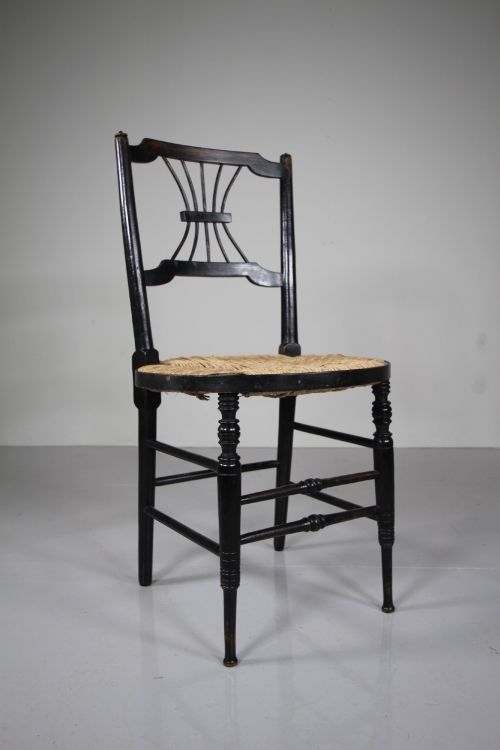
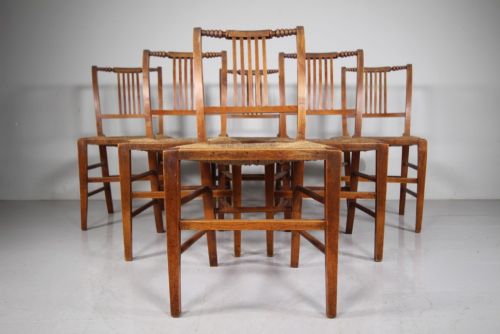
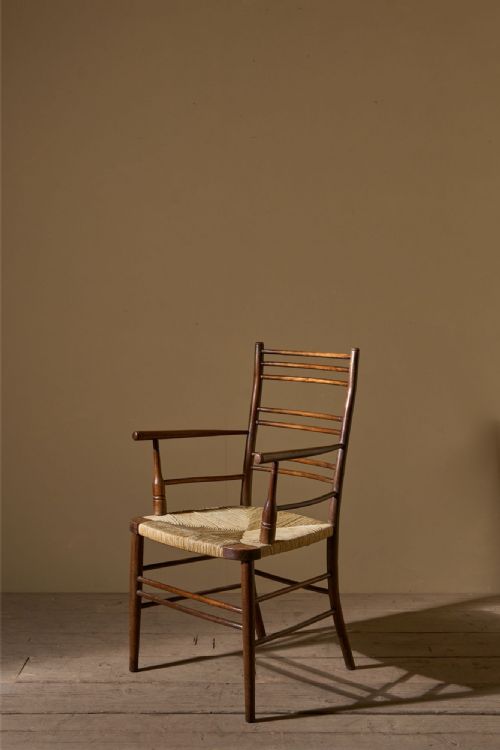
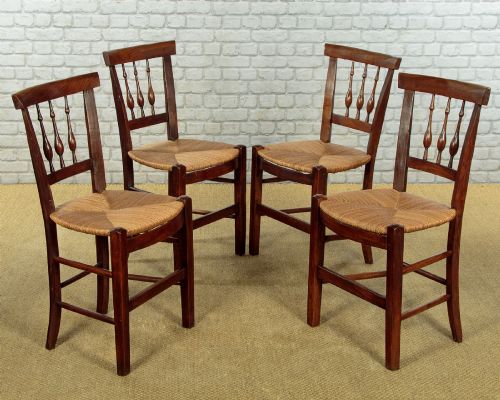
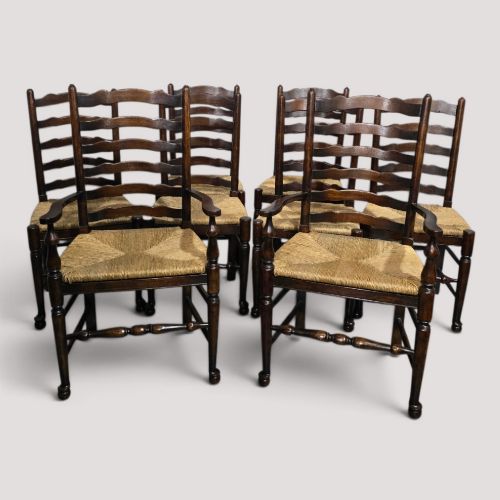
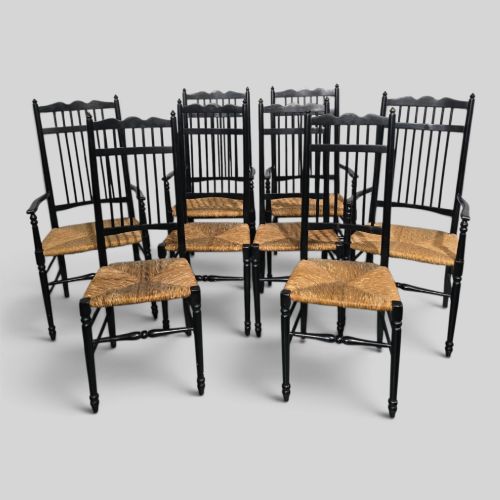
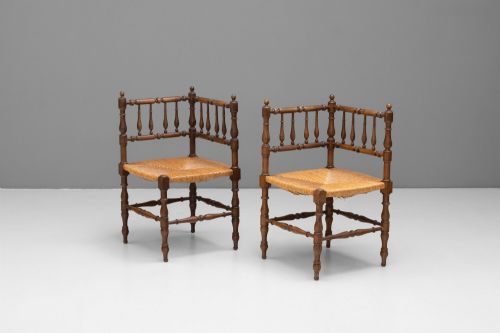
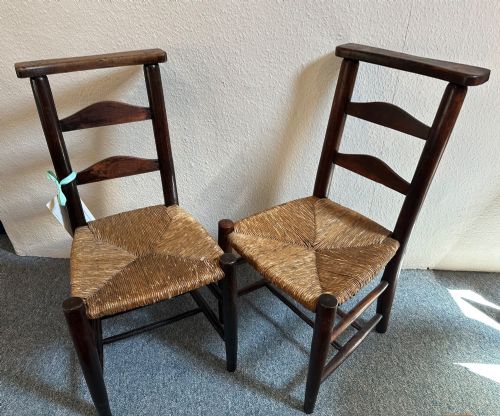
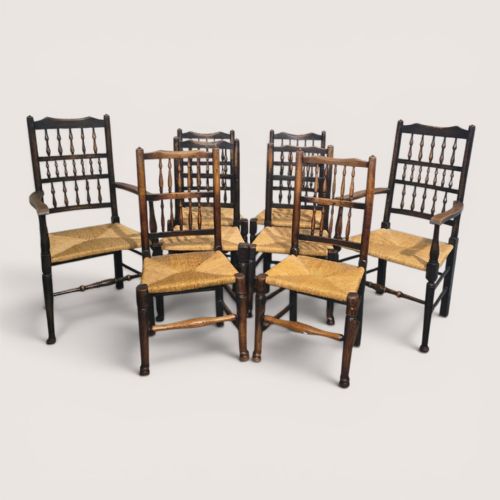
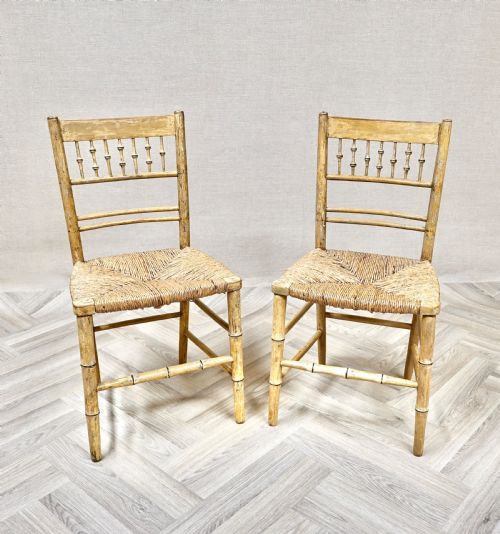
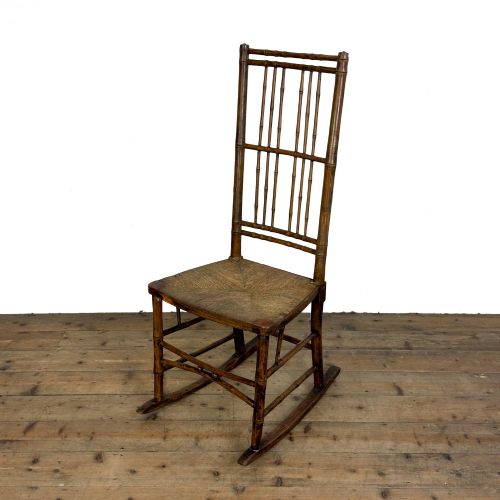
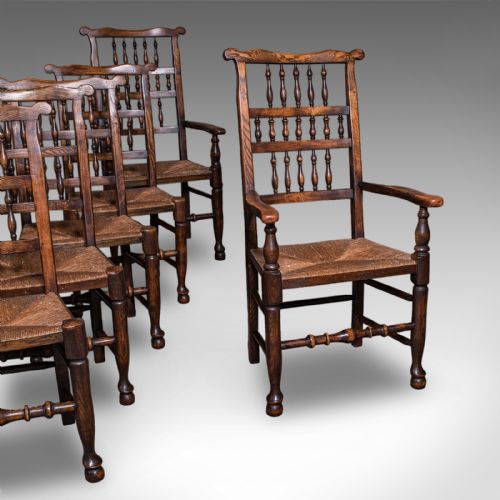
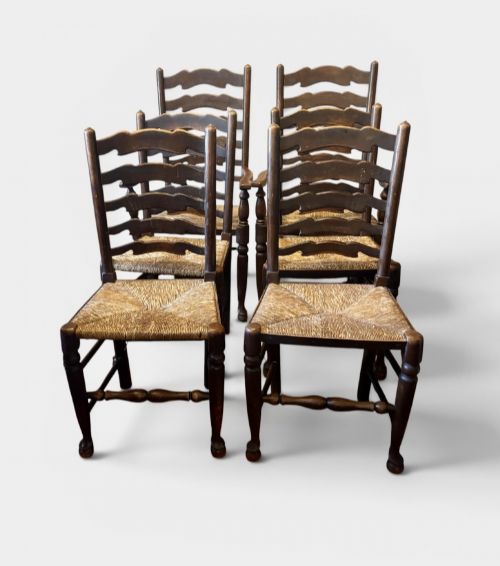
A vintage rush seated chair encompasses a broad family of vernacular and movement-driven seating, spanning rustic country dining sets to Arts and Crafts workshop productions. You will encounter nineteenth-century elm ladder backs, twentieth-century oak armchairs, and low-slung vernacular forms alongside specialised seating like rockers and high chairs.
The aesthetic leans heavily on English and French country traditions, with notable contributions from the Arts and Crafts movement through makers such as William Morris and Liberty & Co. These pieces range from solitary farmhouse carvers to large harlequin sets gathered for domestic dining spaces.
Materials and construction methods
Frames rely upon regional hardwoods chosen for strength and availability, predominantly oak, elm, beech, ash, and fruitwood, sometimes finished with early paint layers. Artisans shaped spindle backs, ladder backs, and curved armrests using traditional turning and joining techniques suited to heavy daily use.
Seats are hand-woven from dried marsh rush or twisted paper-fibre cord, tensioned tightly around wooden seat rails to create a resilient, textured platform. This seating material yields slightly to the sitter while maintaining structural integrity over decades of service.
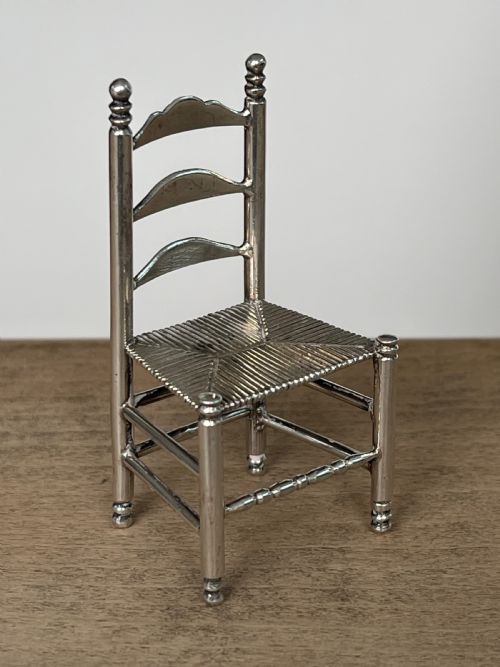
Surviving evidence includes miniature doll's house seating and massive cathedral chairs marked for St Paul's, proving these weaves scale from the microscopic to the monumental.
Separating grades of quality
The calibre of a piece rests largely on the tightness and uniformity of the rush weaving, alongside the crispness of the turned wooden components. Examples originating from documented Arts and Crafts workshops command attention for their proportion and thoughtful selection of timber figure.
Structural honesty and the preservation of original surfaces also divide ordinary items from superior survivals. Untouched fruitwood patination and firm, unaltered frame joinery elevate a chair well beyond utilitarian replacements or heavily modified examples.
William Morris·Liberty and Co·Lawrence Neal·Dicon Nance
The Vintage Rush Seated Chair Glossary
- Rush
- Dried marsh grass woven tightly to form resilient, textured seating surfaces. It provides a supportive web that gains a warm golden tone with age.
- Ladder back
- A chair back featuring multiple horizontal wooden slats between upright posts. This traditional vernacular design dates back centuries and remains common in country seating.
- Carver
- An armchair designed to match a set of dining side chairs, usually placed at the head of a table. These pieces often feature scrolling armrests and sturdy upright posts.
- Spindle back
- A chair back constructed from numerous thin, turned wooden uprights. This arrangement distributes weight evenly and lightens the visual profile of heavy timber frames.
- Arts and Crafts
- A design movement advocating simple forms, vernacular traditions, and high-quality handcraftsmanship. It heavily influenced British furniture production around the turn of the twentieth century.
Vintage Rush Seated Chair: Frequently Asked Questions
How do I care for a rush seat?
Keep woven seats in stable indoor environments away from excessive moisture and direct heat sources. Vacuum gently using a soft brush attachment to remove dust from the woven strands.
Avoid sitting on rush with sharp objects or damp clothing that might puncture or weaken the dried fibres. Occasional light ventilation helps preserve the natural material.
Can broken rush seats be repaired?
Worn or broken rush seating can be completely re-woven by a skilled craftsperson using traditional marsh grass materials. The original wooden frame remains untouched while a fresh cord is twisted and tied around the internal rails.
This restorative process extends the practical lifespan of the furniture by decades while maintaining its historical integrity and appearance.
How do I date a ladder back chair?
Examine the turning style on the upright posts and the overall wear patterns on the foot terminals. Earlier examples from the eighteenth century often display hand-turned irregularities and deep patination on elm or fruitwood.
Twentieth-century interpretations from the Arts and Crafts period tend toward cleaner geometric lines and lighter oak timbers, sometimes carrying workshop stamps or retail labels.
Are these chairs suitable for daily dining?
Most sturdy oak, elm, or beech examples were built specifically for heavy kitchen and dining use. Solid mortise and tenon joinery makes them robust enough for regular seating around a table.
Lighter bedroom chairs, nursing chairs, or low armchairs are better suited to occasional lounging or decorative placement in living spaces.