


English Arts Crafts Chair
An English arts crafts chair brings honest construction and simple utility into daily domestic life.
English Arts Crafts Chair
An English arts crafts chair is a seating form rooted in the rejection of mass industrial production in favour of traditional craftsmanship and unpretentious design. When searching for an English arts crafts chair, a buyer encounters everything from simple ladderback armchairs to sets of dining chairs and substantial library seating.
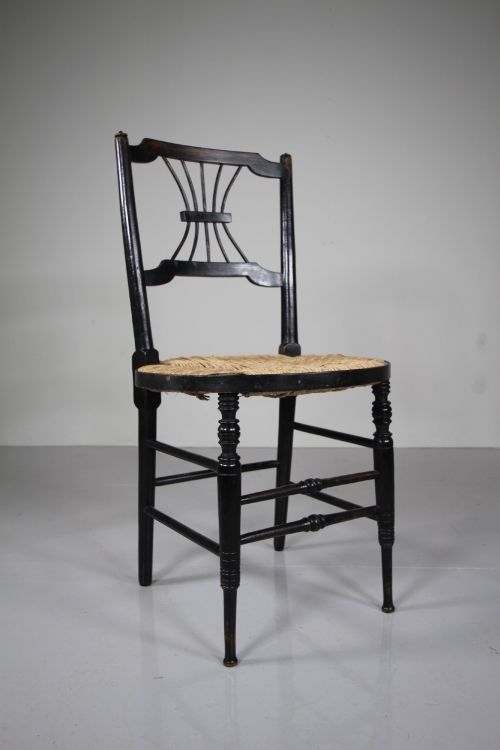
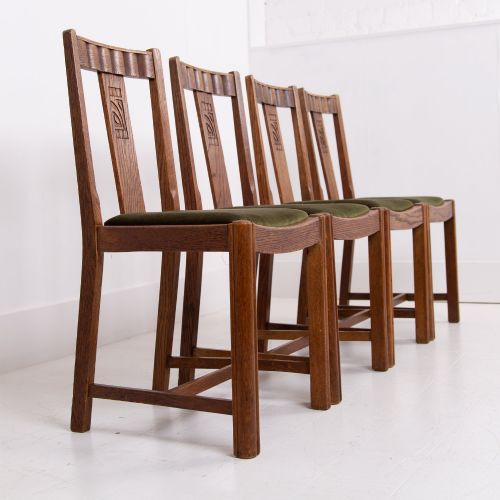
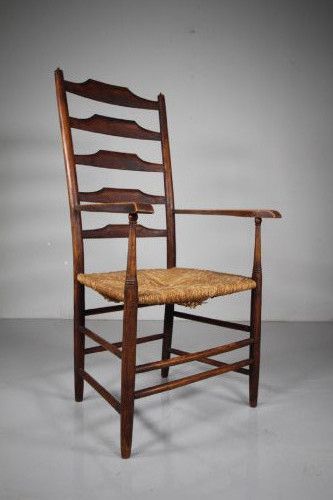
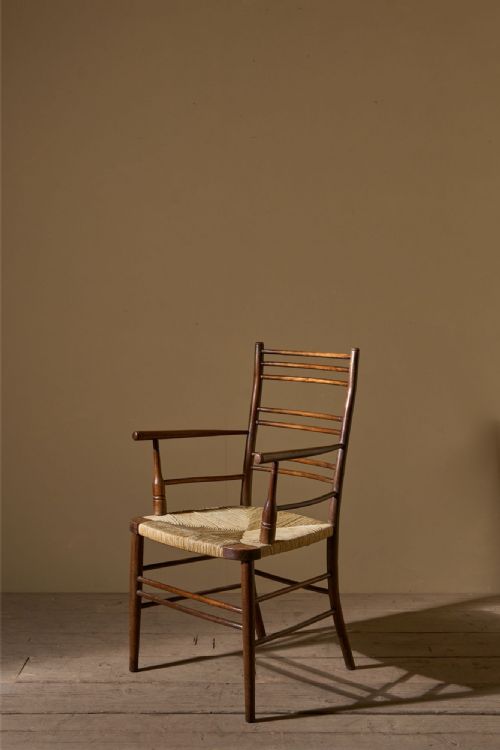
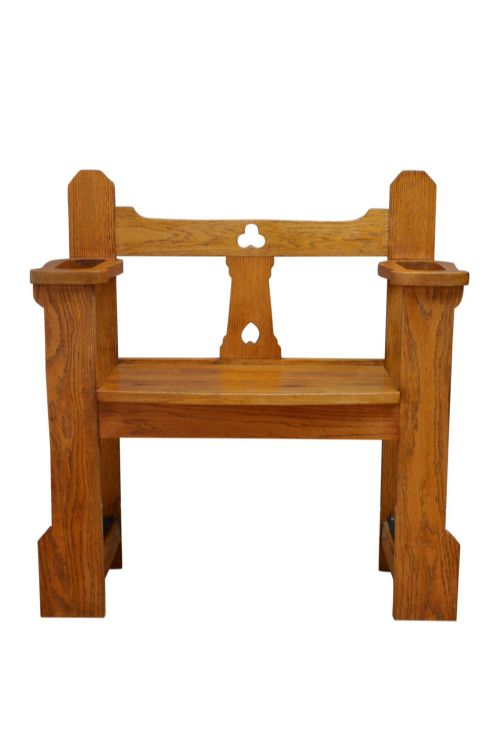
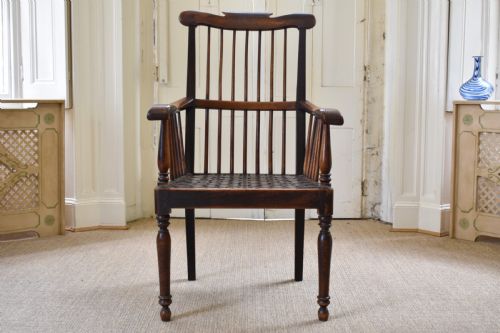
The most common examples on this page are constructed from solid English oak, frequently fitted with woven rush or leather seats. Forms range from vernacular country armchairs and compact hall benches to high-backed dining sets and swivel desk chairs.
The aesthetic bridges late Victorian reform movements and early twentieth-century modernist ideals, maintaining a focus on exposed joinery and visible grain. These pieces serve domestic spaces as functional seating that doubles as sculptural woodwork.
How They Were Made
Makers utilised native timbers, predominantly English oak, alongside elm, beech, laburnum, ash wood, and mahogany. Woodworkers relied on traditional joinery techniques such as mortise and tenon joints rather than metal fasteners, allowing the natural character of the timber to dominate.
Seats were frequently woven by hand using natural rush or upholstered in brown leather, velvet, and ebonised finishes. Turned spindles, curved ladderbacks, and carved details such as signature animal motifs defined the structural framework.
One chair even comes with a carved wooden mouse hiding on the leg.
What Varies in Quality
Quality rests upon the integrity of the timber selection and the precision of the hand-carved joinery. Pieces produced by notable workshops exhibit a deliberate proportion and balance that separates standard vernacular items from benchmark design work.
The survival of original surface finishes, untouched woven rush, and period leather upholstery dictates the standing of an individual piece. Lesser examples often suffer from unsympathetic modern replacements or structural modifications that diminish the original maker intent.
William Morris·Philip Clissett·Dryad of Leicester·Robert Mouseman Thompson·William Birch Ltd·Morris And Co·Liberty London
The English Arts Crafts Chair Glossary
- Rush seat
- A woven seating surface made from dried marsh grasses. This traditional method provides a resilient and textured platform.
- Ladderback
- A chair back featuring horizontal slats arranged in a tier. The design offers ergonomic support through simple stacked wooden rails.
- Carver
- An armchair designed to match a set of dining chairs. These pieces typically sat at the head of a table.
- Vernacular
- Objects built by local craftspeople following regional traditions rather than high-style academic patterns. These pieces prioritise utilitarian function over ornamental excess.
- Ebonised
- Wood treated with a chemical stain or pigment to imitate ebony. This finish provides a dark, uniform surface popular in nineteenth-century aesthetic design.
English Arts Crafts Chair: Frequently Asked Questions
How do I identify an arts and crafts chair?
Look for exposed wooden joinery, straightforward construction, and materials like English oak or woven rush. These elements reflect a deliberate turn away from industrial ornamentation toward honest hand-working methods.
Check for stylistic cues such as ladderbacks, tapered legs, and vernacular forms that prioritize comfort and utility over decorative complexity.
Are these chairs suitable for daily dining?
Many examples on this page were built specifically as dining sets and remain robust enough for regular use. Solid oak frames and sturdy rush or leather seats hold up well to everyday sitting.
It helps to verify that the joints remain tight and the woven or upholstered seat surfaces are stable before putting them into heavy daily service.
How do I care for antique rush seats?
Keep rush-seated chairs in rooms with stable humidity to prevent the dried marsh grass from becoming brittle. Regular gentle dusting with a soft brush helps maintain the natural fibres.
Avoid placing these chairs in direct sunlight or near heat sources, which can dry out and weaken the woven material over time.
What is the difference between a side chair and a carver?
A side chair is built without arms, designed to tuck neatly beneath a dining table or desk. A carver includes armrests and generally occupies the head of the table.
Both forms often share the same underlying construction style and wood selection within a matching dining set.