



Vintage Rush Seated Armchair
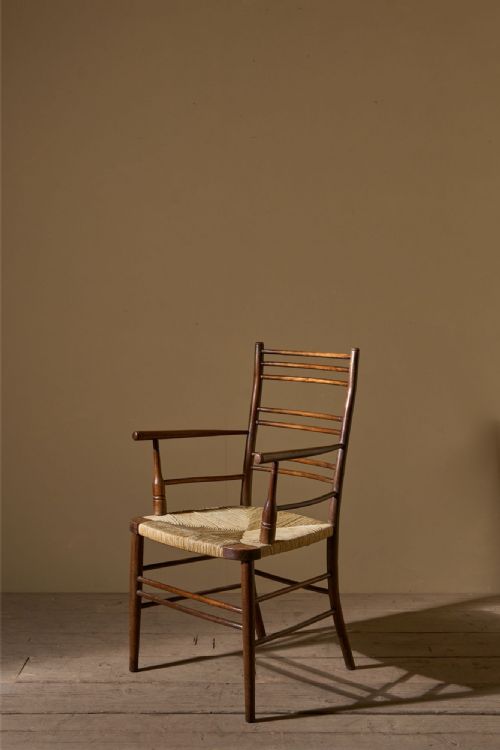
A vintage rush seated armchair brings tactile warmth and vernacular strength to a room, offering tactile woven seats paired with timber frames.
Vintage Rush Seated Armchair
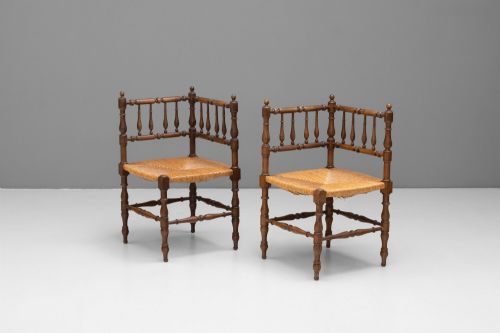
A vintage rush seated armchair combines domestic utility with vernacular traditions, spanning periods from the eighteenth century through the Edwardian era. These chairs emerge primarily from English, French, and Scottish country workshops, employing robust frames designed for daily use.
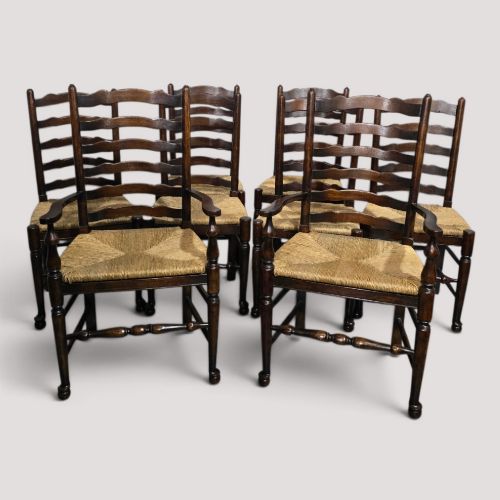
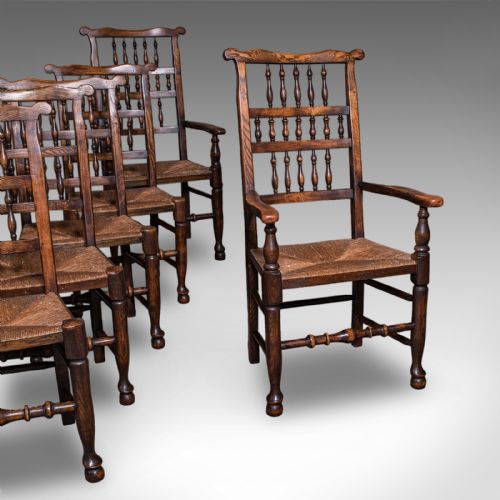
The selections available here range from ladder-back carvers in oak and elm to Arts and Crafts designs associated with makers such as Liberty and William Morris. Buyers frequently encounter nineteenth-century spindle-back forms alongside twentieth-century kitchen and rocking chairs.
Built for comfort and durability, these armchairs serve as functional seating as well as historic examples of regional woodworking. The integration of woven organic seating defines the category, providing both textural contrast and resilient support.
How they were made
Makers constructed the timber frames using native hardwoods such as oak, beech, ash, elm, and mahogany, often pairing different woods for structural parts and decorative turnings. Joinery relied on traditional mortise and tenon methods to ensure longevity under heavy domestic strain.
The seats themselves utilise twisted marsh rush, woven tightly around wooden rails to create a firm, resilient platform. Some examples feature painted finishes or original surfaces that preserve the character of the workshop.
Some nineteenth-century makers sized their rush-seated high chairs so toddlers could safely supervise kitchen activities.
What varies in quality
Quality rests in the integrity of the timber frame and the tightness of the rush weaving. Finer pieces demonstrate careful selection of hardwoods, balanced proportions, and well-executed joinery that resists wobble over generations.
Provenance and association with notable workshops or designers elevate specific examples above standard utility seating. The survival of original painted surfaces or untouched rush work also dictates distinction among surviving pieces.
Liberty Morris And Co·William Morris·Morris And Co·Dicon Nance St Ives Studio
The Vintage Rush Seated Armchair Glossary
- Rush
- Dried marsh grass twisted into cords and woven to form flexible, durable chair seats. It provides a natural texture characteristic of traditional country seating.
- Carver
- An armchair designed with armrests, traditionally used at the head of a dining table or as a fireside seat. These pieces match smaller side chairs in a set.
- Ladder-back
- A chair back featuring multiple horizontal wooden rails between the upright posts. This structural style is typical of English and French vernacular seating.
- Spindle-back
- A chair back constructed with numerous thin, turned wooden rods supporting the sitter. This technique lightens the visual weight of heavy hardwood frames.
Vintage Rush Seated Armchair: Frequently Asked Questions
Where were these armchairs used?
These armchairs served primarily in kitchens, farmhouses, and country dining rooms where durable, practical seating was essential.
They also found places in libraries, parlours, and bedrooms, particularly as Arts and Crafts or nursing chairs designed for specific domestic tasks.
How do I care for rush seats?
Rush seats require a dry environment and gentle cleaning to prevent the natural fibres from becoming brittle or damp.
Avoid excessive moisture when cleaning, and occasionally apply a neutral wax or protector to the wooden frame while leaving the woven seat untouched.
Are these chairs suitable for daily dining?
Many of these armchairs are structurally robust and built for everyday use around a kitchen or dining table.
Heavier elm and oak ladder-back versions offer sturdy support, though delicate nineteenth-century low chairs or rocking variants suit occasional seating better.
How do I distinguish regional styles?
Regional styles reveal themselves through timber choice and turning details, such as Lancashire spindle-backs or Scottish crofter designs.
Local timber availability dictated whether makers used native ash, beech, or oak, creating distinct silhouettes across different geographic workshops.