


Ash and Elm Carver
Ash and elm carver chairs combine vernacular strength with native timber, offering enduring seating shaped by generations of country makers.
Ash and Elm Carver
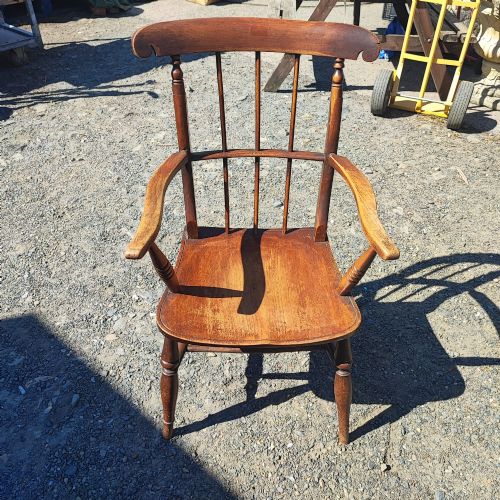
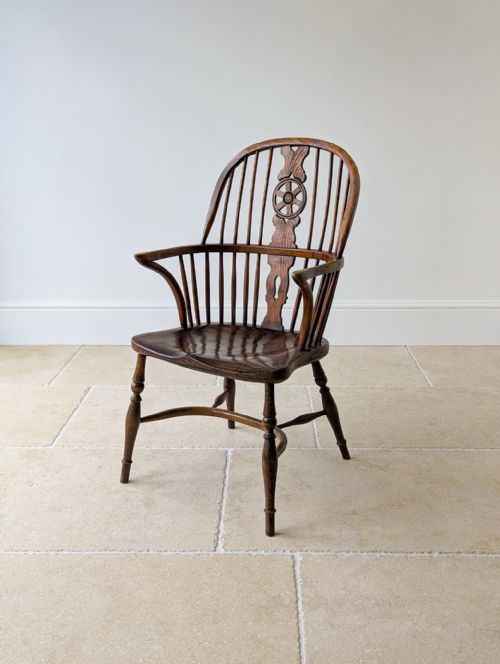
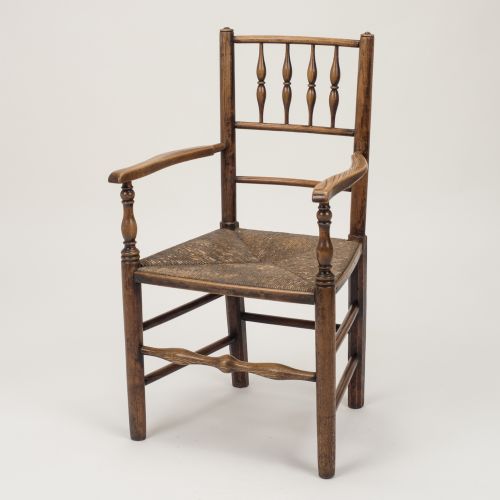
An ash and elm carver is a sturdy country armchair built with a contrasting mix of native British hardwoods, frequently encountered in formats such as Windsor, stick back, wheel back, and Lancashire spindle back chairs. These regional seats date from the Georgian, Regency, and Victorian periods, embodying the utilitarian craftsmanship of English country workshops.
You will most commonly meet these carvers in Windsor and wheel back configurations, featuring solid elm seats paired with turned ash spindles and legs. They served practical roles in farmhouses, kitchens, and provincial homes, evolving from robust functional seating into sought-after decorative antiques.
What varies in quality
Quality rests in the sculptural depth of the elm seat carving and the symmetry of the turned ash spindles, where finer examples display generous saddle scoops and carefully balanced proportions. Thinner timber reduction and clumsy replacement stretchers diminish the visual harmony of the piece.
Surface patina and original timber integration dictate overall standing, distinguishing untouched provincial examples from heavily stripped or overly restored frames. The best carvers retain deep, honest grain character earned through centuries of use.
Listings feature ash, elm, beech, and rush across Georgian, Regency, and Victorian periods.
The Ash and Elm Carver Glossary
- Carver
- An armchair designed to match a set of dining chairs, typically featuring wider arms to accommodate formal clothing. These chairs frequently stood at the head of a table.
- Windsor
- A chair constructed with a solid wooden seat into which the legs, back, and arms are separately inserted. This design originated in rural workshops and relies on pegged tenons for stability.
- Rush
- A marsh plant woven into durable seating pads for country chairs. It provides a flexible and supportive surface.
- Comb back
- A Windsor chair variation where the vertical spindles extend through a horizontal crest rail, resembling the teeth of a comb. This style offers enhanced upper back support.
- Spindle back
- A chair frame composed of numerous slender turned wooden uprights forming the backrest. These members are tenoned directly into the seat and top rail.
Ash and Elm Carver: Frequently Asked Questions
How do I date an ash and elm carver?
Dating relies on examining the turning style of the spindles, the thickness of the elm seat, and construction marks left by bodgers. Georgian examples often display cruder adze work on the seat bottom, while Victorian versions feature more refined machine-assisted turnings.
Secondary woods like beech and the presence of original rush seating further help contextualise the production era, linking the piece to specific 19th-century regional traditions.
Are these chairs comfortable for daily use?
The sculpted elm seats provide surprising ergonomic support due to the deep saddle-shaped depressions carved by historic makers. Their robust construction handles everyday sitting without issue.
Adding a loose seat cushion can improve comfort for modern living while preserving the historic timber framework underneath.
How should I clean the wood surface?
Maintenance requires only a soft cloth and occasional application of quality beeswax to nourish the dry ash and elm grain. Avoid modern liquid polishes that strip the historic wax build-up.
Keeping the chair away from direct heat sources prevents the native timbers from splitting and protects the aged patina.