




Ladderback Arm Chair
A ladderback arm chair brings sturdy country craftsmanship and elegant horizontal slats to any room.
Ladderback Arm Chair
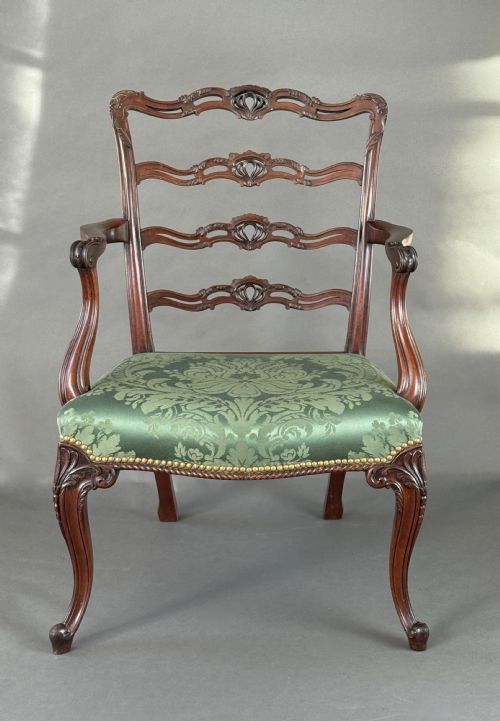
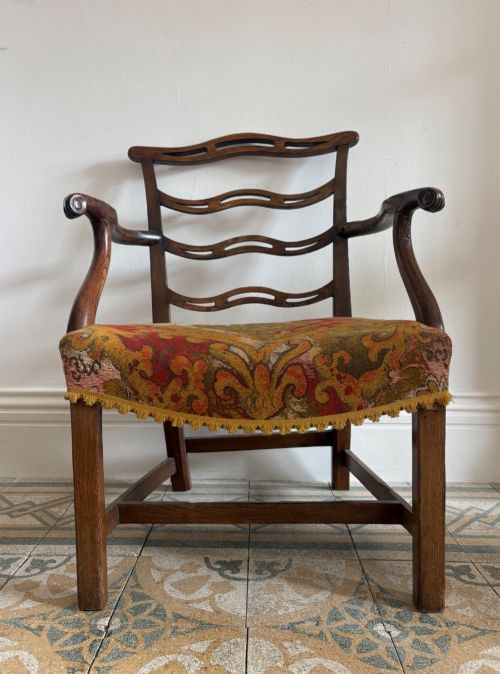
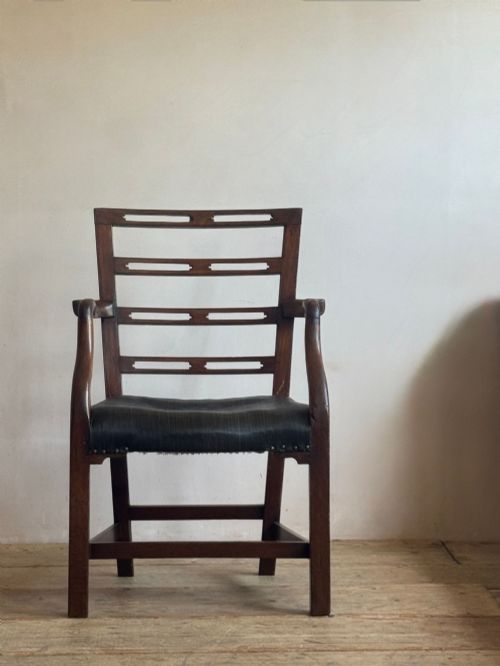
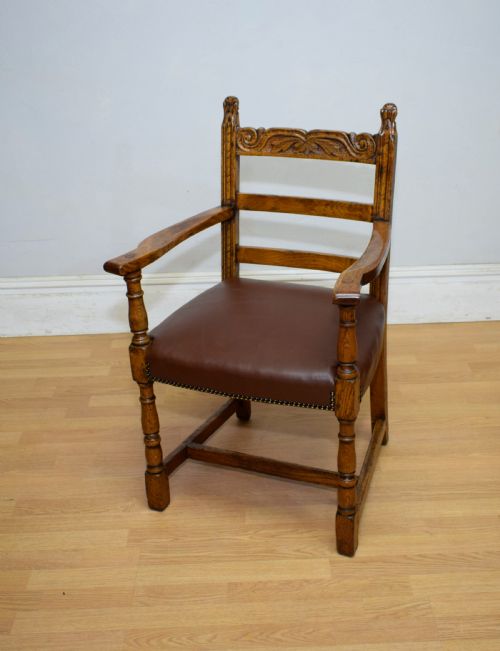
A ladderback arm chair is defined by its horizontal back rails that resemble the rungs of a ladder, a form seen across multiple centuries. Buyers hunting for a ladderback arm chair will encounter sturdy regional variations, particularly English country pieces and formal Georgian iterations.
The materials span native timbers like elm, ash, and oak alongside mahogany examples influenced by Chippendale designs. These seating forms range from straightforward farmhouse carvers to refined Georgian models and later Arts and Crafts interpretations.
Regional workshops produced distinct vernacular types, notably in Lancashire and Macclesfield, where makers paired timber frames with woven seating. Whether fitted with rushes, tapestry, or leather, each piece relies on simple vertical posts and supportive armrests.
Materials and construction methods
Construction typically combines sturdy hardwoods for the frame, utilising ash, elm, oak, or mahogany depending on the period and region. Makers turned spindles on a lathe and shaped horizontal slats to fit between the upright rear posts.
Seats were frequently woven from natural rush to create a flexible, durable platform within the wooden frame. Alternatively, drop-in frames received upholstery in fabric, leather, or tapestry, secured directly to the wooden rails.
Some nineteenth-century examples included castors, allowing owners to roll their ladderbacks smoothly across the carpet without lifting a finger.
Distinguishing quality and craftsmanship
Quality rests in the selection and conditioning of the timber, where dense native woods like elm and ash provide lasting structural integrity. Finer examples display carefully profiled slats and well-turned arm supports that balance decoration with daily utility.
The tightness and uniformity of the original rush seating indicate the skill of the artisan who wove the base. Proportion and wood patination further separate standard regional seating from master-carved Chippendale or Arts and Crafts editions.
Philip Clissett·Heals
The Ladderback Arm Chair Glossary
- Ladderback
- A chair style featuring multiple horizontal slats set between the rear upright posts. This design provides robust back support through a simple, tiered arrangement.
- Carver
- A traditional term for an armchair, often used to describe seating designed to sit at the head of a dining table or serve as a desk chair. These pieces include supportive armrests.
- Rush
- Dried marsh grass woven tightly to form a durable, textured seat base. It is commonly found on country vernacular chairs.
Ladderback Arm Chair: Frequently Asked Questions
How do I identify an older ladderback arm chair?
Look for hand-turned spindles, traditional joinery like pegged mortise and tenon joints, and the natural patination of native timbers. Subtle tool marks and variations in the wood grain often point to earlier provincial craftsmanship.
Compare the slat shaping and arm construction against known regional styles, such as Lancashire or Macclesfield formats. The presence of original woven rush or early upholstery provides further clues to age.
Were these chairs used for dining?
These armchairs served multiple purposes throughout the home, frequently functioning as desk chairs, reading seats, or carvers at the dining table. Their sturdy build suited heavy daily use in farmhouse kitchens and parlours alike.
Pairs and harlequin sets indicate they were often gathered around large dining tables for family meals. Rocking variants and lower formats were also built for relaxation by the hearth.
What woods were used to build them?
Country makers relied heavily on accessible local hardwoods such as elm, ash, oak, and beech for strength and flexibility. Mahogany became common in more formal Georgian interpretations and Chippendale-influenced designs.
Combinations of woods within a single frame, such as ash posts with elm seats, are typical of regional country construction. These material choices ensured the chairs could withstand generations of regular seating.
How should I care for a rush seat?
Keep rush seats away from excessive moisture and direct heat sources to prevent the natural fibres from becoming brittle. Regular dusting with a soft brush helps maintain the integrity of the woven material.
Avoid sitting on rush with sharp objects or uneven pressure that might snap the twisted grass. Gentle maintenance preserves both the flexibility and the appearance of the original weave.