
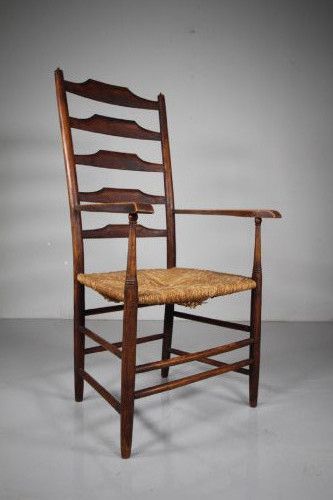
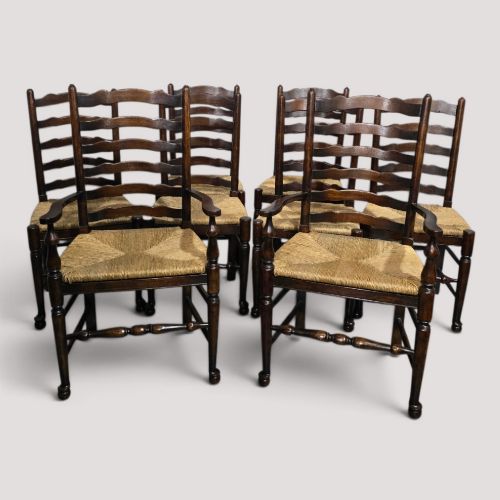


Rustic Ladder Back Armchair
A rustic ladder back armchair offers straightforward vernacular comfort, shaped by regional makers using local woods and woven rush seats.
Rustic Ladder Back Armchair
A rustic ladder back armchair belongs to a long tradition of vernacular seating found across English and French country districts. These chairs serve functional roles in kitchens, farmhouses, and dining rooms, prioritising solid construction and honest materials over courtly ornament.
Buyers searching for a rustic ladder back armchair will encounter examples ranging from nineteenth-century farmhouse carvers to early twentieth-century kitchen seating. The form typically pairs horizontal back slats with sturdy armrests and woven seating surfaces.
The selections span distinct regional styles, including English country vernacular pieces and French provincial variants. Makers utilised native timbers such as oak, elm, ash, and beech, often combining woods within a single frame to suit the legs, seat rails, and spindles.
How they were made
Cabinetmakers and bodgers built these chairs using green or seasoned native hardwoods, turning uprights on foot-powered lathes and shaping arm supports by hand. Ash and elm provided the necessary tensile strength for uprights and rails, while oak appeared in heavier dining sets and early frames.
Seats relied on natural rush, woven tightly over wooden seat rails to create a durable, slightly yielding platform. Joinery typically involved traditional mortise and tenon joints, secured with wooden pegs to accommodate seasonal wood movement without failing.
Listings feature native woods including oak, elm, ash, and beech, paired with natural rush and upholstered seats across the nineteenth and twentieth centuries.
What varies in quality
Quality rests in the balance of proportions and the integrity of the timber selection. Heavier solid construction in the frame and refined turning on the uprights separate everyday workshop pieces from finer rural examples.
The tightness and regularity of the rush weaving influence longevity and daily comfort. Original surface patination and honest timber wear distinguish untouched country pieces from heavily restored or later composite chairs.
Philip Clissett
The Rustic Ladder Back Armchair Glossary
- Ladderback
- A chair featuring horizontal wooden slats, or rungs, set between the upright posts of the backrest. These slats are often curved or shaped to fit the contours of the sitter's spine.
- Rush
- Dried marsh grass utilised for traditional seat weaving. Natural rush creates a durable, textured surface when plaiting spans the seat rails.
- Carver
- An armchair designed to match a set of dining chairs, traditionally placed at the head of a table. These pieces feature integrated armrests for added support.
- Vernacular
- Everyday objects made by local tradesmen using regional materials and traditional methods, without reference to high-style academic design. This approach defines much of rural furniture production.
- Spindle back
- A chair back constructed from multiple thin turned vertical wooden rods rather than flat slats. This method lightens the frame while maintaining structural support.
Rustic Ladder Back Armchair: Frequently Asked Questions
What is a rustic ladder back armchair?
A rustic ladder back armchair is a traditional wooden seat featuring horizontal back slats, supportive arms, and a woven rush or timber seat. These pieces originated in rural workshops for everyday domestic use.
Craftsmen built them using local hardwoods like ash, elm, and oak. Their design focuses on structural honesty and regional utility rather than formal ornamentation.
How do I identify the age of a ladder back chair?
Dating relies on examining tool marks, timber shrinkage, and construction methods. Nineteenth-century examples often display hand-turned spindles and distinct patination on native woods like ash and elm.
Later pieces from the early twentieth century show different turning profiles and industrial aids. Comparing joinery and wear patterns helps clarify the period of production.
Are rush seats durable for daily use?
Natural rush seats offer remarkable strength and flexibility when woven tightly over sturdy frames. They withstand regular seating while providing a comfortable, supportive surface.
Maintenance involves keeping the material dry and avoiding excessive moisture. Original rush holds up well under normal household conditions when treated with care.
Where were these country armchairs made?
Country armchairs were produced by regional makers across English shires and French provinces. Local turners and bodgers utilised timber available in nearby woodlands.
This regional production resulted in varied styles, from English country vernacular forms to French provincial seating, each reflecting local woodworking traditions.