
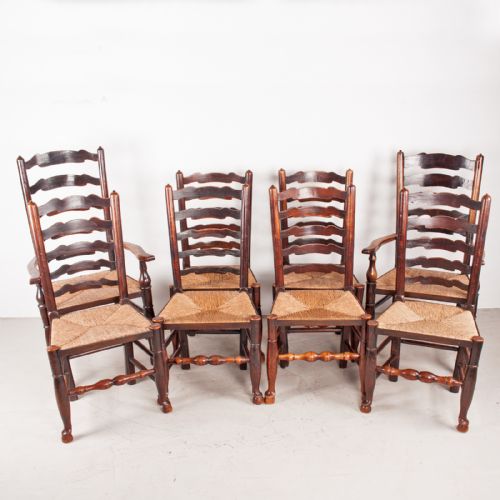


Farmhouse Dining Carver Chair
A farmhouse dining carver chair brings robust vernacular charm and honest timber construction straight to the head of the table.
Farmhouse Dining Carver Chair
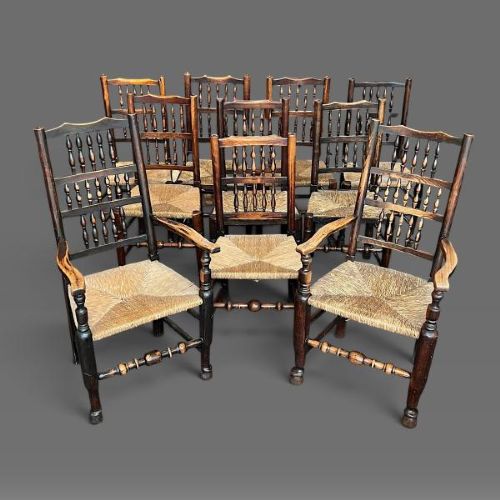
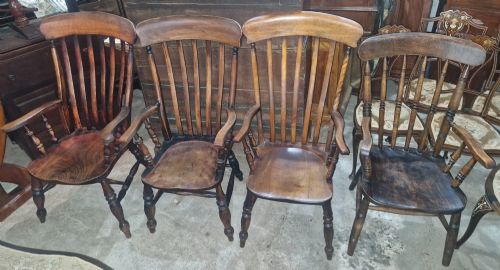
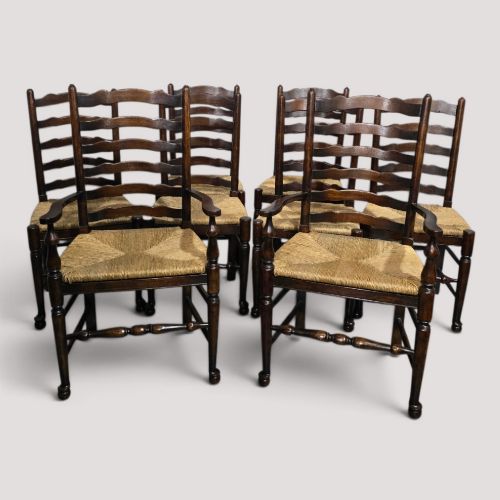
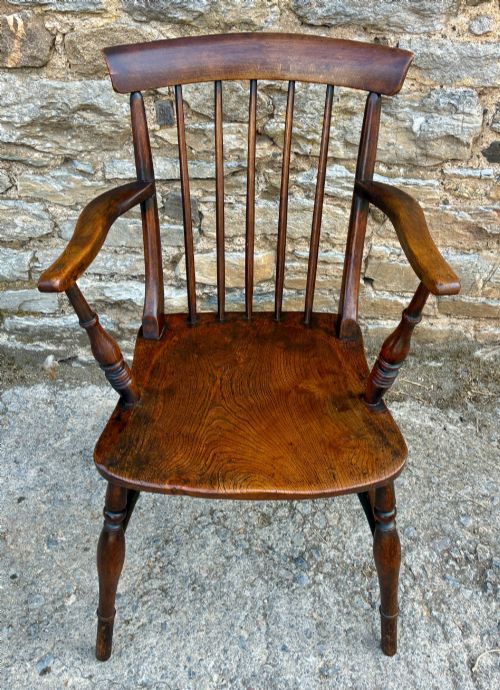
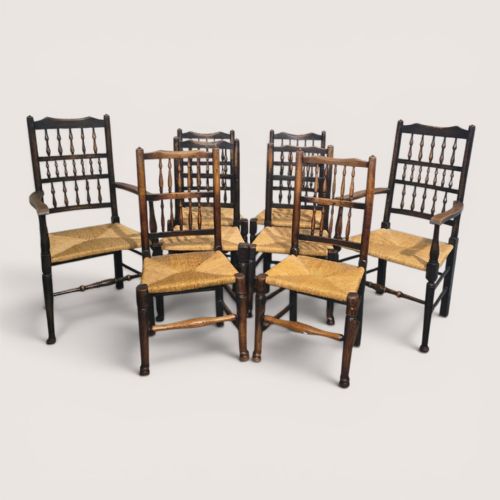
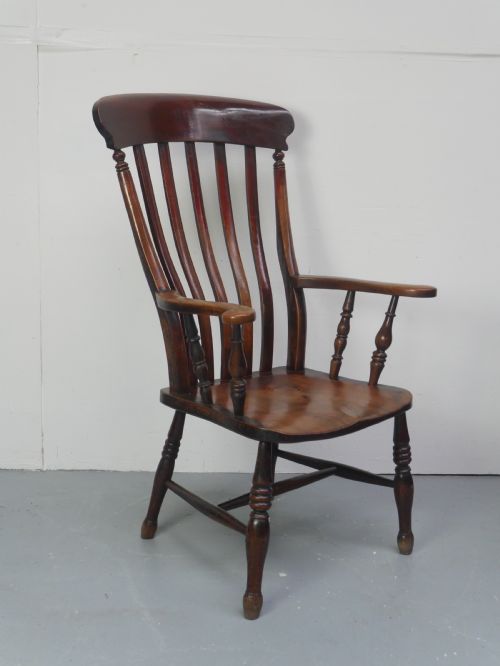
A farmhouse dining carver chair combines sturdy timber frames with supportive armrests designed for daily domestic use around the hearth and table. Buyers seeking a farmhouse dining carver chair will find examples ranging from late Victorian Windsor forms to sturdy ladder-back and spindle-back designs originating in the nineteenth and early twentieth centuries.
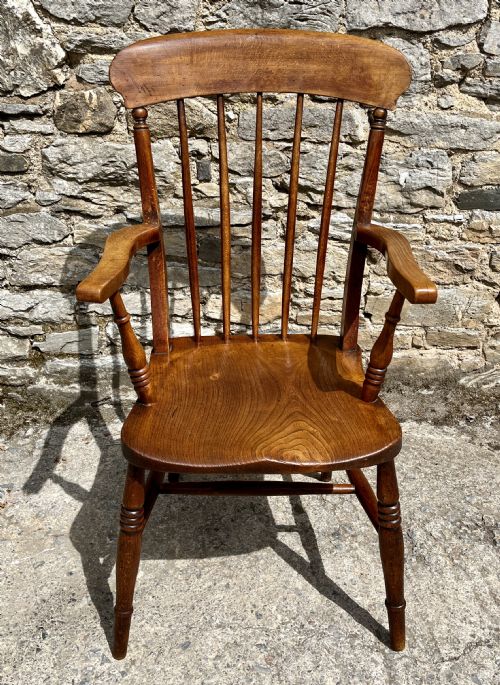
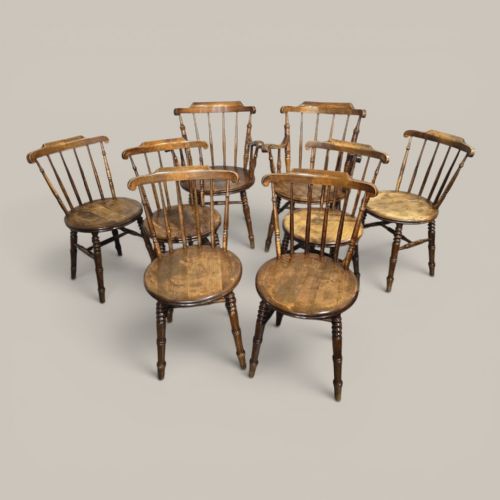
The dominant forms on this page include elm, oak, and ash armchairs featuring traditional stick-back, Windsor, and Lancashire styles. Makers utilised local timbers to build heavy, solid seating intended to withstand generations of hard labour.
Sets often pair six side chairs with two carvers, though individual armchairs also appear frequently. These pieces represent the practical heart of English country life, relying on regional vernacular traditions rather than courtly ornament.
Construction and materials
Makers built these chairs using a combination of native hardwoods, most commonly oak frames with elm seats and ash or beech spindles. Turned components and steam-bent bows provided structural integrity without unnecessary weight.
Seats were frequently shaped from solid slabs of elm or woven with rush and cane for seating comfort. Joinery relied on mortise and tenon joints alongside wedged spindles that tightened naturally as the timber dried over time.
The listings show periods spanning from 1840 through the 1930s, featuring oak, elm, ash, and rush.
Judging quality and proportion
Quality rests upon the integrity of the original timber and the survival of crisp turnings on the legs and spindles. Chairs that retain their deep patination and honest surface wear without excessive timber replacement stand firmly at the top of the range.
Subtle differences in the thickness of the armbows and the balance of the stick-backs separate standard workshop output from finer vernacular craftsmanship. The weight of the timber and the tightness of the original joints dictate how well the structure has survived decades of daily use.
The Farmhouse Dining Carver Chair Glossary
- Carver
- An armchair designed to sit at the head of a dining table, traditionally featuring supportive armrests.
- Windsor
- A chair built with a solid wooden seat into which the legs, back spindles, and bow are separately bored and wedged.
- Ladder-back
- A chair back constructed from horizontal wooden slats or rails stacked vertically between two upright posts.
- Rush seat
- A seating surface woven from dried marsh rushes, creating a durable and slightly yielding mat.
- Spindle-back
- A chair back formed from numerous slender turned wooden rods rather than solid panels or wide slats.
Farmhouse Dining Carver Chair: Frequently Asked Questions
What is a farmhouse dining carver chair?
A farmhouse dining carver chair is a sturdy wooden armchair with armrests, designed for everyday use at a country table.
These chairs were built using regional British timbers like oak, elm, and ash, following traditional vernacular styles such as Windsor or ladder-back.
How do I date an old farmhouse carver?
Dating relies on observing construction methods, timber choice, and wear patterns consistent with the nineteenth and early twentieth centuries.
Details like hand-turned spindles, pegged joints, and deep surface patination help distinguish Victorian country pieces from later revival items.
Are elm and oak common in these chairs?
Elm and oak appear frequently because makers valued their strength and local availability in English country workshops.
Elm was particularly favoured for solid saddle seats due to its resistance to splitting, while oak provided rigid frames.
Can I mix carvers with standard dining chairs?
Mixing carvers with side chairs reflects traditional country dining habits where armchairs sat at the table heads.
Harlequin sets and matched groups often combine carvers and side chairs sharing similar ladder-back or spindle-back forms.