


Vintage Rush Seat Chairs
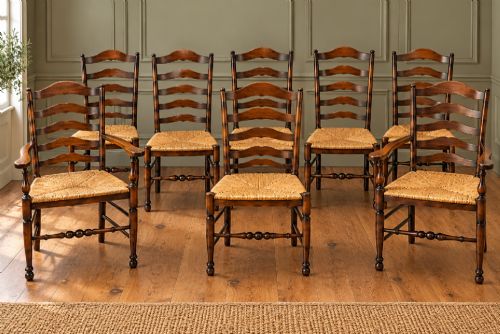
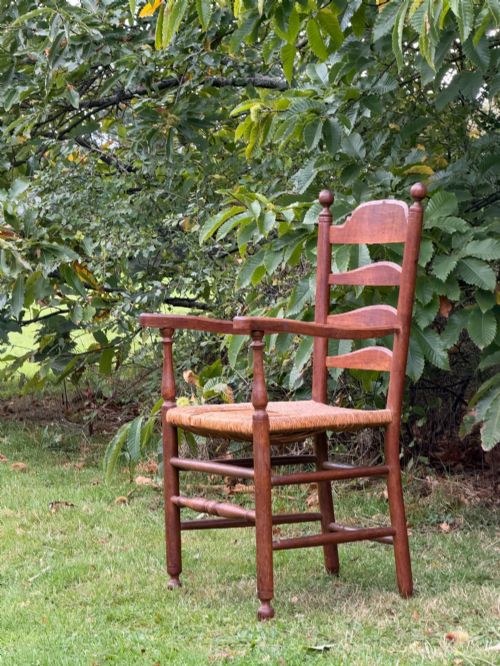
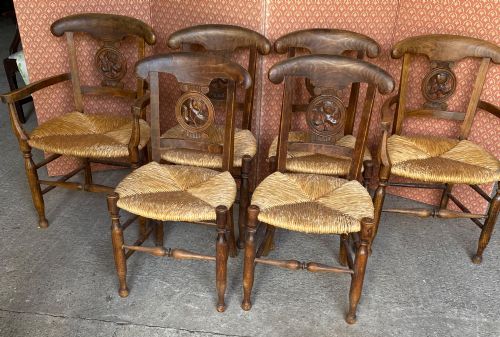
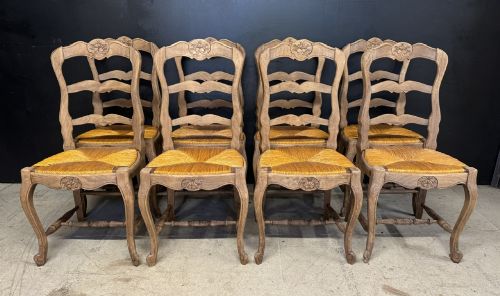
These vintage rush seat chairs combine woven natural seating with timber frames, offering enduring country character for modern dining and living spaces.
Vintage Rush Seat Chairs
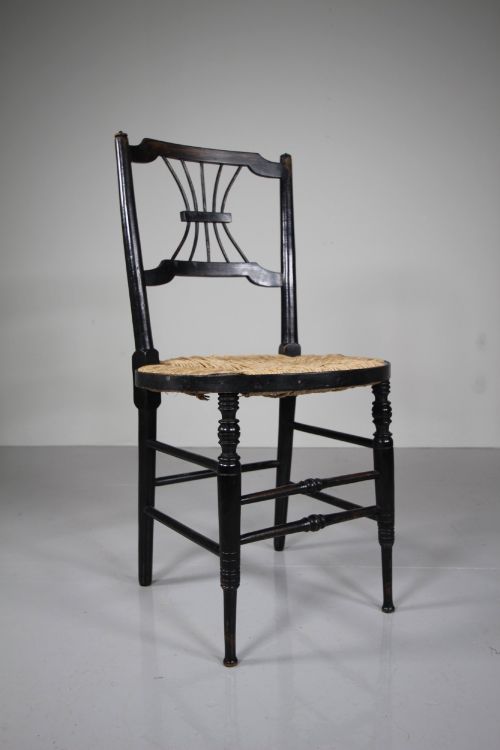
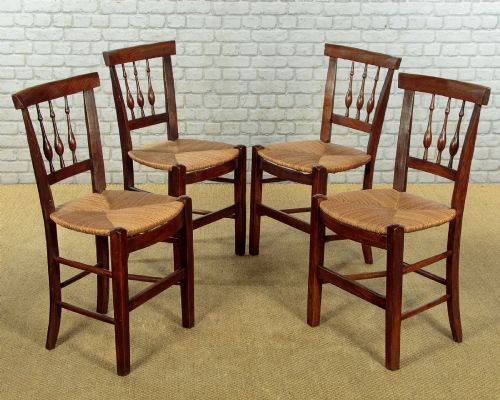
Vintage rush seat chairs encompass vernacular country seating, formal dining sets, and studio pieces spanning from the eighteenth century through the 1930s. The selection on this page relies heavily upon nineteenth-century and early twentieth-century examples, ranging from simple kitchen benches to sophisticated Arts and Crafts designs.
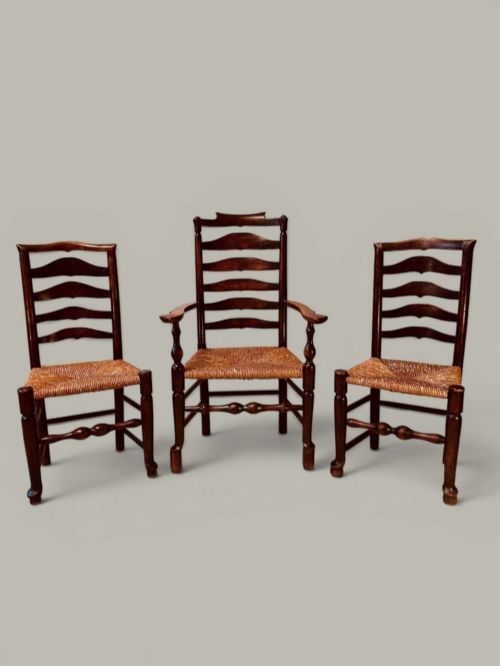
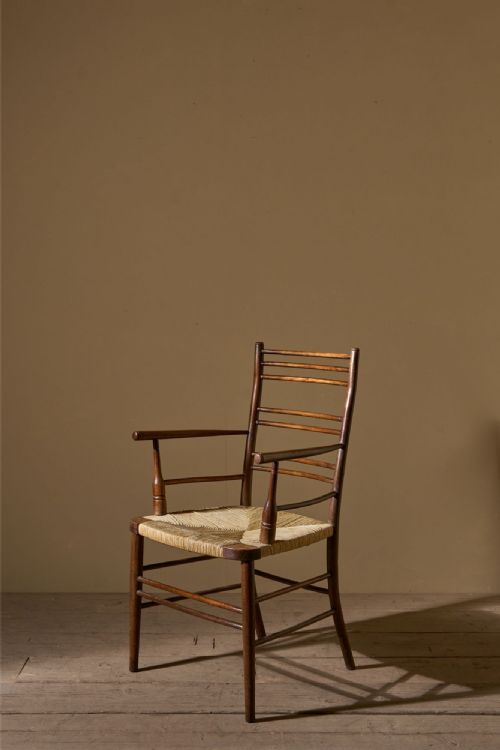
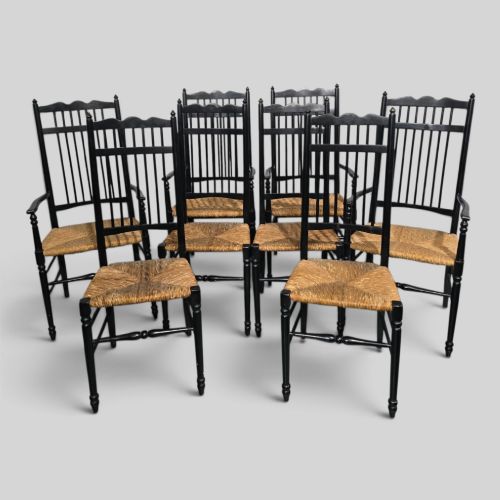
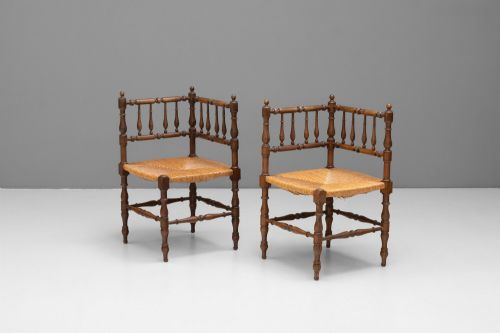
Buyers encounter distinct regional and stylistic variations, including English ladder backs, French Provincial fruitwood forms, and iconic Arts and Crafts models associated with firms like Liberty and Morris & Co. Forms extend from standard dining chairs and carvers to rocking chairs, corner chairs, and high chairs.
The enduring appeal of these seats lies in their honest construction and tactile woven rush surfaces. They suit rustic interiors and modern schemes alike, bringing historical weight and natural texture to a room.
Materials and construction
Frames are constructed from native hardwoods including oak, elm, beech, ash, fruitwood, and teak, selected for strength and local availability. Carpenters often combined timbers within a single piece, such as elm seats paired with fruitwood or ash spindles.
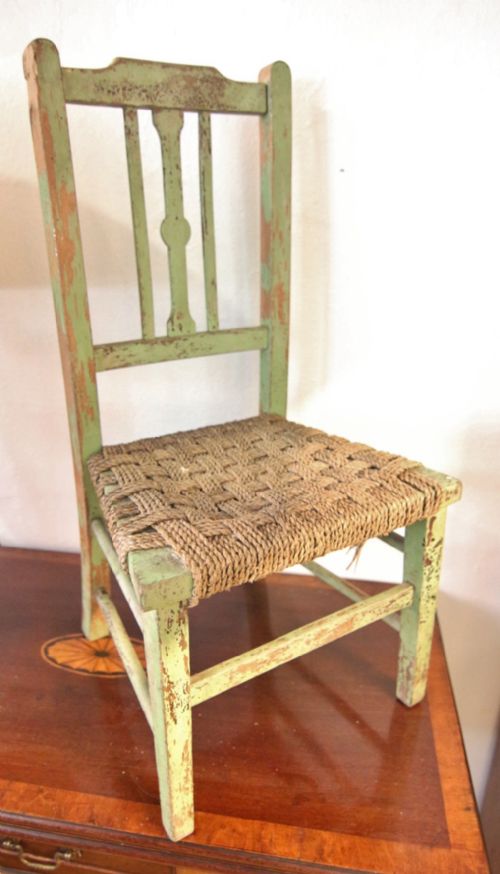
Seats are woven by hand using dried marsh grass or rush, wound tightly over wooden framing rails to create a durable, textured surface. This traditional weaving technique distributes weight evenly across the seat while maintaining natural flexibility.
Surface treatments vary from bare polished wood and golden oak finishes to original paintwork, faux bamboo turning, and later white or decorative pigments.
Vintage Rush Seat Chairs Retail Price Guide 2026
Typical asking prices for vintage rush seat chairs among the pieces listed under this phrase on Sellingantiques today, from the lower quarter to the upper quarter. They describe what is for sale here now, not the wider market.
Periods range from the 18th century through the 1950s, covering Georgian, Regency, Victorian, and Arts and Crafts eras.
Distinctions in quality
Quality rests upon the integrity of the timber frame, the tightness and material of the rush weaving, and the historical authenticity of the piece. Master makers and specific workshops achieved finer proportions, superior turning on ladder backs and spindle rails, and more robust joinery.
Original finishes and untouched surfaces elevate a piece above examples that have undergone heavy intervention or unsympathetic alterations. The tension and preservation of the woven rush seat also dictate the overall standard of the chair.
Morris and Co·Liberty and Co·Rossetti·Dicon Nance·Lawrence Neal
The Vintage Rush Seat Chairs Glossary
- Rush
- A marsh plant used for centuries to weave durable, pliable chair seats. It provides a natural texture that wears smooth over time.
- Ladder back
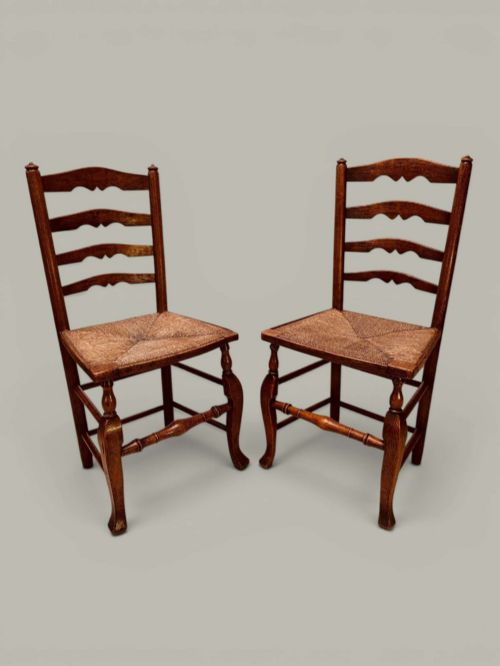
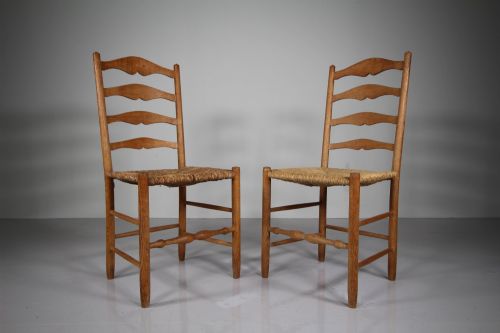
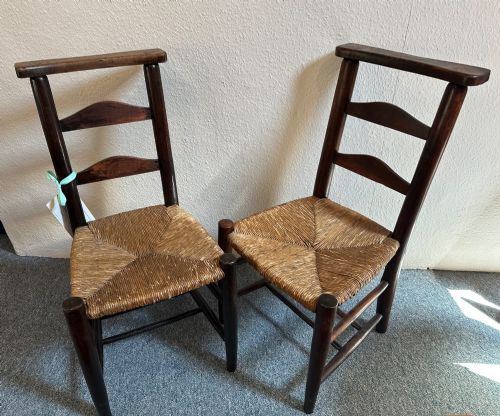
- A chair style featuring horizontal arched slats between the rear upright posts. This traditional form appears frequently in English and French country seating.
- Carver
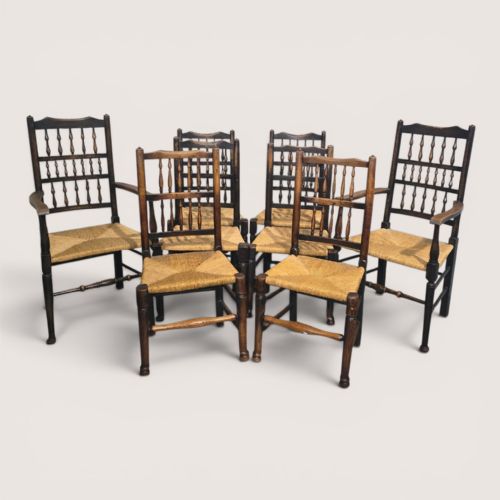
- An armchair designed to match a set of dining side chairs, typically placed at the head of a table. These pieces often feature substantial arm supports.
- Arts and Crafts
- A design movement valuing handcraftsmanship and vernacular traditions over industrial mass production. Makers in this circle produced simplified, honest wooden furniture.
- Spindle back
- A chair back constructed with numerous slender turned wooden rods. This method offers lightweight strength and structural support.
Vintage Rush Seat Chairs: Frequently Asked Questions
How do I clean a rush seat?
Maintain rush seats by dusting them gently with a soft brush or vacuuming with a low-suction attachment. Avoid applying water or cleaning solutions directly to the woven material, as moisture causes the natural fibres to rot.
For stubborn marks, wipe lightly with a barely damp cloth and dry immediately. Keeping the room humidity stable prevents the rush from becoming brittle over time.
Can broken rush seats be repaired?
Damaged or sagging rush seating can be completely re-woven by a skilled artisan using traditional materials. A professional restorer wraps new marsh grass around the original frame to restore structural integrity.
This restorative process preserves the historical frame while giving the chair another lifetime of functional use.
Are these chairs suitable for daily dining?
Most of these wooden and rush-seated chairs were built for everyday domestic utility and handle regular daily dining comfortably. Solid timber frames and tightly woven rush provide reliable support for sitting over long meals.
Placing felt pads beneath the legs helps protect hard floors and prevents unnecessary strain on the joints during movement.
How do I date an older ladder back?
Dating relies on observing tool marks, timber selection, turning profiles, and construction methods. Earlier eighteenth-century examples often feature hand-rived timbers and simpler hand-turned components, whereas Victorian and Arts and Crafts versions display more refined lathe work.
Maker stamps, historical labels, or documented provenance also assist in establishing a precise period.