



Vintage Round Gilt Mirror
A vintage round gilt mirror brings warmth and depth to a room, catching the light in a way few other wall ornaments manage.
Vintage Round Gilt Mirror
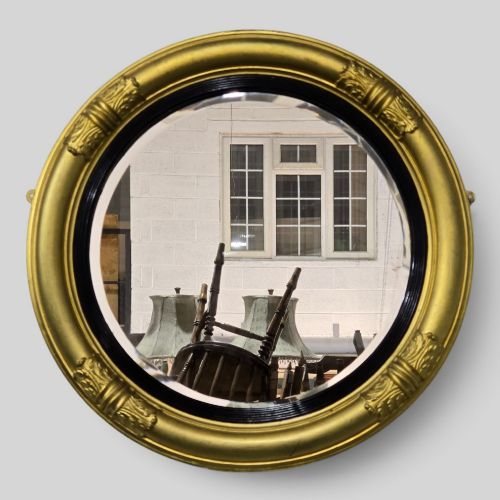
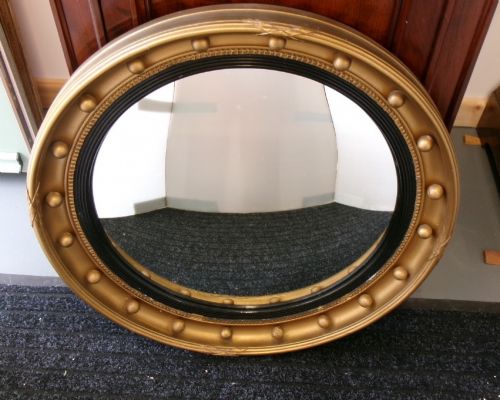
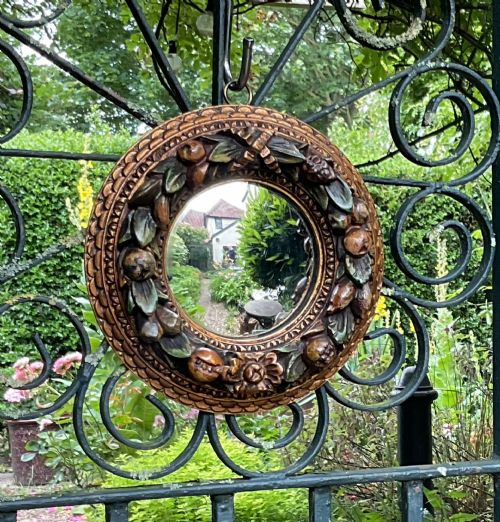
When you search for a vintage round gilt mirror, you encounter circular wall plates framed in gold leaf, gesso, or giltwood, often drawing on Regency or Victorian designs. These pieces range from small convex hall mirrors to large circular frames intended as focal points above mantelpieces or in reception rooms.
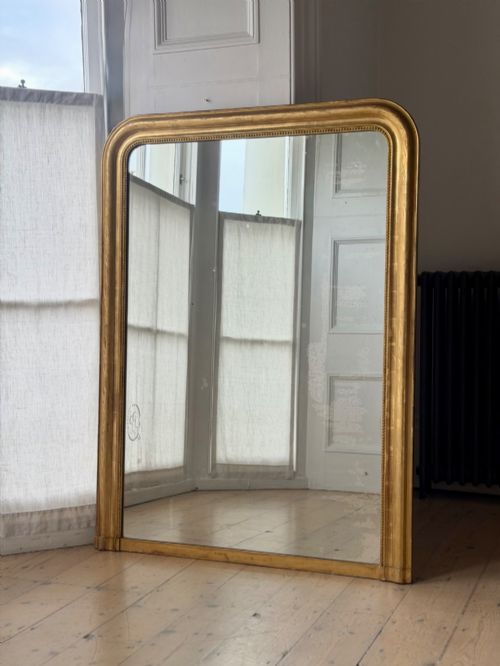
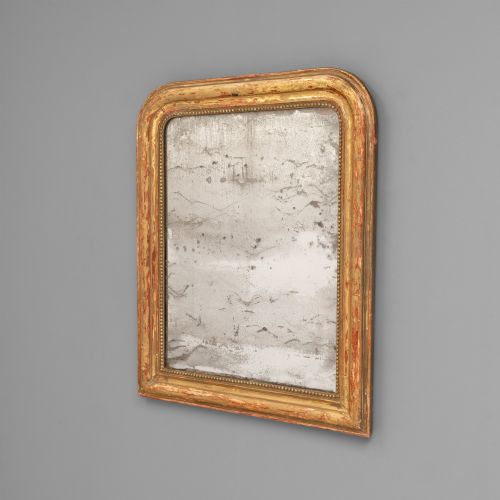
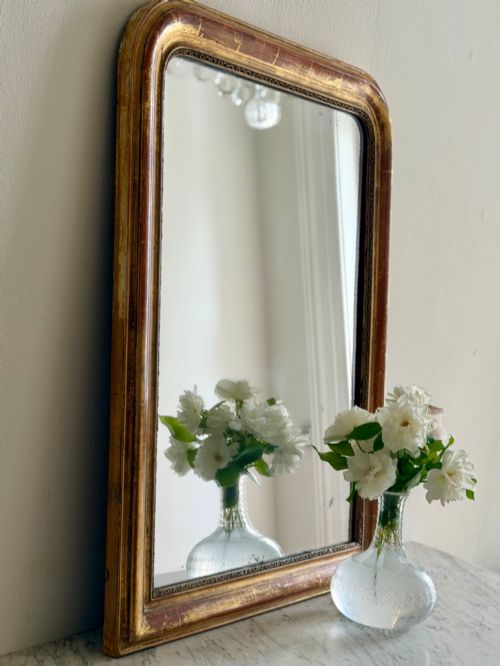
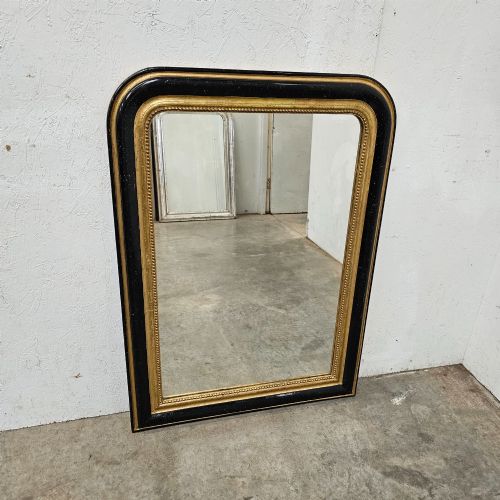
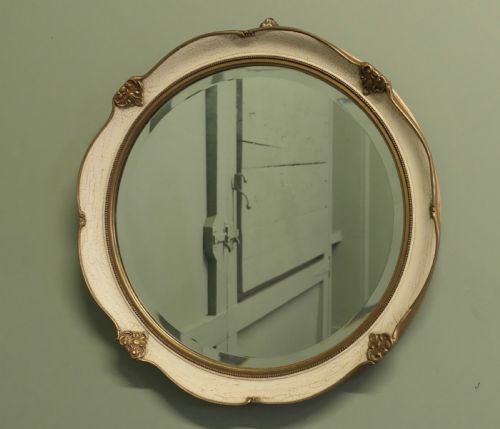
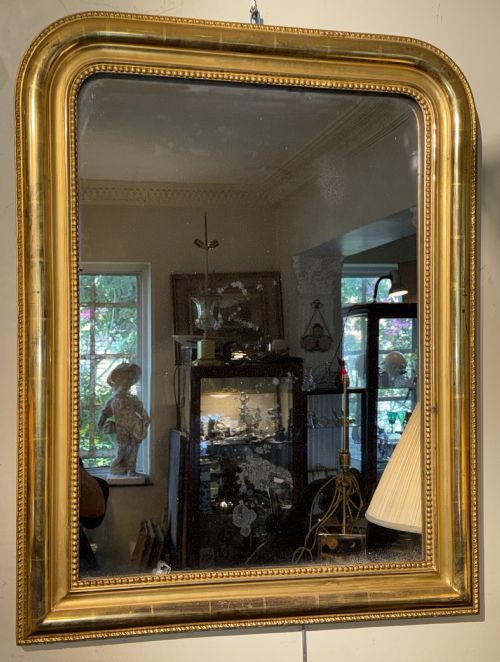
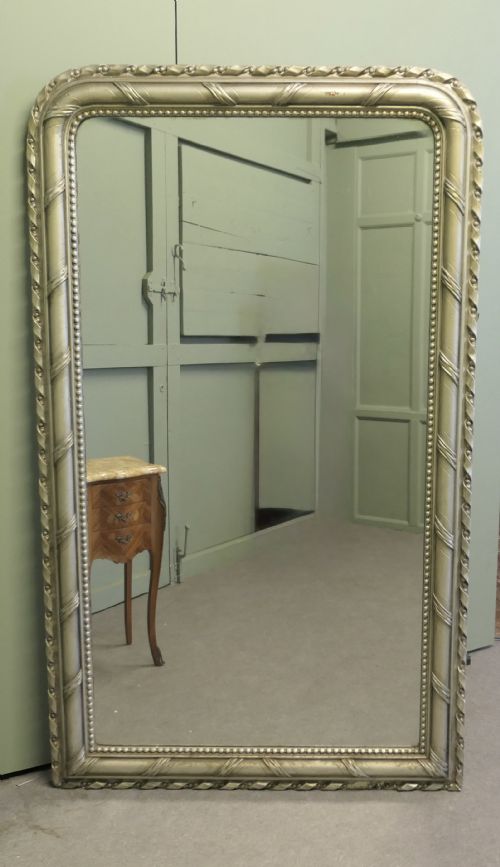
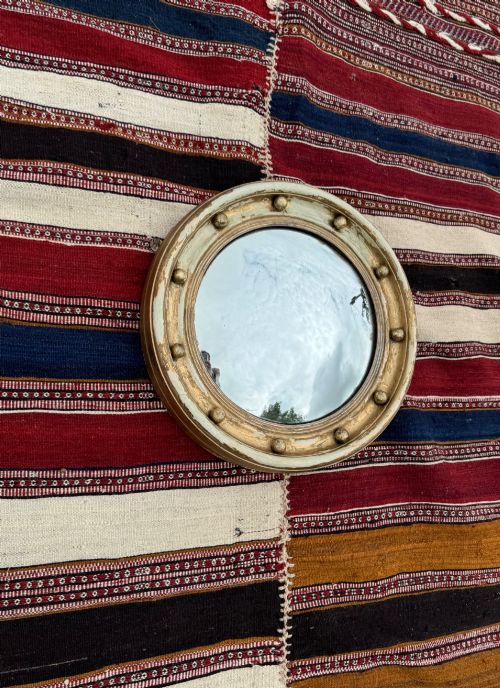
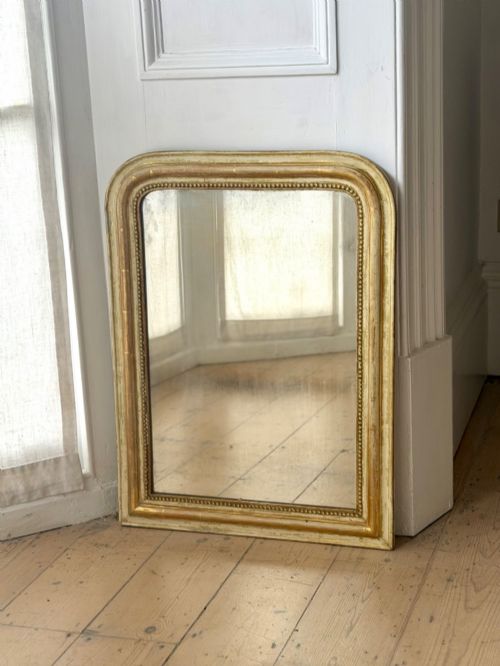
The most common examples on this page are nineteenth-century convex glasses, sometimes called portholes, alongside French Louis Philippe designs and early twentieth-century interpretations. They combine reflective glass with ornate or restrained gilded wooden frames.
Makers and craftsmen produced these circular glasses in varying scales, from modest domestic wall hangings to grand four-foot diameters suited to substantial period interiors. Each piece relies on the interplay between the curved mirror plate and the reflective metallic finish of the border.
How they were made
The foundation of these frames typically relies on carved wood, composition, or gesso, built up to allow for crisp moulding and deep relief ornamentation. Craftsmen then applied gold leaf, silver gilt, or liquid gilt to the prepared surface, often burnishing parts to create contrast.
Mirror plates in older circular pieces were frequently blown or cast, resulting in subtle distortions that catch ambient light differently from modern flat float glass. Convex plates in particular required specialised spherical glass-blowing techniques to achieve the desired wide-angle reflection.
Some nineteenth-century convex mirrors feature a small eagle perched on top, watching over the room with stern Victorian vigilance.
What varies in quality
Quality in these pieces rests primarily on the depth of the carving and the integrity of the original gilded surface. Finer examples display hand-carved wooden details or meticulously layered gesso rather than heavy, uniform composition mouldings.
The preservation of the original mercury or silvered glass plate also influences the standing of a piece. Age spots and foxing add character, but the crispness of the frame's gilding ultimately separates standard decorative items from masterworks.
The Vintage Round Gilt Mirror Glossary
- Convex mirror
- A circular glass curved outward to provide a wide, panoramic reflection of the room. These were often designed to help staff monitor large dining spaces discreetly.
- Gesso
- A plaster-like mixture applied to wood frames as a base for gilding. It allows craftsmen to carve intricate decorative motifs before applying gold leaf.
- Giltwood
- Timber that has been coated with gold leaf or metallic powder. It forms the primary structural and visual medium for most traditional frames.
- Louis Philippe
- A nineteenth-century French style characterised by clean, understated lines and gentle rounded upper corners. It offers a softer alternative to heavily ornate baroque designs.
- Regency
- An English design period spanning the early nineteenth century known for classical revivalism. Frames from this era often incorporate ball-bearing friezes and eagle crests.
Vintage Round Gilt Mirror: Frequently Asked Questions
Where should I hang a round gilt mirror?
These pieces work well centred above a fireplace mantelpiece, in a hallway to bounce natural light, or paired with symmetrical furniture arrangements.
Because circular frames draw the eye naturally, they anchor a wall space effectively when hung at eye level.
How do I clean a vintage gilt frame?
Dust the surface gently using a soft, dry ostrich feather duster or a very soft artist brush.
Avoid using water, chemical sprays, or abrasive cloths, as these can strip the delicate gold leaf or damage the underlying gesso.
Why do some mirrors look warped?
Convex glass is intentionally curved outward to capture a wide-angle view of the entire interior space.
This optical effect is an intentional design feature of nineteenth-century porthole and girandole mirrors rather than a manufacturing defect.
How do I date a gilt mirror?
Examine the construction methods of the wooden backboards, the type of screws or fixings used, and the composition of the frame.
Hand-applied gesso and traditional gold leafing techniques generally point towards nineteenth-century or earlier craftsmanship.