
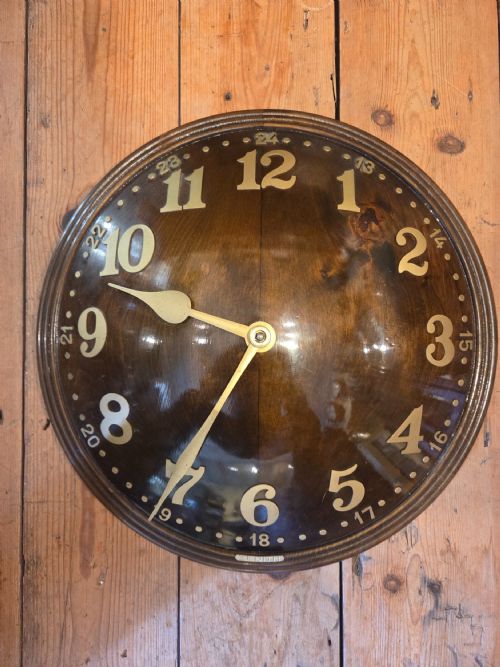
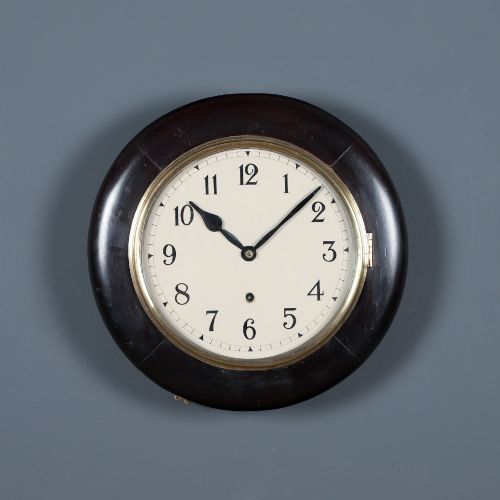
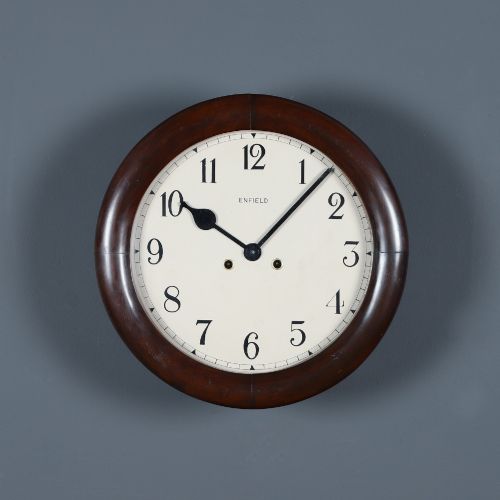
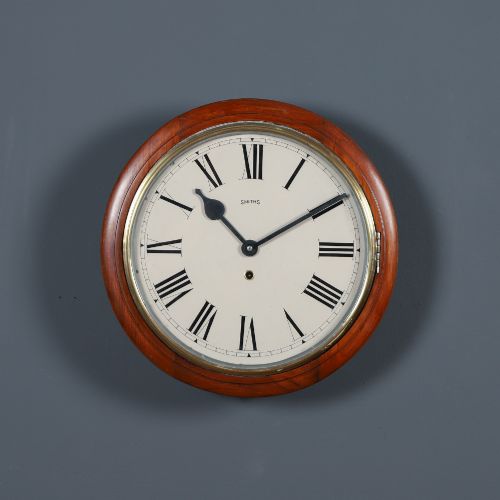
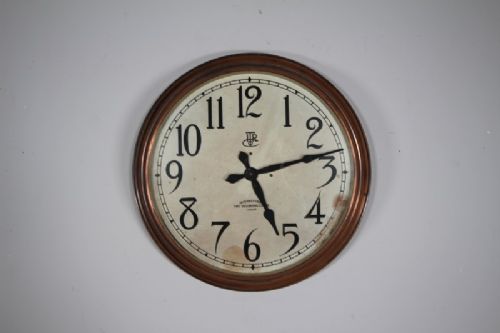
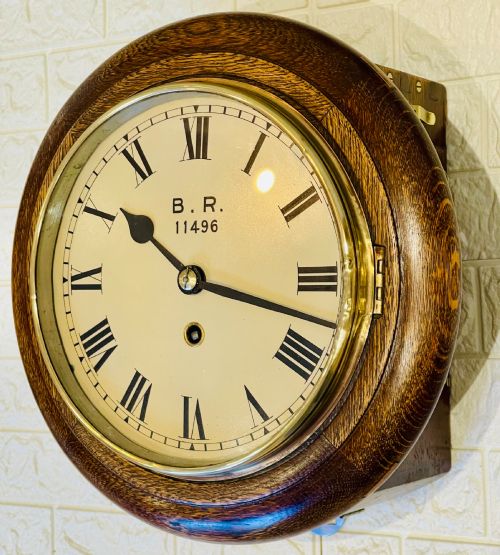
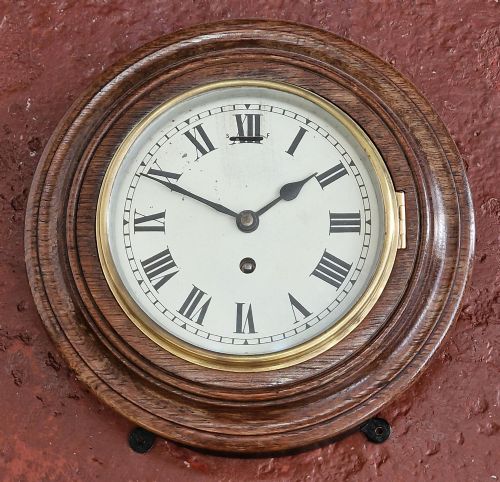
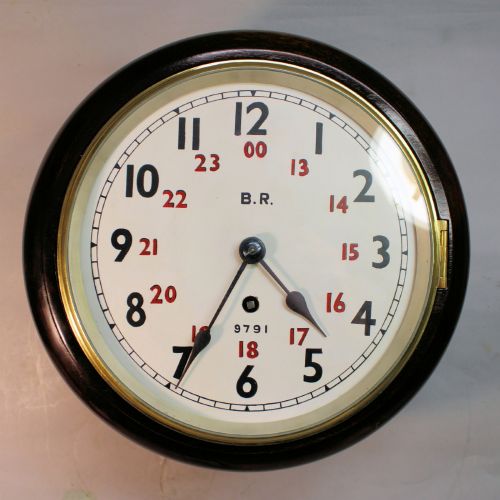
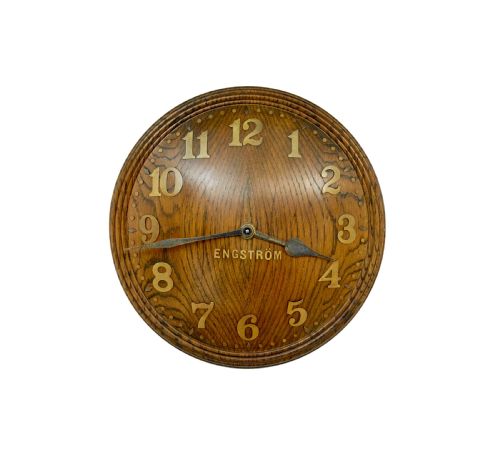


Vintage Round Clock
A vintage round clock brings utilitarian precision into a domestic space, offering the honest proportions of railway stations and offices past.
Vintage Round Clock
A vintage round clock typically takes the form of a dial wall clock, mantel clock, or desk timepiece designed for utility in public spaces, transport hubs, and offices. When searching for a vintage round clock, buyers encounter robust timekeepers spanning from the Victorian era through the mid-20th century.
The selections on this page concentrate heavily on circular dial configurations housed in timber surrounds, ranging from large railway station markers to compact desk instruments. Pieces originate from British, Swiss, French, and Japanese makers, reflecting diverse functional contexts from municipal buildings to military operations.
Forms include single fusee movements mounted in mahogany or oak cases, striking school clocks, and Art Deco mirrored designs. Buyers find both simple timepieces and complex chiming examples that retain their original architectural presence.
How They Were Made
Casework relies heavily on solid timber species such as mahogany, oak, and walnut, shaped into circular bezels and mounting blocks. Metal components incorporate brass, iron, and chrome, providing durable structures for mechanical movements housed behind protective glass faces.
Dial faces utilise painted enamel, paper on metal, or convex glass constructions designed for legibility in public environments. Movements range from fusee mechanisms to 8-day jewelled desk calibres, constructed by specialist horologists to maintain consistent tension and accuracy.
Listings feature periods spanning from the 19th century through the 1960s, utilising mahogany, oak, brass, and glass.
What Varies in Quality
Quality reveals itself in the crispness of the dial lettering, the integrity of the timber case joinery, and the refinement of the interior movement. Higher-tier examples display signed dials from established retailers or railway companies, alongside sophisticated fusee mechanisms that demonstrate superior mechanical execution.
Lower tiers often show replacement parts, heavy dial repainting, or generic movements that lack the specific provenance of verified railway or institutional service. The weight of the bezel, the clarity of the glass, and the depth of the carved timber surround separate utilitarian factory issues from luxury private pieces.
Smiths·Enfield·Zenith·Imhof·John Walker·Van Cleef Arpels·Anglo Swiss Watch Co·Balbiani Brookley·Payne of Tunbridge Wells·Palmer Co
The Vintage Round Clock Glossary
- Fusee
- A conical pulley used in clock movements to maintain even tension on the chain as the mainspring unwinds. This mechanism ensures consistent timekeeping throughout the power reserve.
- Dial
- The face of the clock where the hours and minutes are displayed. On these pieces, dials frequently feature Roman or Arabic numerals behind protective glass.
- Bezel
- The ring of brass, wood, or metal that holds the glass door or cover over the clock face. It often hinges open to allow hand-setting and winding.
- Chiming
- An acoustic function that sounds on the hours or quarters to mark the passage of time. These mechanisms use gongs or bells to produce the audible tone.
- Regulator
- A precision timekeeper designed for high accuracy and used as a standard to check other clocks. They often feature extended pendulum drops and clean dial layouts.
Vintage Round Clock: Frequently Asked Questions
How do I wind a fusee wall clock?
Insert the winding key into the dial aperture and turn it gently clockwise until resistance indicates the mainspring is fully tensioned. Care should be taken not to overwind older mechanisms.
Ensure the pendulum is hung securely on its suspension spring before setting the time by moving the minute hand forward.
Where were railway station clocks displayed?
These clocks hung prominently in booking halls, platform offices, and signal boxes to coordinate train movements and passenger schedules. Their clear circular dials ensured legibility from a distance.
Many bear specific company lettering or station names on the dial face, recording their operational history.
How do I date a wooden wall clock?
Examine the construction methods of the timber case, the fixing screws, and the style of the dial numerals. Victorian and Edwardian examples often feature heavy mahogany surrounds and fusee movements.
Later mid-century pieces shift toward oak, chrome, or mirror glass frames reflecting Art Deco and modernist design influences.
Are these clocks suitable for quiet rooms?
Mechanical clocks produce a steady ticking sound and, in some instances, striking or chiming noises on the hour. Models equipped with a simple timepiece movement generate the quietest operation.
Buyers sensitive to ambient noise should check whether the specific piece includes a chiming or striking train before placement.