



1930s Wall Clock
A 1930s wall clock brings dependable architectural presence to a room through geometric form and honest period materials.
1930s Wall Clock
A 1930s wall clock encompasses a range of timepieces designed during an era of significant stylistic shift towards functional modernity. Buyers searching this phrase look for pieces that combine practical timekeeping with the distinctive geometry of the period.
The most common examples on this page reflect the dominant Art Deco aesthetic alongside utilitarian industrial designs. These pieces range from domestic striking clocks in rich timber cases to specialised military and institutional dials.
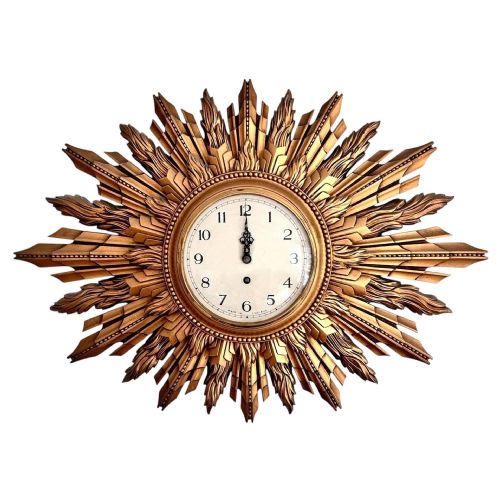
Forms vary from circular frameless mirror designs and octagonal timber frames to sunburst shapes and heavy metal bezels. Each type serves a distinct interior function, whether as a domestic focal point or a functional workspace timepiece.
How they were made
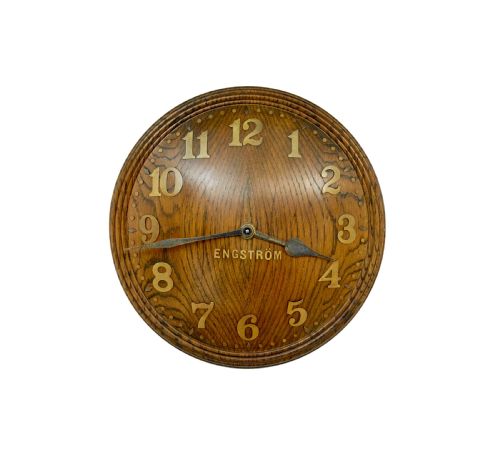
Cases utilise a combination of traditional cabinet timbers and modern industrial materials. Oak and walnut provide rich grain and warmth, whilst chrome, brass, steel, and glass introduce clean metallic lines and reflective surfaces.
Movements span mechanical eight-day mechanisms, fusee movements, and early electric or battery systems. Dial construction involves painted metal, glass covers, and moulded synthetic materials like bakelite depending on the intended commercial market.
Some hospital clocks quietly kept time over decades of clinical rounds before finding retirement on a domestic wall.
What varies in quality
Quality separates mass-produced utility items from bespoke or branded pieces through the crispness of case construction and the finish of the dial. Superior examples display careful timber selection, precise metalwork, and original signed movements.
The integrity of the dial and the preservation of original hands and bezels dictate the overall standard. Pieces retaining their original mechanical systems or specific maker markings hold greater interest than heavily altered examples.
Smiths·Zenith·Vedette·F W Elliott
The 1930s Wall Clock Glossary
- Art Deco
- A design style characterised by sleek geometric shapes, streamlined forms, and modern industrial materials. It dominates the decorative arts of the interwar period.
- Fusee movement
- A mechanical clock drive incorporating a conical pulley to ensure even tension as the mainspring unwinds. This mechanism improves timekeeping accuracy across the power reserve.
- Bakelite
- An early synthetic thermosetting plastic moulded into durable casings and bezels. It offers a smooth finish typical of interwar electrical and domestic goods.
- Striking clock
- A timepiece that chimes the hours or fractions thereof using gongs or bells. These movements require additional gear trains separate from the timekeeping mechanism.
- Dial
- The visible face of the clock bearing the numerals and markers. These range from simple painted metal circles to complex mirrored and luminous configurations.
1930s Wall Clock: Frequently Asked Questions
How do I wind an eight day clock?
An eight day clock requires winding approximately once a week using a matching key inserted into the dial holes. Care must be taken not to overwind the mainspring.
Maintaining a regular winding schedule helps preserve the tension and accuracy of the mechanical movement over time.
Are these clocks suitable for daily use?
Many mechanical and electric models function reliably for daily timekeeping when properly serviced. Some examples retain their original movements while others utilise modern battery conversions.
Placing the clock away from excessive moisture and vibration ensures stable operation in a modern interior.
What is a fusee movement?
A fusee movement uses a conical pulley connected to the mainspring by a chain or cord. This clever mechanism equalises the force delivered to the gear train as the spring winds down.
It represents a higher standard of clockmaking precision frequently found in military and high-grade timepieces.
How do I identify an Art Deco clock?
Art Deco clocks feature characteristic geometric symmetry, stepped cases, and contrasting materials like chrome against dark walnut or golden oak. Numerals often employ stylised sans-serif typography.
These design cues reflect the modernist architecture and industrial progress of the interwar decades.