
Vintage Rosewood Side Table
A vintage rosewood side table brings rich timber grain and compact utility to a room, appearing in forms from occasional tables to nests and work tables across multiple periods.
Vintage Rosewood Side Table
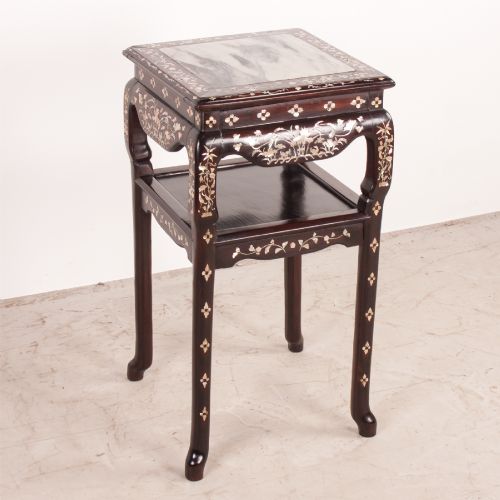
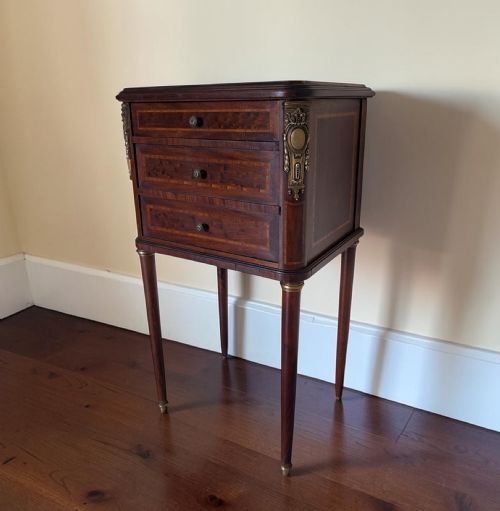
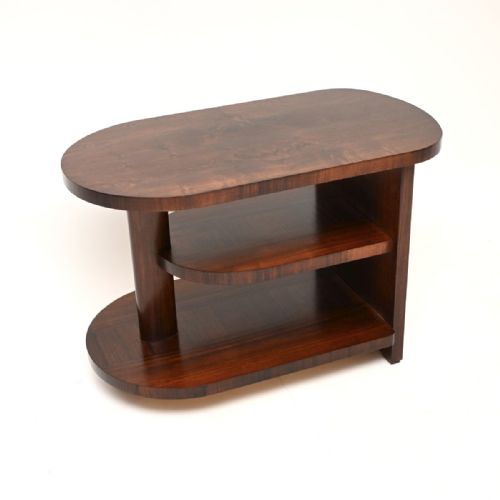
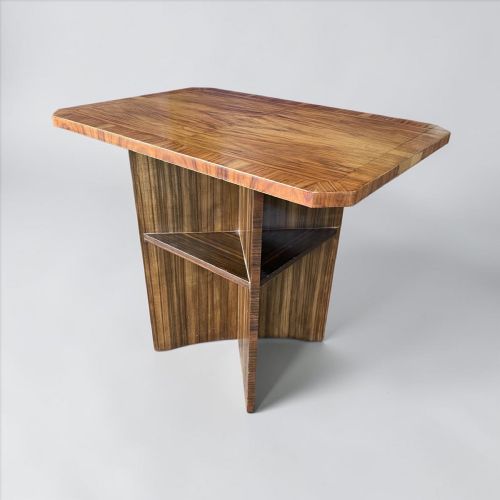
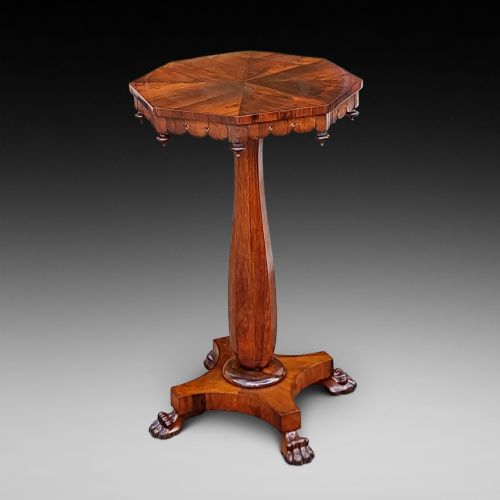
When you search for a vintage rosewood side table, you encounter a diverse group of compact furniture designed for daily utility and decorative display. The selection spans the nineteenth century, the Edwardian era, and the art deco period, taking forms such as occasional tables, coffee tables, bedside cabinets, and nests of tables.
The material palette is anchored by rosewood, often accompanied by exotic hardwoods, satinwood, and mahogany. Many pieces reflect international influences, particularly Anglo-Indian and Chinese designs, alongside traditional European styles including Regency, Victorian, and Louis XV revival.
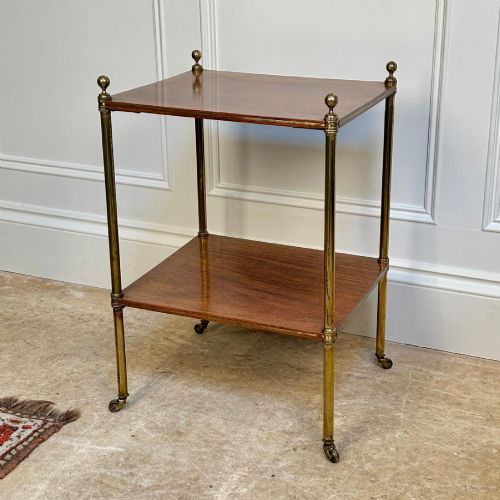
The most common formats on this page include occasional tables, work tables with compartmentalised interiors, and multi-tiered etageres. Buyers select these tables for their manageable proportions and deep timber tones, which integrate readily into contemporary and traditional interiors.
How they were made
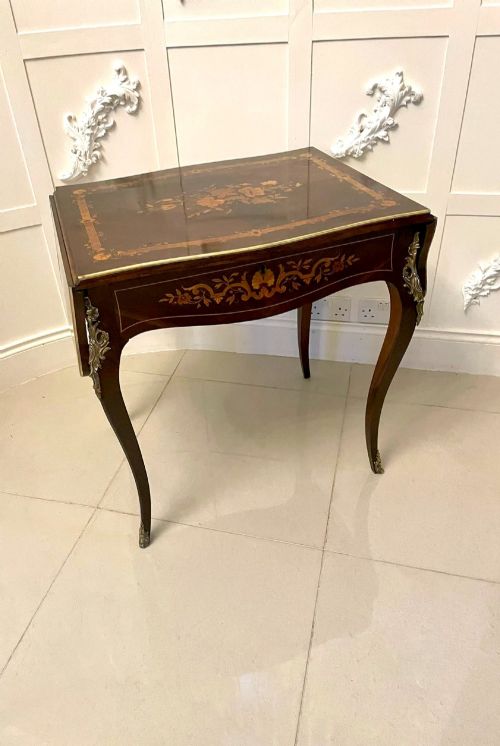
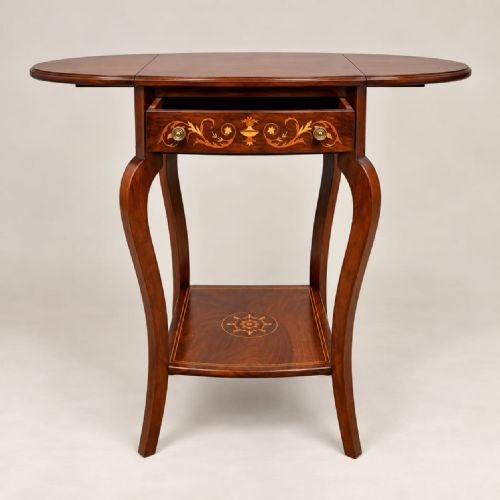
Cabinet makers utilised dense rosewood and exotic hardwoods for foundational structures and tabletops, frequently applying marquetry inlays of satinwood and other contrasting timbers. Brass mounts, handles, and stringing provide structural reinforcement and linear detail on many examples.
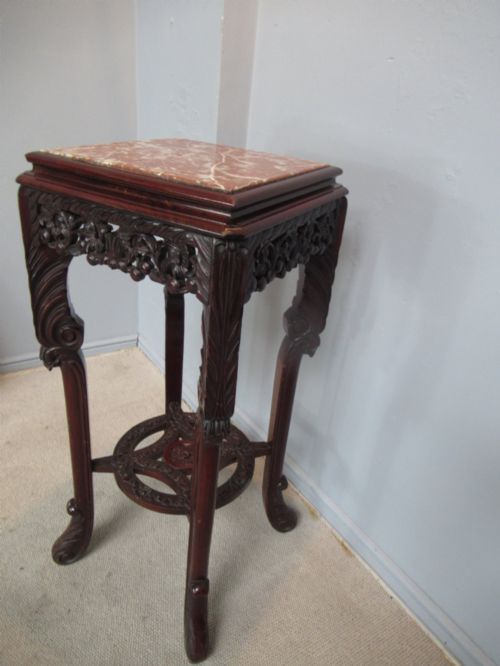
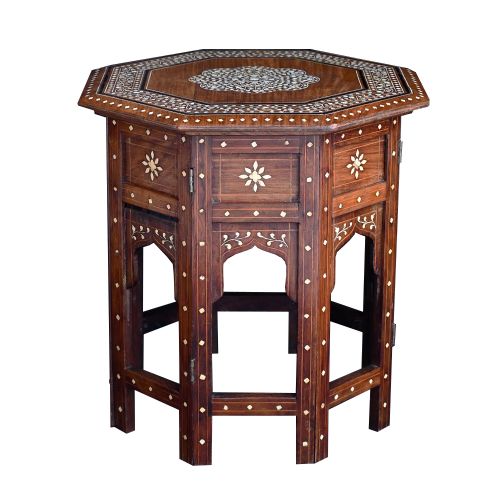
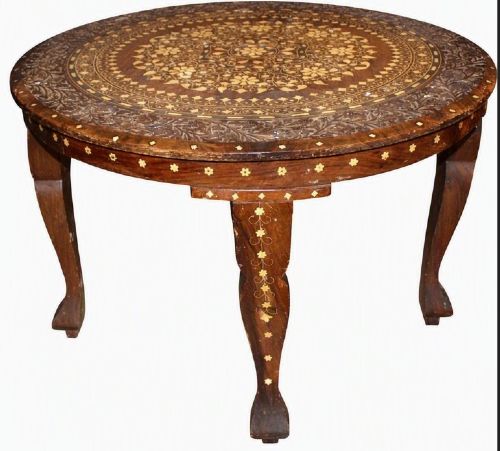
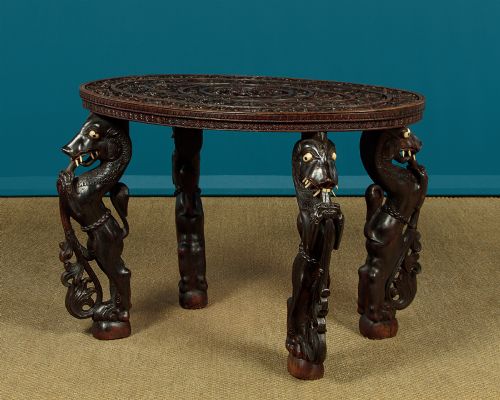
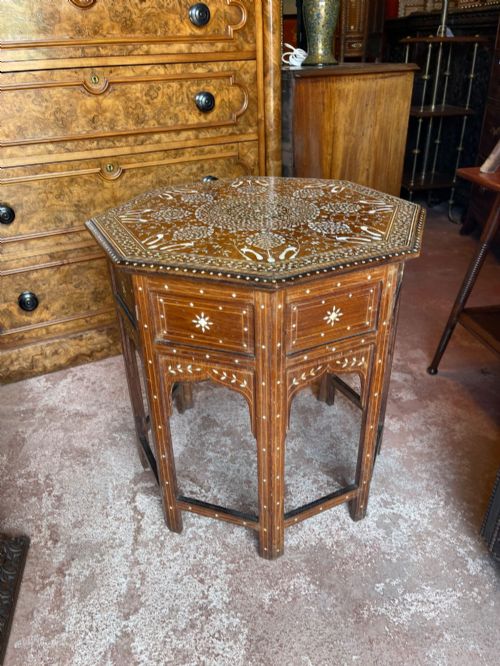
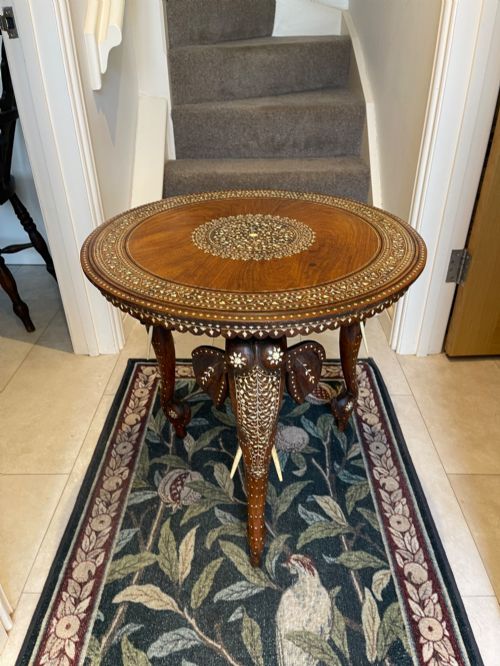
Surface ornamentation often incorporates intricate carving, bone inlay, mother of pearl, and marble inserts. These decorative techniques appear extensively on Anglo-Indian pieces from Hoshiarpur and on Chinese jardiniere stands, combining carpentry with traditional craft traditions.
Several tables feature hidden chess boards and specialised elephant motifs, combining social gaming with exotic nineteenth-century woodcarving.
What varies in quality
Quality in these tables is determined by the precision of the joinery and the selection of the timber grain. Superior examples exhibit tightly fitted marquetry, stable drop leaves, and crisp, deep carving that retains sharp definition across intricate floral or geometric patterns.
The integrity of secondary materials, such as well-fitted marble tops, securely pinned bone and mother of pearl inlays, and original brass hardware, separates standard production pieces from finer workshop outputs.
Liberty & Co·Émile Gallé·Mallett
The Vintage Rosewood Side Table Glossary
- Quartetto tables
- A set of four graduating nesting tables designed to slide neatly beneath one another. This form gained popularity during the Regency period.
- Etagere
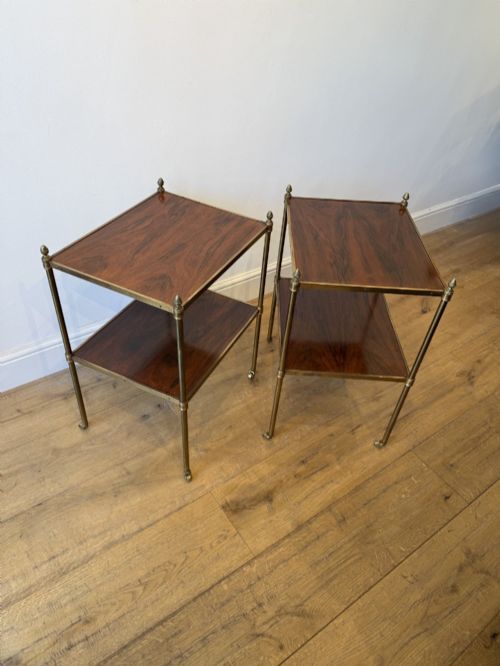
- A set of open shelves supported by columns or pillars, used for displaying small objects. These pieces often feature multiple tiers and delicate brass or timber framing.
- Marquetry
- The art of applying pieces of veneer to a structure to form decorative patterns and pictures. Craftsmen utilise varied timber colours to create contrast.
- Work table
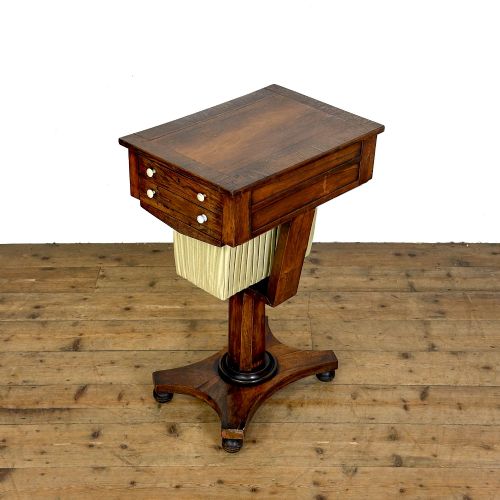
- A specialised table containing compartments, drawers, or a fabric bag for sewing and needlework. Victorian examples frequently incorporate trumpet-shaped pedestals.
- Jardiniere stand
- A tall, sturdy table designed specifically to hold a heavy plant pot or flower bowl. These often feature inset marble tops to protect the timber from moisture.
Vintage Rosewood Side Table: Frequently Asked Questions
What is a quartetto table set?
A quartetto table set consists of four graduating tables designed to nest together. They save space when stored and can be positioned around a room when entertaining.
Originating largely in the Regency period, these nests combine mobility with practical tabletop surface area.
How do I identify an Anglo-Indian table?
Anglo-Indian tables are distinguished by dense, intricate surface carvings and extensive use of bone or mother of pearl inlay. They frequently feature geometric or leaf motifs across octagonal or circular tops.
Many of these pieces originated from production centres such as Hoshiarpur during the nineteenth and early twentieth centuries.
Where were work tables used?
Work tables were placed in sitting rooms and parlours to provide a dedicated workspace for needlework and small crafts. The internal compartments kept threads, needles, and fabrics organised.
Victorian examples often feature hinged lids opening to fitted trays or suspended fabric bags.
What is an etagere?
An etagere is a freestanding piece of furniture comprising multiple open shelves for display. They were utilised to hold ornaments, books, and small decorative items.
Edwardian and Victorian versions often incorporate rosewood frames with brass galleries and slender supports.