





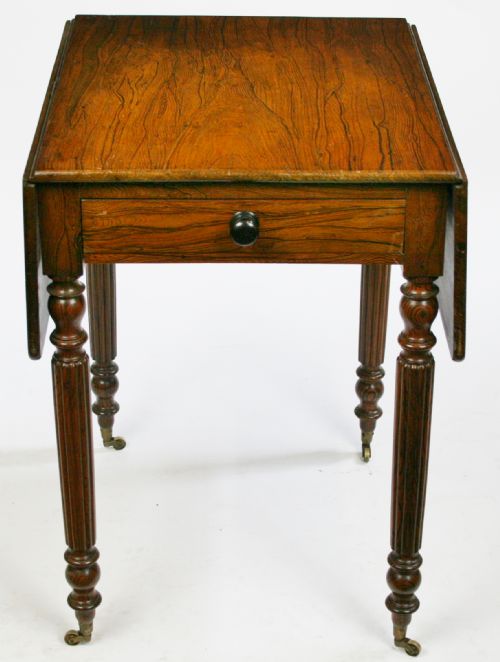


Regency Rosewood Pembroke Table
A regency rosewood pembroke table brings rich timber grain and clever drop leaves into compact spaces.
Regency Rosewood Pembroke Table
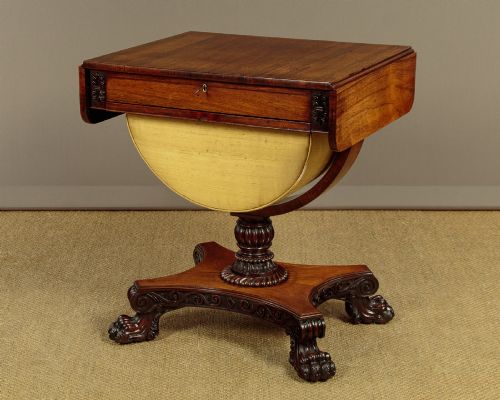
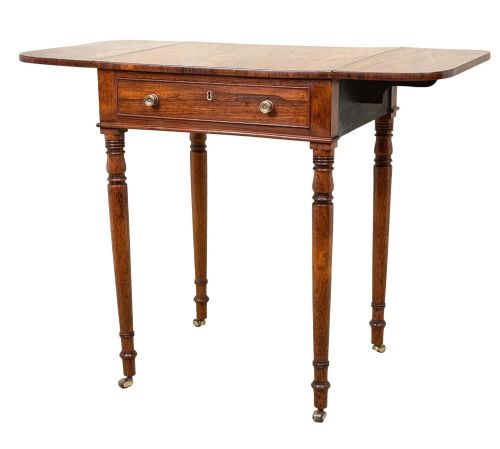
When you search for a regency rosewood pembroke table, you encounter versatile drop-leaf tables designed for flexible living spaces. These pieces combine compact proportions with extendable flaps supported by folding brackets.
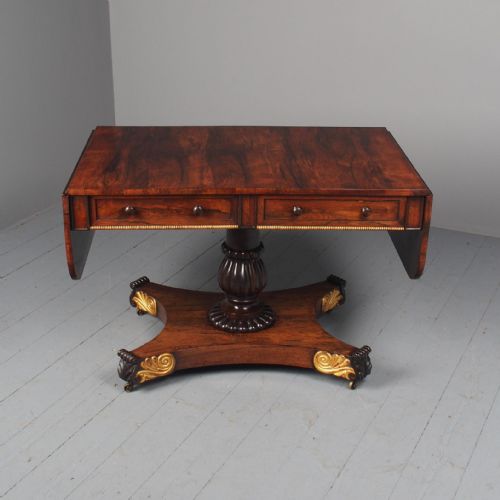
The examples on this page span the Regency period through to Early Victorian times, alongside Victorian and William IV pieces. Alongside true pembroke tables, the selection includes related forms like sofa tables, side tables, and occasional tables.
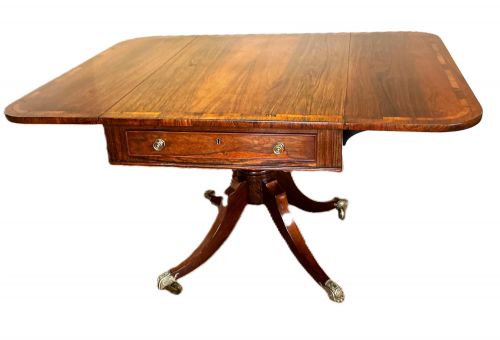
Rosewood dominates the surface appearance, occasionally accompanied by simulated rosewood, mahogany, and contrasting wood inlay. Brass mounts and silk components appear within the listings alongside standard wooden construction.
How they were made
Cabinet makers utilised dense rosewood timber, frequently applied as a veneer over secondary woods to create rich grain patterns across the top and drop leaves. Selected pieces incorporate wood inlay and brass details to accent the structure.
Drop leaves rely on hinged brackets or pull-out supports that swing out from the frieze to hold the flaps level. Pedestal columns and turned legs provide the underframe support across these designs.
Regency Rosewood Pembroke Table Retail Price Guide 2026
Typical asking prices for regency rosewood pembroke table among the pieces listed under this phrase on Sellingantiques today, from the lower quarter to the upper quarter. They describe what is for sale here now, not the wider market.
Listings span the Regency period, William IV, and Early Victorian eras, utilising rosewood, mahogany, and brass.
What varies in quality
Quality rests in the choice of timber figure and the precision of the veneer work across the top and drop leaves. Rich, well-matched grain patterns elevate a piece above simpler surfaces.
The integration of brass inlay and the execution of turned or pedestal supports dictate the refinement of the construction. Finer examples display meticulous attention to the hinging mechanisms and drawer construction.
The Regency Rosewood Pembroke Table Glossary
- Pembroke table
- A small table featuring two hinged drop leaves on opposite sides, designed for occasional use and easy repositioning. These tables typically include one or two small drawers.
- Sofa table
- A rectangular occasional table designed to sit in front of a sofa, featuring drop leaves and often a trestle or pedestal base. They share many construction traits with pembroke tables.
- Drop leaf
- A hinged flap attached to the main top of a table that can be raised and supported to increase surface area. When lowered, it reduces the footprint of the furniture.
- Simulated rosewood
- A painted or stained finish applied to a more common timber to mimic the distinctive dark grain and colour of genuine rosewood. This technique provided the aesthetic of exotic wood at a lower cost.
- Wood inlay
- The technique of embedding contrasting pieces of wood into the surface to create decorative patterns and borders. It highlights the craftsmanship of the cabinet maker.
Regency Rosewood Pembroke Table: Frequently Asked Questions
How were pembroke tables used historically?
These tables served multiple functions in domestic interiors, acting as writing desks, work tables, or occasional tea tables. Their drop leaves allowed them to sit compactly against a wall when not in use.
Owners moved them about rooms easily to suit daily activities, making them exceptionally adaptable furniture pieces.
How do I identify the Regency period?
Regency furniture typically dates from the early nineteenth century, aligning with the British Regency era and the reign of George IV. Pieces from this time often display classical influences, elegant proportions, and fine timber veneers.
Makers utilised rosewood and mahogany extensively, frequently accented with brass inlay or giltwood details.
How do I care for rosewood furniture?
Rosewood surfaces benefit from a stable indoor environment away from direct sunlight and extreme temperature changes. Regular dusting with a soft, dry cloth preserves the finish.
Avoid placing damp items directly on the timber to protect the polished wood and delicate inlay work.