





Vintage Rosewood Etagere
These vintage rosewood etagere pieces offer open tiered shelving for display, combining decorative timber with practical multi-level storage.
Vintage Rosewood Etagere
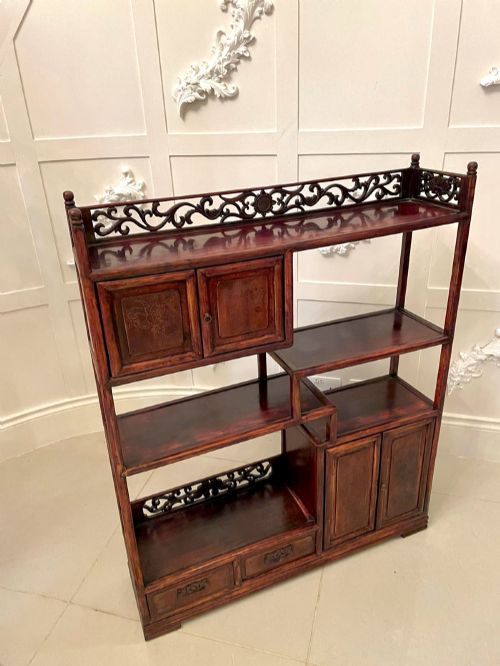
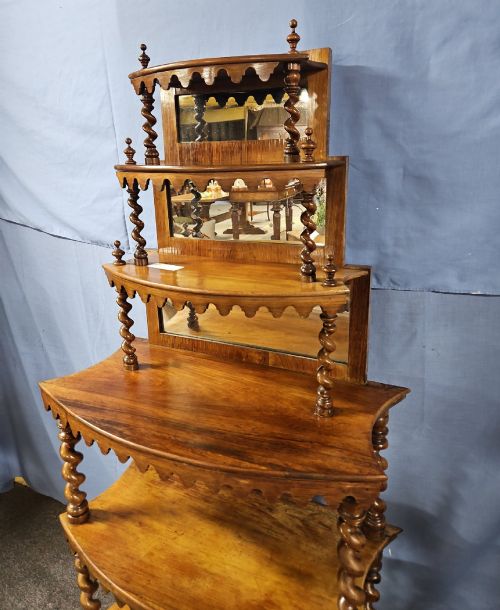
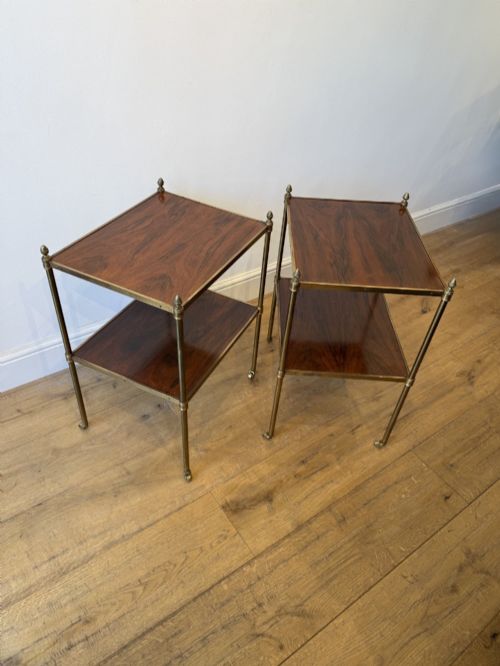
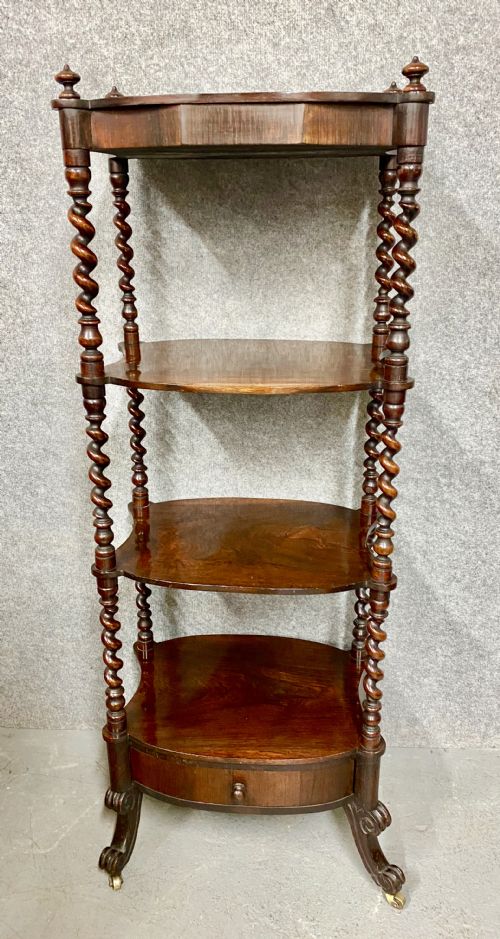
A vintage rosewood etagere is an open tiered shelving unit designed for displaying decorative objects, most frequently seen on this page in Victorian and Edwardian iterations alongside nineteenth-century examples. These items take several forms including traditional whatnots, tabletop variants, corner cabinets, and multi-tiered display shelves.
The materials and styles span periods from the regency era through to the early twentieth century, incorporating Chinese Qing style, neoclassical revival, and Napoleon III designs. Buyers encounter everything from simple two-tier tables to substantial four-tier shelving units and dumb waiters.
How they were made
Makers utilised dense rosewood as the primary timber, often framing the open tiers with brass mounts or ormolu details. Construction frequently involved delicate turning on the upright supports and structural joints designed to bear the weight of porcelain or glassware.
Surface decoration relies heavily on fruitwood inlay and satinwood inlay, contrasting sharply against the dark grain of the rosewood. Carved elements also appear on specific regional pieces such as nineteenth-century Anglo-Indian shelving units.
Vintage Rosewood Etagere Retail Price Guide 2026
Typical asking prices for vintage rosewood etagere among the pieces listed under this phrase on Sellingantiques today, from the lower quarter to the upper quarter. They describe what is for sale here now, not the wider market.
Some nineteenth-century makers built etageres sturdy enough to hold heavy porcelain yet delicate enough to look like they floated on brass legs.
What varies in quality
The standard of a vintage rosewood etagere depends upon the crispness of the inlay work and the precision of the timber joints. Pieces featuring fine brass mounts, ormolu enrichments, or intricate fruitwood and satinwood banding sit at a higher tier than plain utility examples.
Structural integrity of the tiered shelves dictates overall success, as multi-level open furniture requires rigid uprights to prevent wobble. The depth of colour in the rosewood grain and the subtlety of carved details further separate standard production from exceptional examples.
Mallett·Samson & Son London
The Vintage Rosewood Etagere Glossary
- Etagere
- A piece of furniture consisting of a set of open shelves for displaying small objects or ornaments. These tiered stands emerged in France during the eighteenth century.
- Whatnot
- A tall, open-shelved piece of furniture used for displaying ornaments or books. The term gained common usage during the Victorian period.
- Ormolu
- Gilt bronze mounted onto furniture or decorative objects. This technique provides a bright metallic contrast against dark woods.
- Inlay
- A decorative technique where contrasting materials are inserted into recessed cavities in the wood surface. Fruitwood and satinwood are typical examples seen on these pieces.
- Dumb waiter
- A multi-tiered piece of furniture historically used for holding serving dishes or items. In this context, it functions similarly to a multi-tier whatnot.
Vintage Rosewood Etagere: Frequently Asked Questions
What is an etagere used for?
An etagere provides open tiered shelving primarily designed for the display of ornaments, porcelain, and decorative small objects. The multiple levels allow owners to arrange collections vertically in principal rooms.
Historically and today, these pieces serve both a decorative and practical function in drawing rooms and parlours by keeping display items organised and visible.
What is the difference between a whatnot and an etagere?
While both terms describe open-tiered shelving units, whatnot is a traditional British designation frequently applied to Victorian multi-tier stands. Etagere often implies a French influence, sometimes incorporating more decorative framing or tabletop formats.
In practice, makers and retailers used both terms interchangeably throughout the nineteenth century to describe multi-level display furniture.
Where should I place an etagere at home?
These open shelving units suit corners, hallway spaces, or living rooms where their multi-tiered design can be viewed from multiple angles. Because the shelves are open on all sides, they work well against solid walls or as room accents.
Placing them away from direct sunlight protects the rosewood timber and any delicate fruitwood or satinwood inlay from fading over time.