
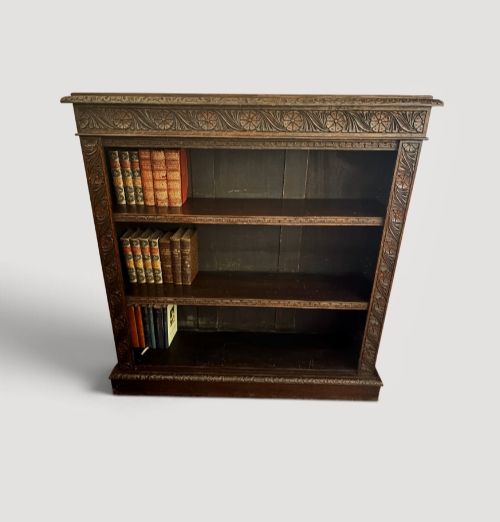
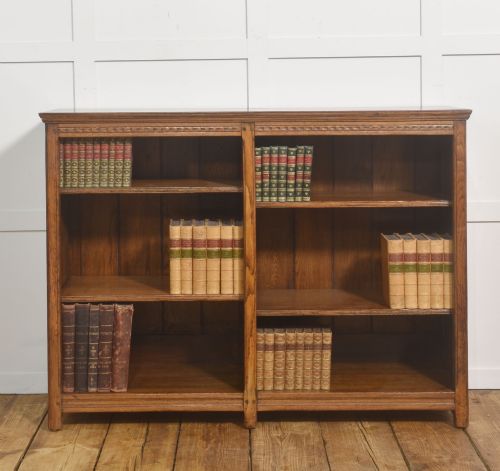
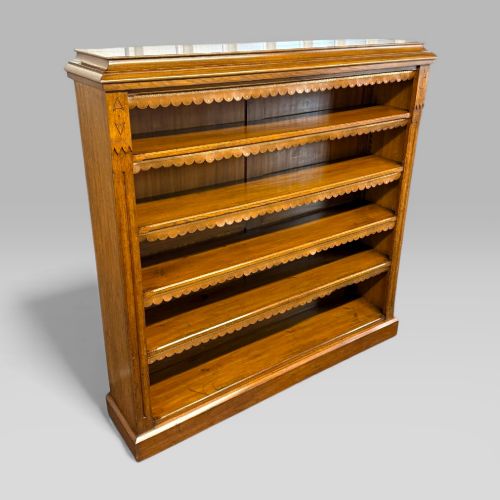
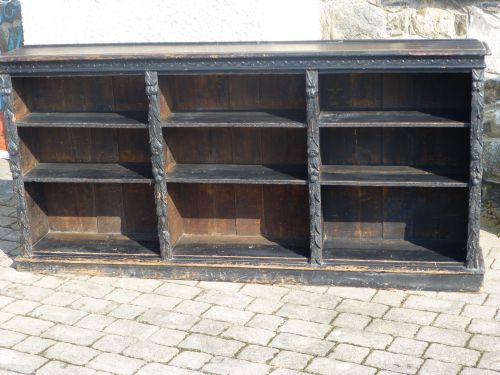
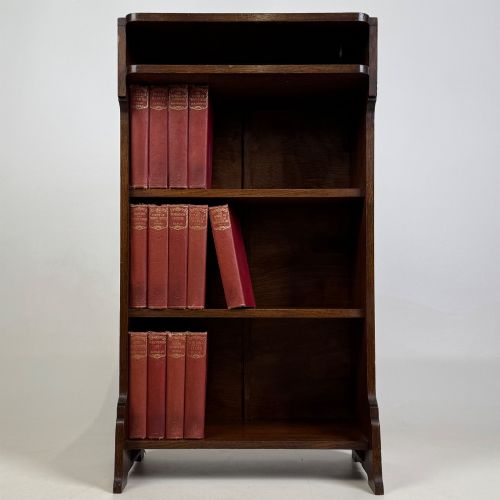
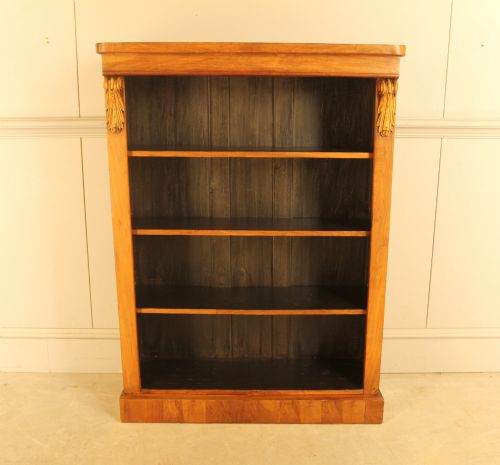
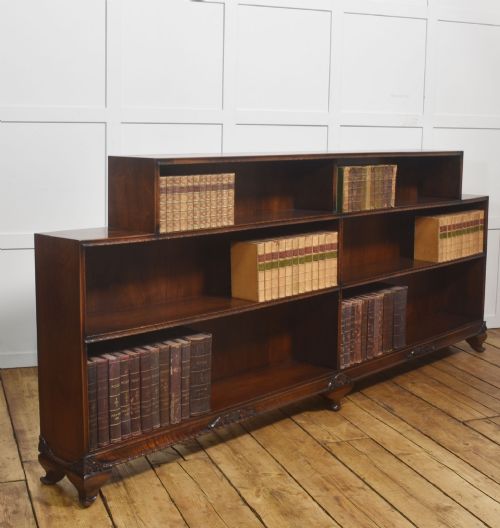
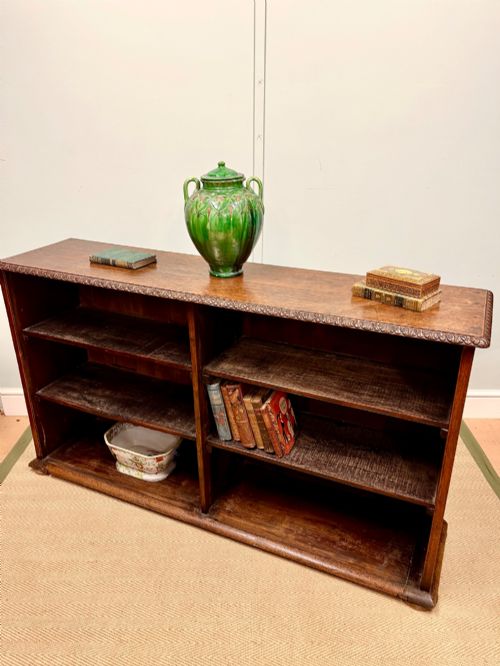
Carved Low Shelf Unit
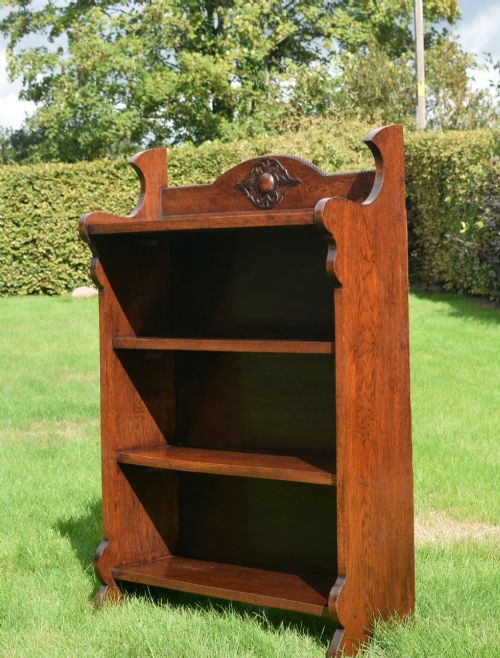
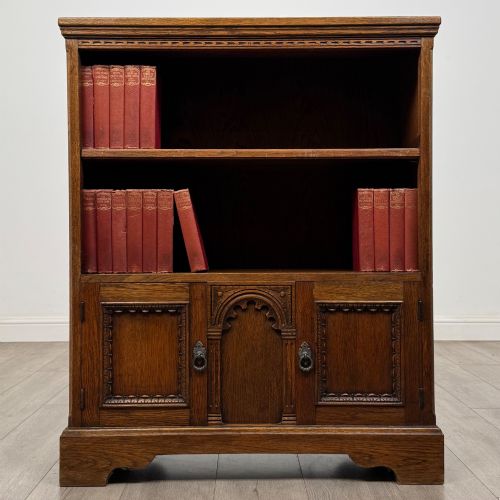
These carved low shelf unit examples bring practical open storage and period timber grain directly into a room.
Carved Low Shelf Unit
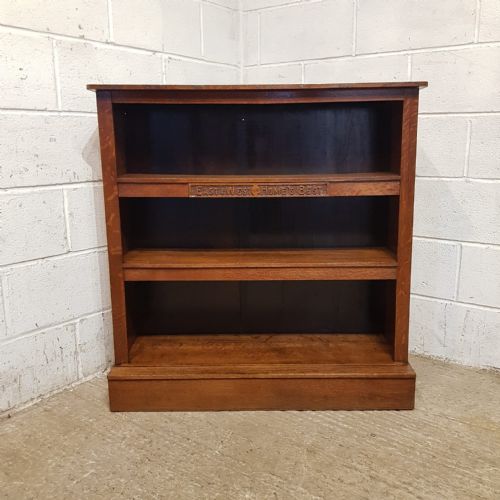
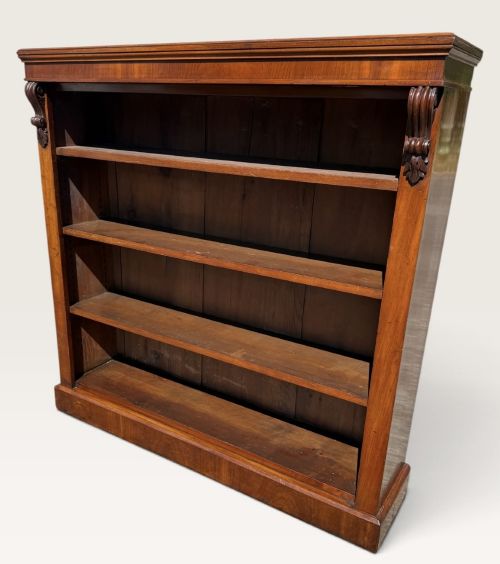
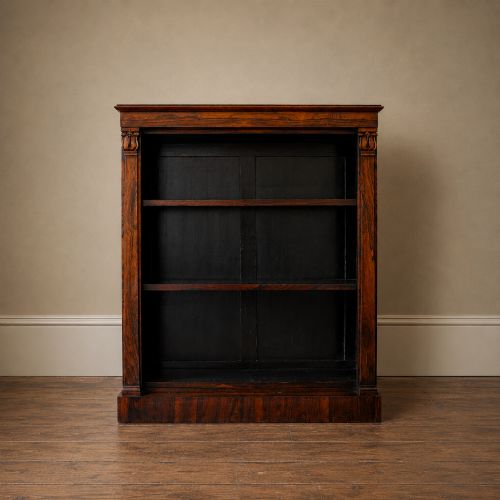
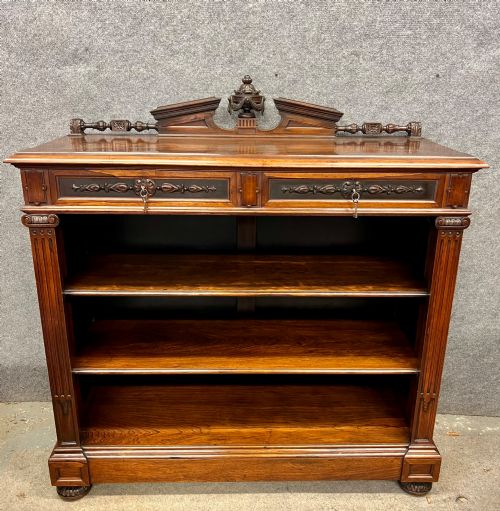
A carved low shelf unit delivers accessible open storage, typically taking the form of an open bookcase or dwarf bookcase designed to sit below eye level. The pieces on this page span the 19th century, Victorian, Edwardian, and 1930 periods, drawing on styles such as Jacobean Revival, Gothic Revival, Arts and Crafts, and the Aesthetic Movement. Most examples you will encounter here are low open timber bookcases standing at a convenient height for placing objects on top.
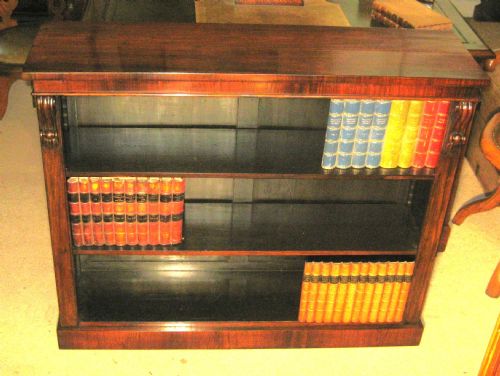
Makers and cabinetmakers constructed these low shelf units to house working libraries and display collections in domestic settings. The primary forms include straightforward open fronts, stepped tiers, and breakfront layouts, often fitted with adjustable shelves to accommodate varying book sizes. Oak and mahogany dominate the selections, alongside rich rosewood and walnut, reflecting the taste of their respective periods.
Materials and construction methods
Cabinetmakers relied on solid timbers like oak, mahogany, walnut, and rosewood, occasionally applying rosewood veneer over secondary woods. Timber selection dictated the character of the grain, while brass fittings and marble tops appeared on select refined commissions.
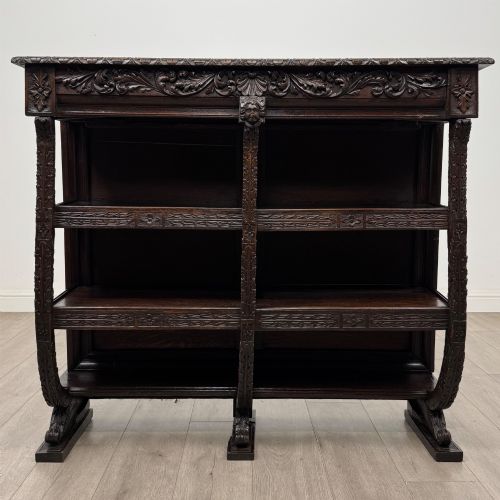
Carving was executed by hand to render foliate motifs, linenfold panels, or the distinctive green man details seen in revivalist pieces. Joinery remained robust, utilising traditional housing joints and tongue-and-groove methods to support heavy volumes on adjustable timber shelving.
Listings feature oak, mahogany, rosewood, walnut, pine, brass, and marble across Victorian, Edwardian, Regency, and 1930 periods.
Distinctions in quality
Quality rests in the depth and crispness of the carved ornamentation, where sharp chisel work distinguishes bespoke cabinetmaking from mass-produced output. The selection of timber grain, particularly matched mahogany flames or figured walnut, elevates the visual presence of the piece.
Structural integrity reveals itself in the smoothness of adjustable shelf mechanisms and the weight of the timber used for uprights and plinths. Superior examples display tight corner joints and careful timber seasoning that prevents warping over decades of use.
The Carved Low Shelf Unit Glossary
- Dwarf bookcase
- A low open bookshelf designed to sit below standard window height, providing surface display space on top. These units remain popular for keeping collections within easy reach.
- Breakfront
- A cabinet or bookcase whose central section projects forward from the flanking wings. This architectural layout creates depth and shadow across the front elevation.
- Green man
- A sculptural architectural ornament depicting a human face disgorged from foliage or surrounded by leaves. It appears frequently in revivalist furniture carving.
- Adjustable shelves
- Shelving resting on movable pegs or ratchets that allows the vertical spacing to be altered. This system accommodated varying heights of leather-bound volumes.
Carved Low Shelf Unit: Frequently Asked Questions
Where should I place a low shelf unit?
These low units sit comfortably beneath windows or against living room walls without obstructing natural light or views. Their height leaves the wall space above free for art or mirrors.
Because the shelves remain open, placing them away from direct heat sources protects the timber and any stored volumes from drying out.
How do I adjust the shelves?
Most period examples utilise either traditional wooden support slips, brass peg systems, or vertical rack strips inset into the interior uprights. You simply lift the shelf slightly to disengage it from the supports and relocate it into the desired slot.
Take care when moving heavy oak or mahogany boards to avoid chipping the interior veneer or timber edges.
Can these hold heavy books?
Solid oak, mahogany, and walnut construction provides substantial weight capacity for standard libraries and heavy volumes. The thickness of the shelf timber determines how well it resists sagging over time.
Distributing heavier folios toward the centre supports helps maintain the straight alignment of older wooden boards.
How do I tell Victorian from Edwardian pieces?
Victorian examples often feature heavier proportions, darker finishes, and dense carving influenced by Gothic or Jacobean revivals. Mahogany and rosewood are frequent choices for these formal rooms.
Edwardian pieces tend to display lighter oak construction with simpler lines, reflecting the shift toward airier domestic interiors at the start of the 20th century.