


Vintage Room Size Rug
A vintage room size rug grounds a large floor with patterned wool and cotton.
Vintage Room Size Rug
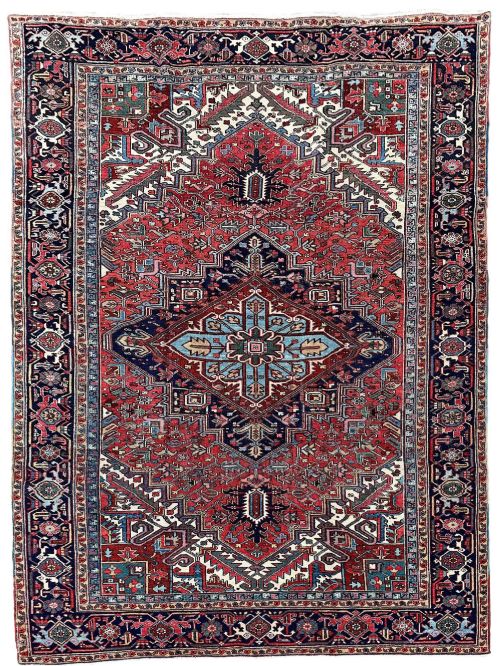
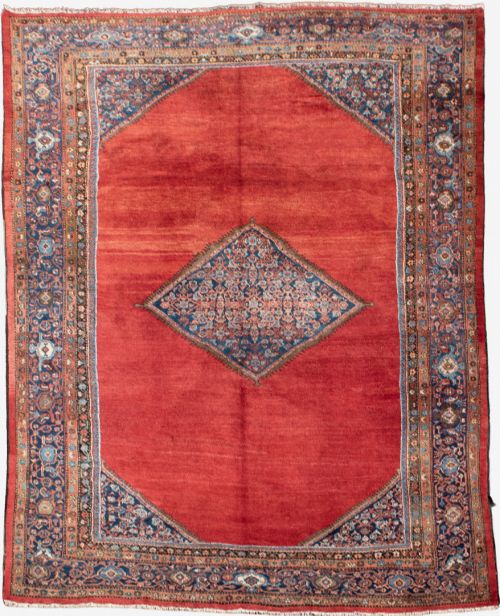
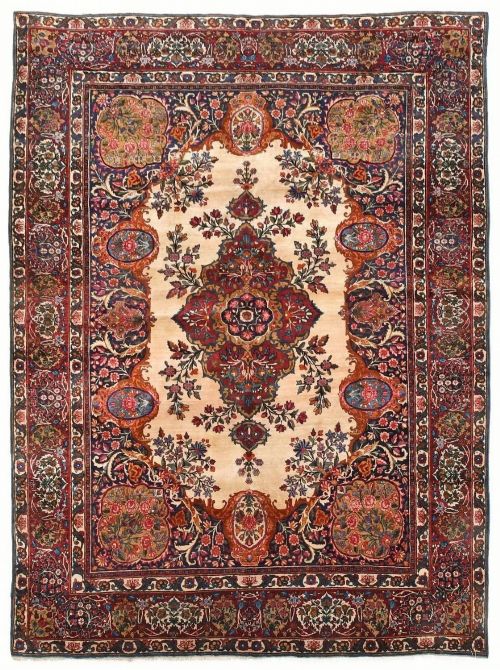
A vintage room size rug brings substantial floor coverage to domestic spaces through expansive formats dating from the nineteenth century into the twentieth century. These textiles originate primarily from Persian centres such as Heriz, Kirman, Tabriz, Ferahan, Mahal, and Isfahan, alongside Turkish Oushak and Balkan Pirot or Sarkoy weaves. Buyers encounter large formats created to anchor major rooms, spanning from the late nineteenth century to around 1930.
The selection centres on woven carpets and kilims featuring traditional Persian and Balkan designs, executed in generous dimensions suitable for principal reception rooms. Pieces range from grand carpets exceeding five metres in length down to substantial room-sized squares. Each example displays the distinctive regional palette and medallion or repeat patterns characteristic of its origin.
Makers and workshops across Persia, Turkey, India, and China produced these floor coverings to serve domestic and international markets. The inventory reflects a span of decades from the 1870s through the interwar years, capturing diverse weaving traditions from village workshops to major commercial ateliers.
Materials and construction
These floor coverings utilise wool for the pile and surface design, paired with cotton foundations for warp and weft threads. Hand-knotting techniques dominate the production of carpets, while kilims employ flatweave methods without a raised pile.
Weavers mounted foundation threads vertically on looms before working coloured wool yarns row by row to form intricate patterns. Natural and early synthetic dyes provided the varied hues seen across Persian, Turkish, and Balkan examples.
Listings feature wool and cotton carpets dated between 1870 and 1930 from Persian, Turkish, Indian, Chinese, and Balkan origins.
Distinctions in quality
Quality rests upon the density of the knotting and the fineness of the wool used in the pile, which dictate the crispness of the design. Finer specimens display precise geometry in medallion layouts and greater durability under foot traffic.
The sophistication of the palette and the complexity of regional designs distinguish standard commercial output from exceptional atelier pieces. Workshops associated with master weavers or specific commercial houses such as Ziegler and Co demonstrate superior precision in scale and composition.
Ziegler and Co·Haji Jalili
The Vintage Room Size Rug Glossary
- Kilim
- A flatwoven carpet produced without a pile by tightly interlacing warp and weft threads. This technique creates a smooth, reversible surface characteristic of Balkan and village pieces.
- Warp
- The stationary vertical threads stretched across a loom that form the structural foundation of the textile. Weft threads pass horizontally through these structural elements.
- Medallion
- A large central ornamental design motif placed in the middle of the field. This symmetrical feature dominates the composition of many Persian formats.
- Pile
- The raised surface of a carpet formed by the cut ends of knotted wool yarn. Dense knotting creates a heavier and more resilient surface layer.
- Weft
- The horizontal threads passed through the vertical warp to secure the knots in place. These horizontal elements stabilise the woven structure row by row.
Vintage Room Size Rug: Frequently Asked Questions
How do I clean a wool carpet?
Regular gentle vacuuming without a beater bar removes surface dust safely from wool piles.
Professional specialist cleaning remains necessary for deeper maintenance to protect natural fibres.
Where were these large carpets made?
Production spans traditional weaving centres in Persia, including Heriz, Kirman, and Tabriz.
Additional examples originate from Turkish Oushak, Northern India, China, and Balkan Pirot workshops.
What size is a room size carpet?
Room size formats typically measure over three metres in length to anchor large living spaces.
Dimensions vary across the selection, ranging from square formats to expansive carpets exceeding five metres.
How do I identify a kilim?
Kilims are flatwoven without a raised pile, unlike the knotted construction of traditional carpets.
This technique produces a lighter textile with visible geometric patterns on both sides.