

Vintage Roll Top Bureau
A vintage roll top bureau conceals private papers and writing materials beneath a sliding cylinder or slatted tambour, combining security with a handsome workspace.
Vintage Roll Top Bureau
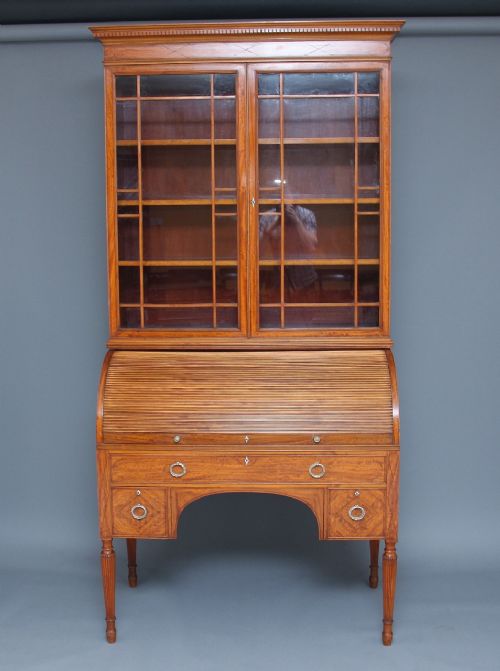
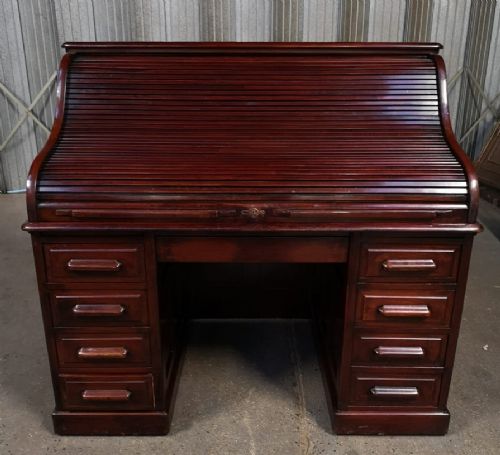
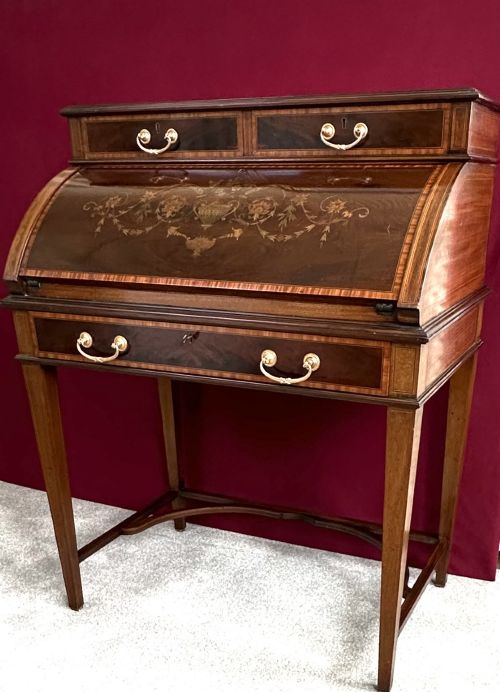
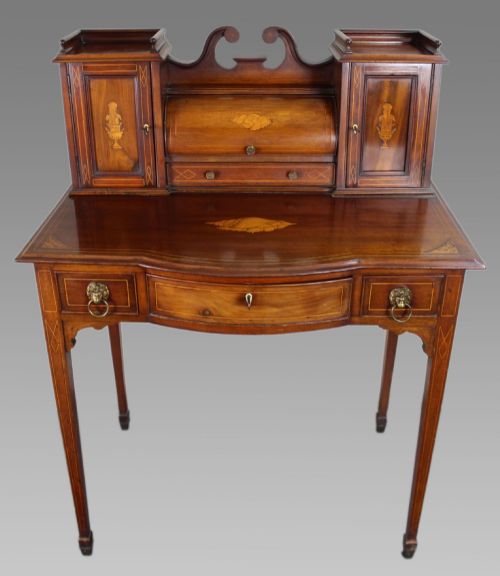
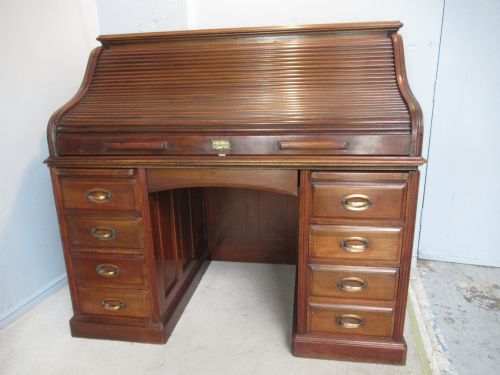
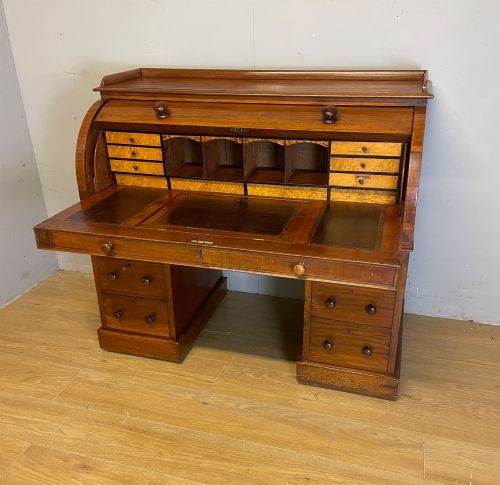
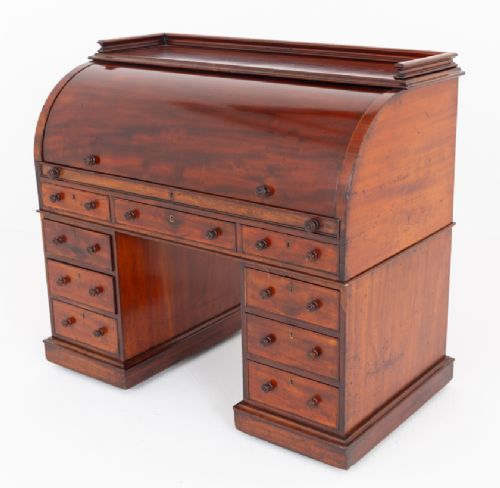
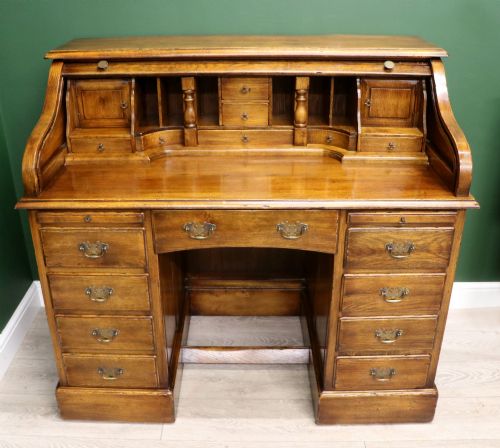
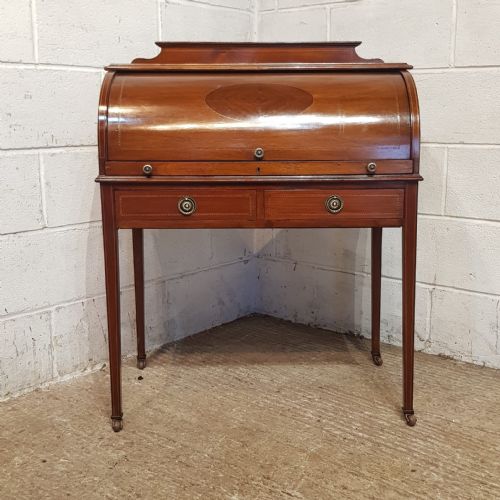
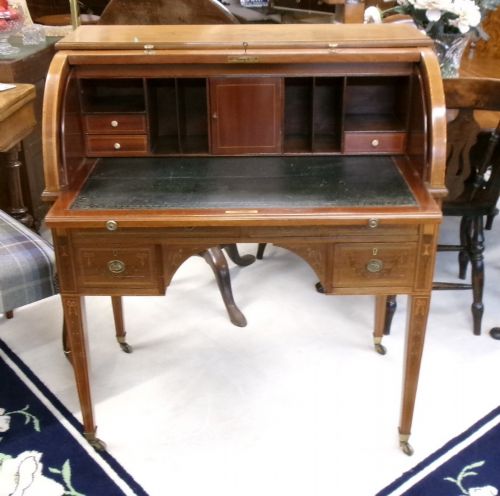
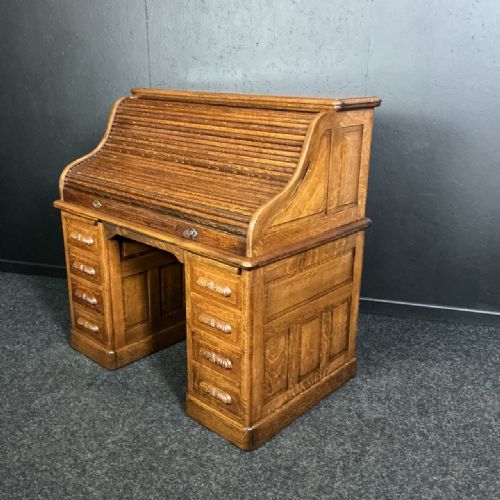
When searching for a vintage roll top bureau, a buyer encounters practical writing furniture spanning the Victorian and Edwardian eras alongside early twentieth-century examples. These pieces range from substantial twin pedestal models in oak or mahogany to delicate ladies writing desks inlaid with satinwood.
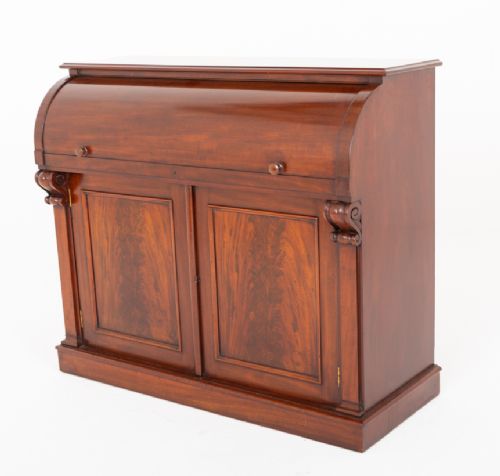
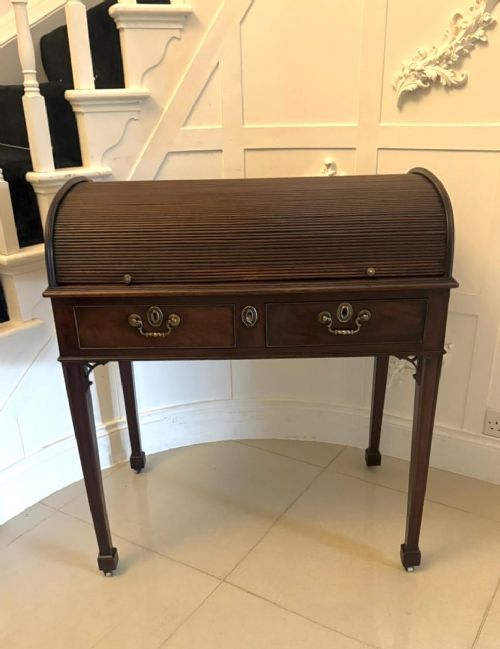
The most common versions on this page are Edwardian and Victorian desks featuring either a solid wooden cylinder or a slatted tambour closure that pulls down to lock the writing surface and pigeonholes away. Bureau bookcases and compact miniature furniture also appear, offering fitted compartments for correspondence.
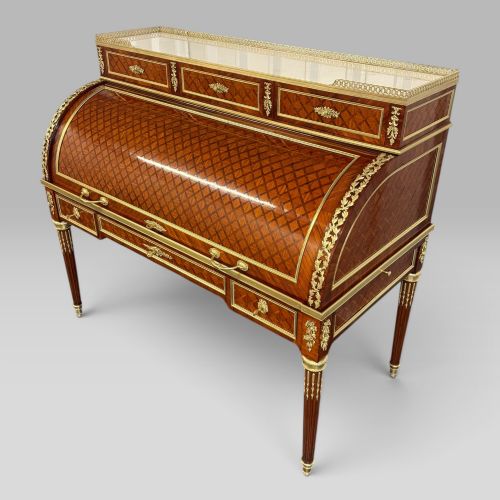
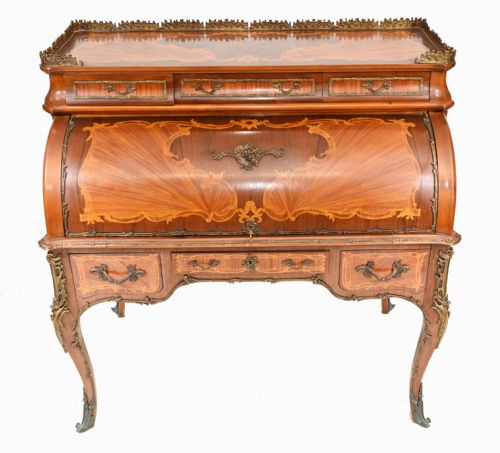
Origins stretch from British workshops to French ateliers, bringing stylistic influences from Louis XVI Revival and Regency periods. Buyers find everything from large executive oak desks to free-standing mahogany writing tables designed for domestic studies.
How they were made
Cabinetmakers built these desks using sturdy timbers like mahogany, oak, and walnut, often applying finer veneers of satinwood or kingwood to the exterior surfaces. Drawer linings typically utilised secondary woods, while brass handles, glass doors, and ormolu mounts added decorative punctuation.
The defining mechanical feature, the roll top or cylinder, relies on closely fitted wooden slats glued to a canvas backing or a curved solid panel running in hidden tracks. Writing surfaces frequently incorporated inset panels of tooled leather to provide a durable writing plane.
Inlaid decoration employed contrasting woods and stringing to create geometric or floral motifs, particularly on Edwardian and Sheraton Revival pieces. French makers added parquetry patterns and cast bronze ormolu mounts to enhance formal cylinder desks.
The selection spans compact nineteenth-century miniature desks up to large Edwardian pedestal models.
What varies in quality
Quality rests primarily on the smoothness of the mechanical action; a superior cylinder or tambour glides silently along its track without binding or dipping. The choice of primary timber and the precision of the dovetail joinery in the drawers further separate standard production from superior cabinetmaking.
The crispness of decorative inlays and the weight of brass fittings indicate the level of craftsmanship invested in the piece. Well-figured mahogany or walnut veneers carefully matched across the front demonstrate a maker's commitment to visual harmony.
Maples of London and Paris
The Vintage Roll Top Bureau Glossary
- Tambour
- A flexible shutter made of narrow vertical strips of wood glued to canvas, allowing a desk top to curve smoothly around a radius.
- Cylinder desk
- A writing desk featuring a quarter-circle solid wooden roll that conceals the writing surface and internal pigeonholes when closed.
- Bureau bookcase
- A tall piece of furniture combining a lower writing desk with an upper glazed cabinet for books or display.
- Ormolu
- Gilt bronze mounts used extensively on French furniture of the nineteenth century to highlight corners and key escutcheons.
- Parquetry
- Geometric patterns formed by fitting small pieces of contrasting veneer together across a surface.
- Pedestal desk
- A heavy freestanding desk supported by two banks of drawers rather than four separate legs.
Vintage Roll Top Bureau: Frequently Asked Questions
How do I maintain the roll top mechanism?
Keep the wooden tracks clean and free from dust using a dry cloth or a soft brush.
A light application of appropriate furniture wax or lubricant helps the slats slide smoothly without sticking.
Can I fit a modern laptop inside?
Many larger pedestal models offer sufficient depth and width for contemporary office equipment when the writing surface is pulled out.
Compact Edwardian ladies desks provide less internal clearance, so measure the pull-out slide carefully before purchasing.
Are these desks easy to move?
Most roll top desks are exceptionally heavy, particularly solid oak or large walnut pedestal versions that incorporate multiple drawer stacks.
Some larger nineteenth-century examples dismantle into modular sections to facilitate transport through doorways and up stairs.
How do I distinguish Victorian from Edwardian pieces?
Victorian examples generally employ heavier proportions, darker mahogany timbers, and robust construction suited to formal nineteenth-century libraries.
Edwardian pieces often display lighter satinwood inlay, brighter mahogany tones, and more delicate proportions influenced by Sheraton Revival styles.