
French Parquetry Writing Table
A french parquetry writing table offers a surface for correspondence finished in geometric wood veneers and metal mounts.
French Parquetry Writing Table
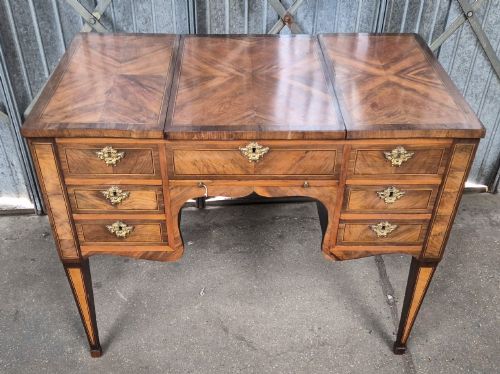
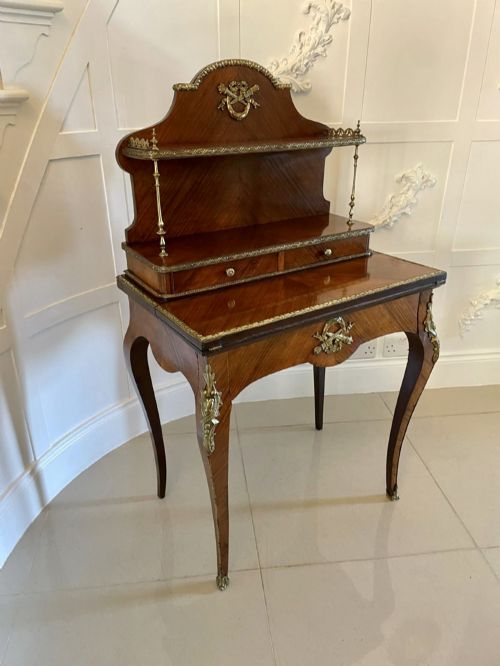
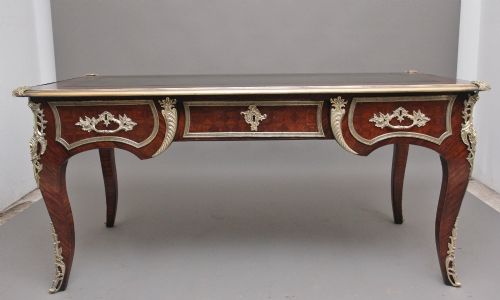
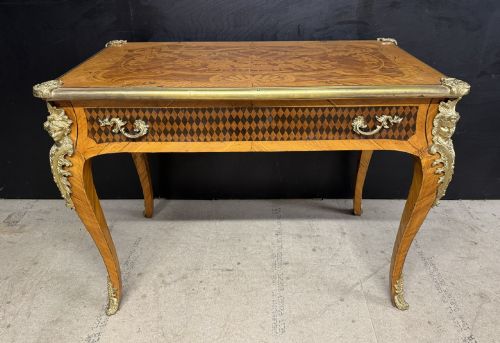
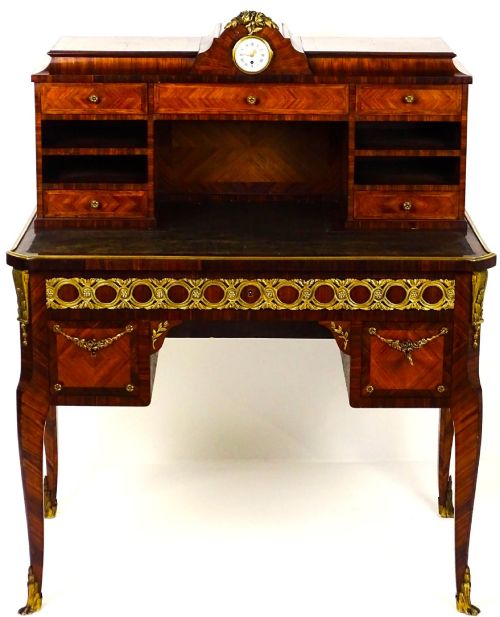
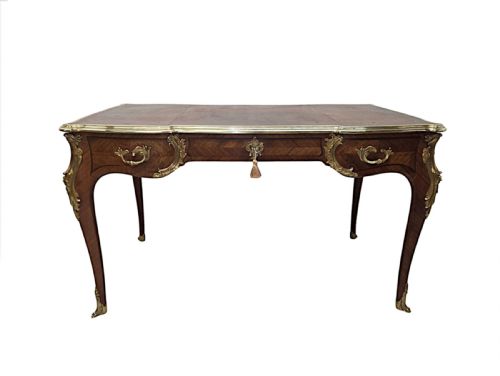
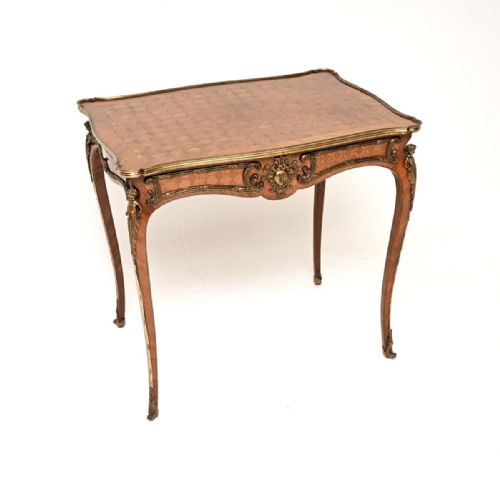
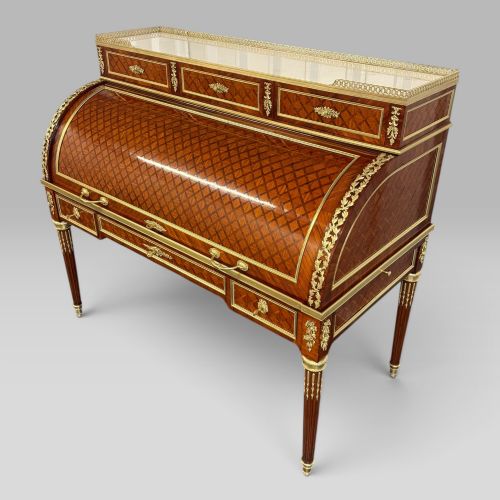
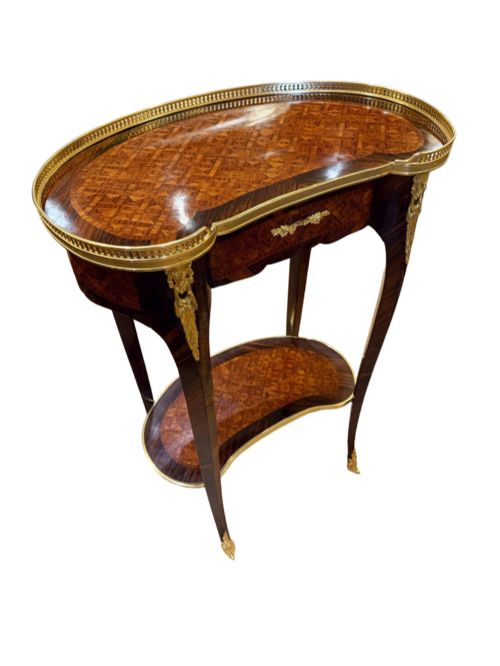
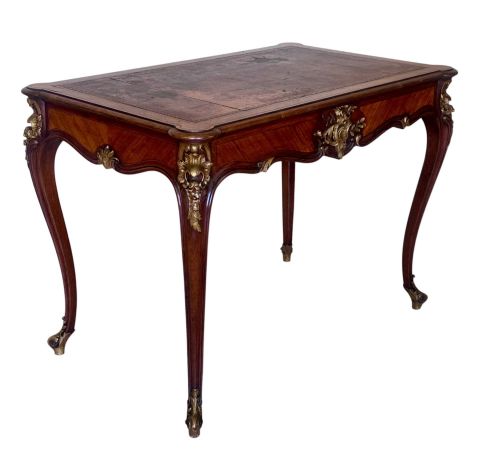
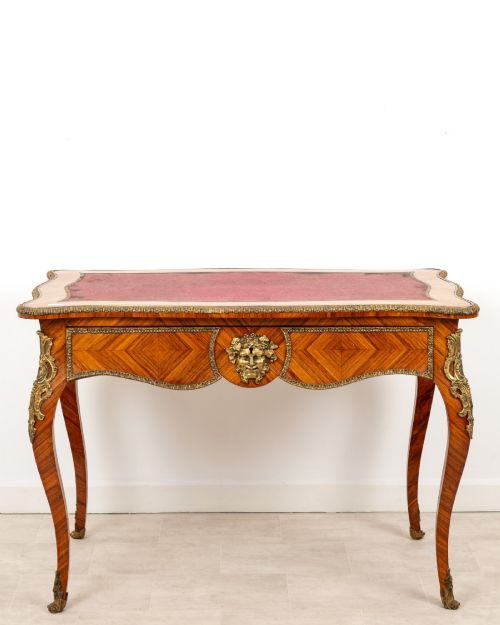
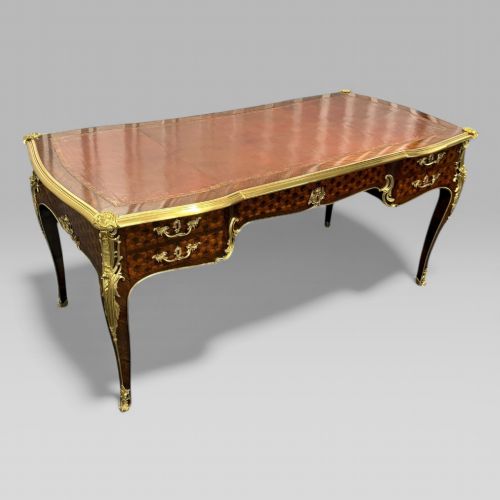
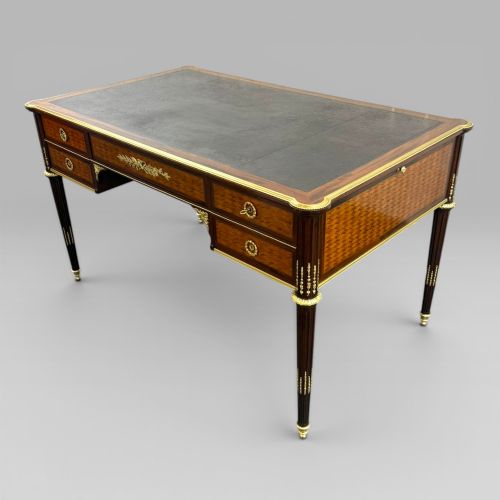
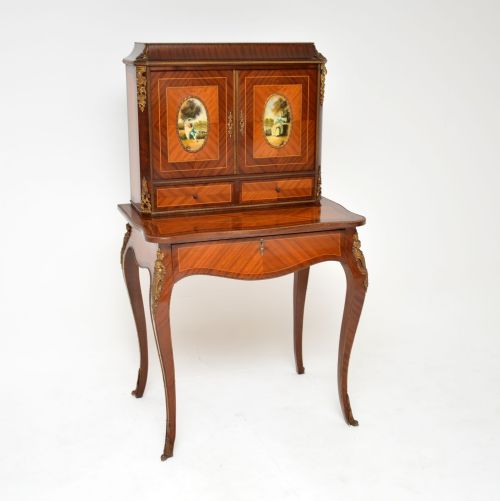
A french parquetry writing table is a desk designed for letters and paperwork, typically taking the form of a bureau plat, a freestanding centre table, or a smaller bonheur du jour. These pieces appear largely from the nineteenth century, including Victorian interpretations and revival styles such as Louis XV and Louis XVI.
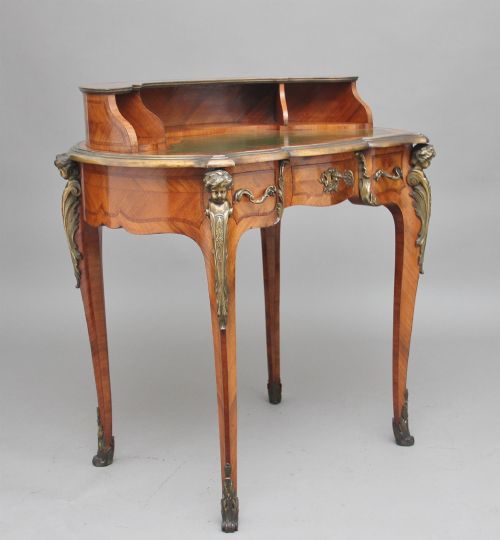
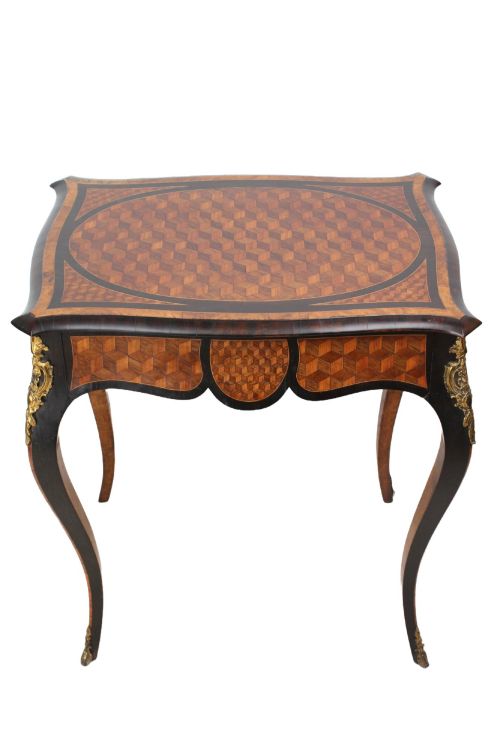
The surface patterns rely on geometric wood arrangements, often accompanied by leather writing inserts and gilded bronze or ormolu mounts. Makers utilised forms with cabriole legs, kidney shapes, or cylinder tops depending on the specific domestic function intended for the room.
How They Were Made
Cabinet makers applied thin veneers of kingwood, tulipwood, rosewood, and walnut onto a secondary wood structure to create geometric parquetry patterns across the top and sides. These wooden surfaces were combined with cast ormolu and gilt bronze mounts, which protected the corners and outlined the drawers.
Writing surfaces were frequently inset with panels of tooled leather, whilst interior compartments utilised smaller drawers and drop fronts to organise stationery. Joinery relied on traditional methods suited to supporting curved aprons and mounted legs.
Some nineteenth-century writing desks include concealed spring-loaded compartments designed for stashing private letters away from prying eyes.
What Varies In Quality
The standard of a french parquetry writing table depends on the precision of the geometric veneer work and the crispness of the cast ormolu mounts. Finer examples display meticulous alignment of the grain across complex curves and joints, alongside heavier, more deeply chased bronze hardware.
Secondary timbers, the weight of the bronze fittings, and the depth of the hand-chasing distinguish workshop production levels. Pieces bearing stamps from documented makers generally reflect the higher tiers of nineteenth-century cabinet making.
JAS Shoolbred·Paul Sormani·François Linke·CH Jeanselme·Donald Ross·Maurice Dufrêne
The French Parquetry Writing Table Glossary
- Parquetry
- Geometric patterns formed by fitting small pieces of veneer together on a surface. This technique creates visual texture across table tops and drawer fronts.
- Bureau plat
- A flat-topped freestanding writing desk with drawers in the frieze. These tables are finished on all sides to allow placement in the centre of a room.
- Ormolu
- Gilded bronze mounts applied to furniture for decoration and edge protection. The metal is cast and subsequently chased to define intricate details.
- Kingwood
- A dense, heavily figured exotic timber utilised extensively in nineteenth-century cabinet making. Its dark grain provides strong contrast in parquetry designs.
- Bonheur du jour
- A small ladies writing desk featuring a tiered superstructure with drawers or shelves above the main writing surface. The form gained popularity during the eighteenth century and continued through later revivals.
French Parquetry Writing Table: Frequently Asked Questions
Where should I place a bureau plat?
A bureau plat is finished on all sides, making it suitable for placement in the middle of a study or reception room rather than against a wall.
Sufficient clearance around the piece is necessary to allow chairs to pull out comfortably and to view the parquetry from multiple angles.
How do I care for the leather insert?
The leather writing surface benefits from occasional dusting with a dry cloth and protection from direct sunlight to prevent fading and drying.
Liquid spills should be blotted immediately to avoid staining the hide or seeping into the underlying wooden substrate.
What is the difference between parquetry and marquetry?
Parquetry uses geometric shapes such as cubes, diamonds, and squares to form repeating patterns across a wooden surface.
Marquetry employs pictorial or floral arrangements composed of various tinted veneers to create distinct decorative pictures.
Can I use a writing table for a laptop?
These tables provide a flat surface for modern devices, provided the dimensions and height align with comfortable seating.
Care should be taken with weight distribution and heat from electronic equipment placed directly onto antique wood or leather surfaces.