




Brown Veneer Writing Table
These brown veneer writing tables combine utility with rich timber surfaces, offering a practical workspace shaped by centuries of cabinet-making traditions.
Brown Veneer Writing Table
A brown veneer writing table brings together functional desks and side tables finished in figured woods across multiple historic periods. When searching for a brown veneer writing table, buyers encounter forms ranging from compact kneehole desks to cylinder desks and occasional tables.
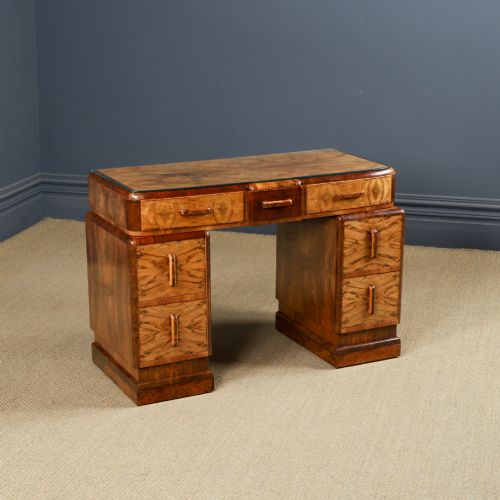
The pieces on this page span the eighteenth century, the nineteenth century, and the nineteen-thirties, reflecting diverse regional tastes including English and French cabinet-making. Domestic workspaces and formal rooms alike accommodated these versatile tables, which frequently served multiple functions as dressing tables or side tables.
Revival styles appear alongside pieces from the Art Deco period and eighteenth-century origins, showing how later makers reinterpreted earlier designs. Walnut, mahogany, kingwood, and burr elm dominate the structural vocabulary, often arranged in striking geometric patterns across the top.
Materials and construction
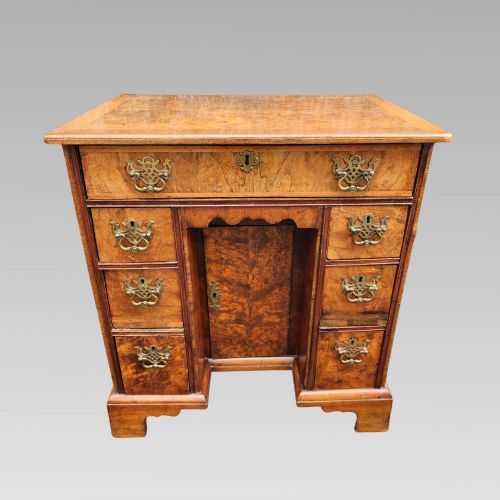
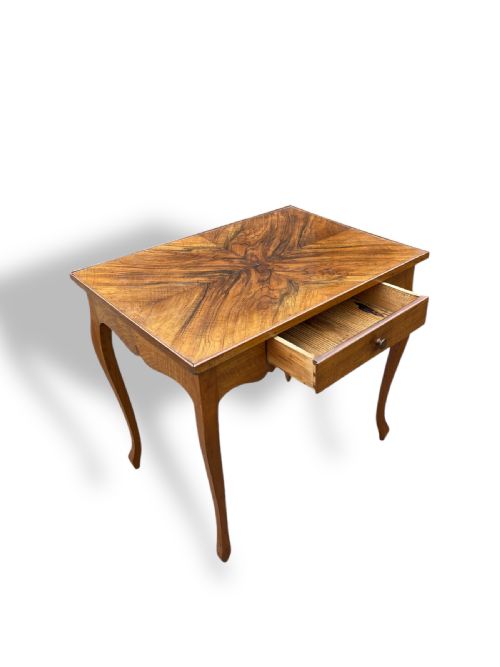
Cabinet-makers applied thin slices of decorative timber veneers, such as walnut, burr elm, amboyna, and kingwood, over secondary woods to create complex grain patterns. Techniques like oyster veneering and quartering exploited the natural figuring of timber, while featherbanding provided precise borders on eighteenth-century surfaces.
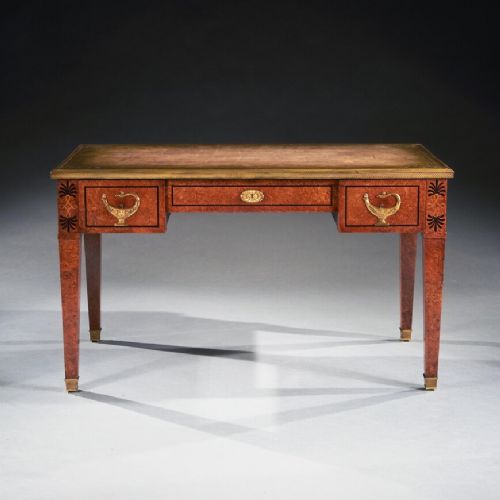
Mounts of gilt bronze and hardware cast in brass punctuate the wooden structures, particularly on French neoclassical and nineteenth-century pieces. Inset leather surfaces frequently form the writing area, framed by timber borders and occasionally protected by glass tops on later twentieth-century iterations.
Listings feature walnut, mahogany, amboyna, kingwood, and burr ash alongside nineteenth-century and Art Deco periods.
Judging the execution
Quality rests upon the selection and matching of the veneer, where symmetrical grain alignment reveals the competence of the workshop. Superior examples maintain intact parquetry and harmonious timber selection across every visible surface without distracting patches.
The integration of metal mounts, such as gilt bronze, separates standard production from finer work by demonstrating precise fitting and chased detail. Drawer construction, using traditional joinery and matching secondary woods, indicates the underlying standard of the piece.
The Brown Veneer Writing Table Glossary
- Veneer
- A thin slice of figured wood applied to a core structure to display decorative grain patterns. This technique allows makers to utilise expensive timbers efficiently.
- Oyster veneering
- Cutting branches or small logs transversely to produce circular or oval sections resembling oyster shells. Cabinet-makers arrange these closely together to create intricate patterned surfaces.
- Kneehole desk
- A writing table featuring a central recess for the legs, flanked by pedestals of small drawers. This compact form gained popularity during the seventeenth and eighteenth centuries.
- Parquetry
- Geometric mosaic woodwork formed by small pieces of veneer arranged in repeating patterns. It frequently decorates the top surfaces of French writing tables.
- Featherbanding
- Narrow strips of veneer laid in a herringbone pattern around the perimeter of a table top or drawer front. This decorative border defines the edges of eighteenth-century pieces.
Brown Veneer Writing Table: Frequently Asked Questions
What is a brown veneer writing table?
A brown veneer writing table is a desk or table surfaced with decorative wood veneers like walnut, mahogany, or kingwood. These pieces provide a dedicated writing surface while displaying the natural figuring of the timber.
Such tables range from eighteenth-century kneehole desks to Art Deco pedestal designs, serving practical needs across different historical periods.
How do I identify the period?
Period identification relies upon observing the structural form, decorative motifs, and veneering techniques typical of specific eras. Eighteenth-century examples often feature featherbanding and restrained proportions, while nineteenth-century pieces display heavier neoclassical mounts or revival styles.
Art Deco items from the nineteen-thirties utilise streamlined silhouettes alongside modernist materials like glass.
Were these used in offices?
Many of these tables functioned as domestic writing desks or library furniture rather than commercial office equipment. Smaller side tables and occasional tables accommodated letter-writing and personal correspondence in private homes.
Pedestal forms and cylinder desks offered greater enclosed storage for stationery and documents.
How should I care for the veneer?
Protecting veneered surfaces requires maintaining stable indoor humidity levels away from direct heat sources and strong sunlight. Gentle cleaning with a soft, dry cloth preserves the polished finish without damaging the underlying wood.
Harsh chemical polishes and excessive moisture can lift the veneer or degrade historic finishes.