
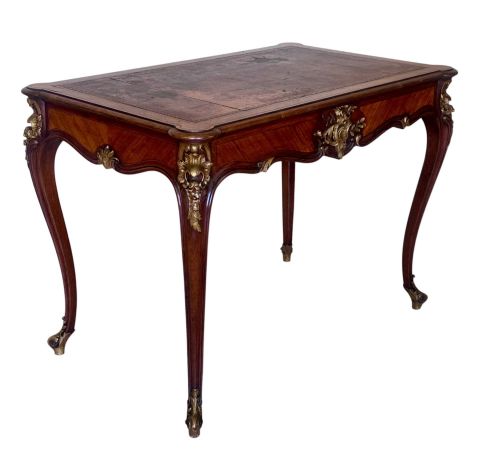
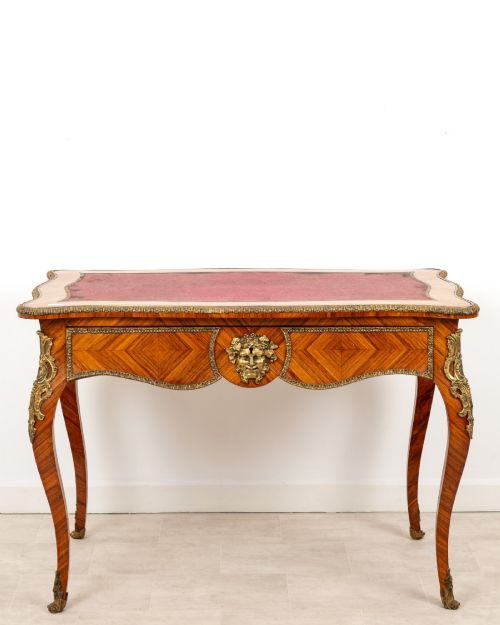

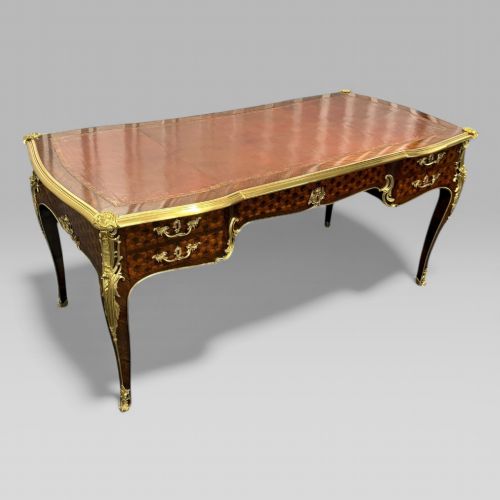
Parquetry Bureau Desk
When you search for parquetry bureau desk, you are looking at fitted writing furniture surfaced in geometric wood veneers, offering concealed compartments alongside a working surface.
Parquetry Bureau Desk
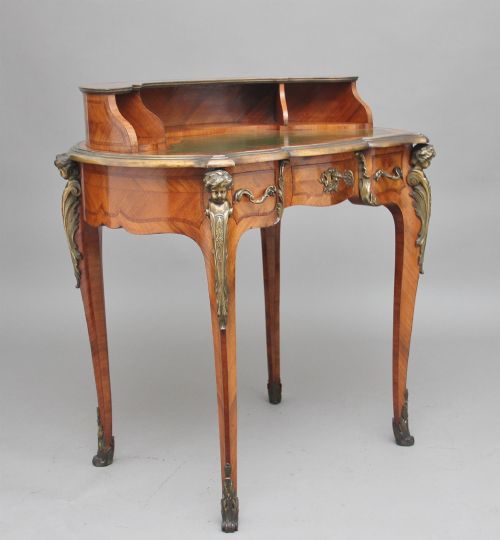
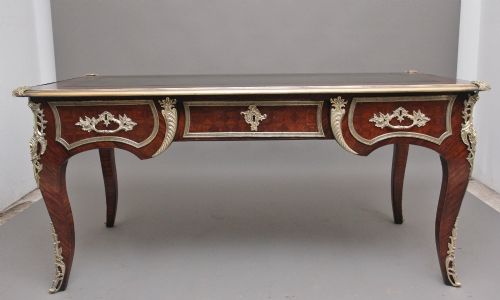
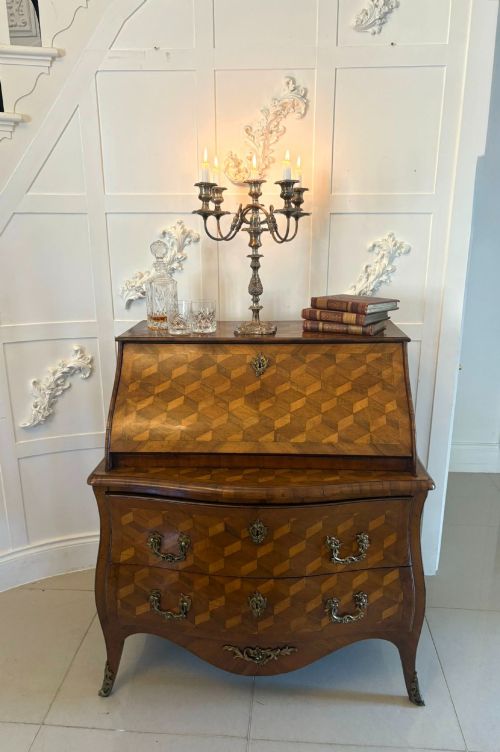
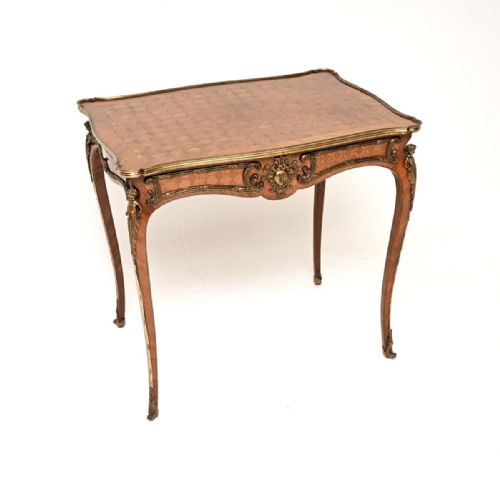
A parquetry bureau desk brings together writing surfaces and storage within structured wooden forms, predominantly originating from French and English workshops. These pieces appear frequently in nineteenth-century interpretations of Louis styles, alongside Victorian iterations executed in kingwood, walnut, and tulipwood.
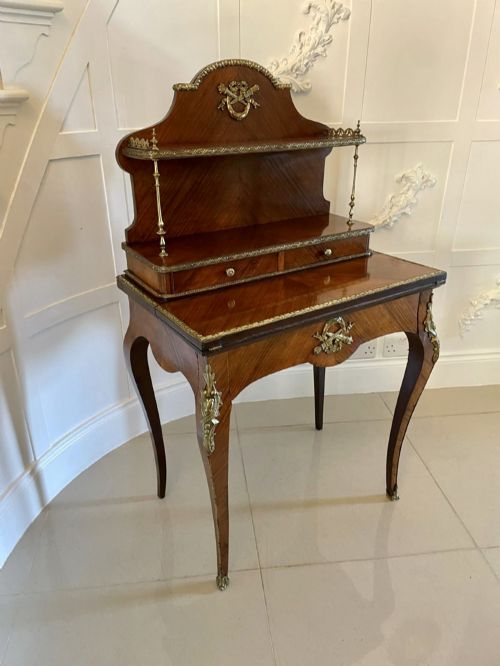
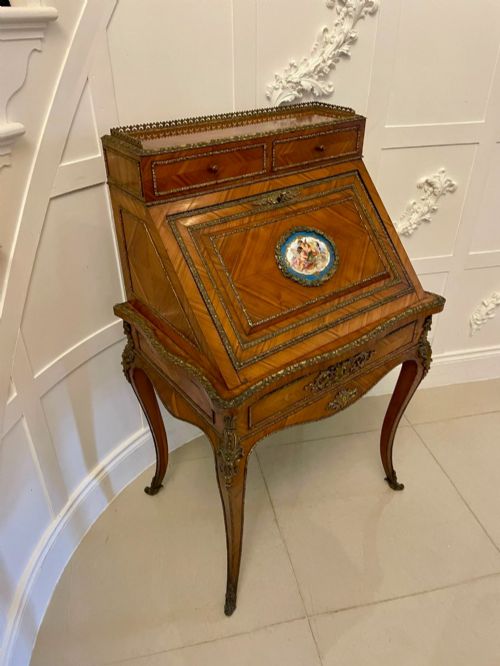
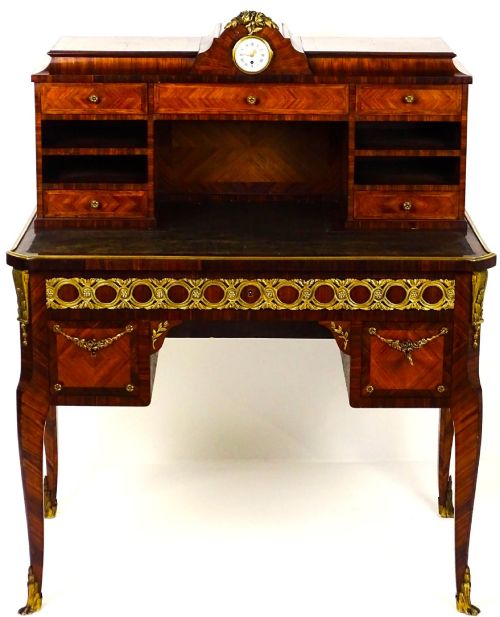
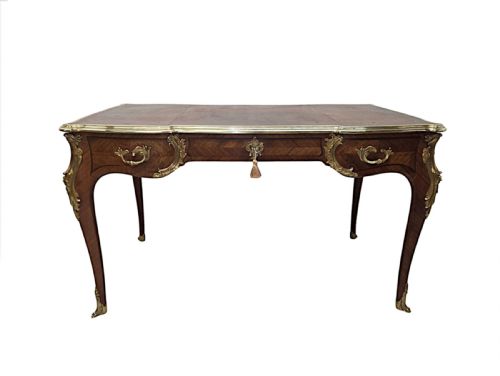
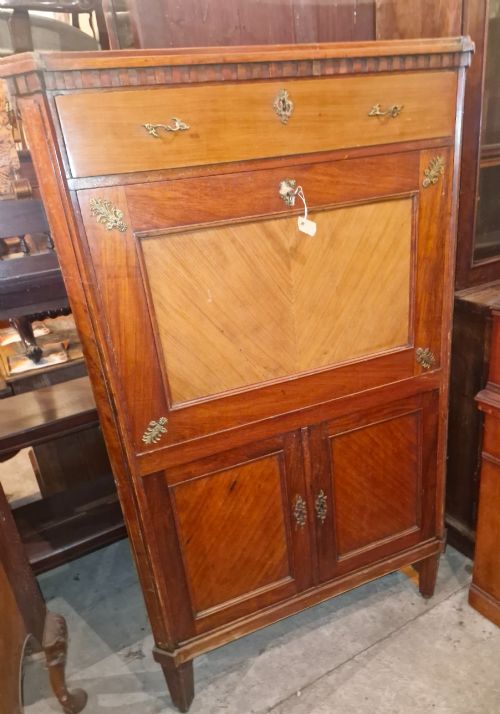
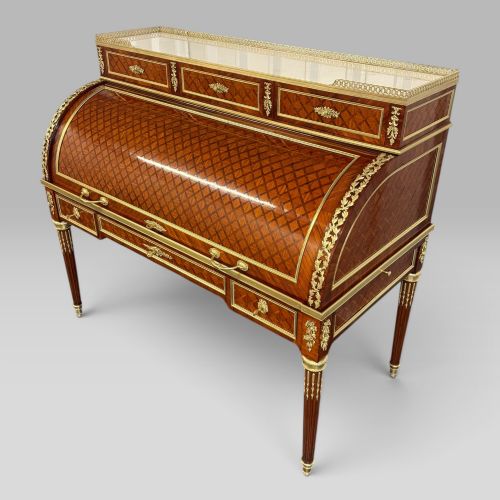
The layout typically incorporates sloping fall fronts, cylinder lids, or flat writing planes framed by ormolu mounts and brass details. Buyers encounter bureau plats, bonheur du jour cabinets, and secrétaire abattant models reflecting eighteenth-century revival tastes.
Materials and construction methods
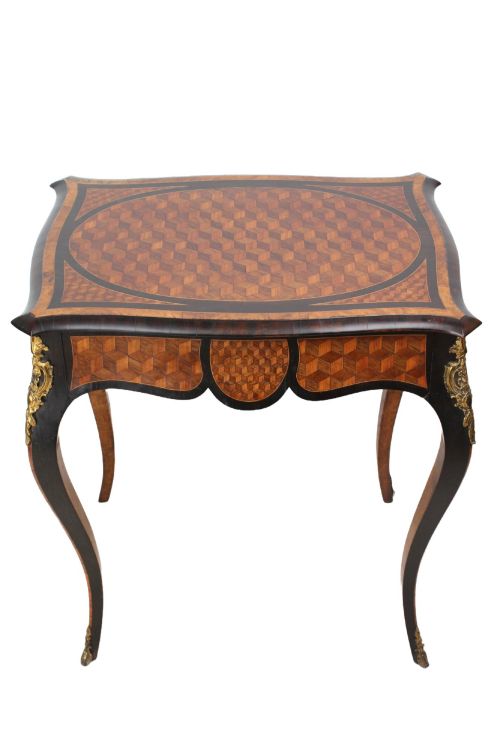
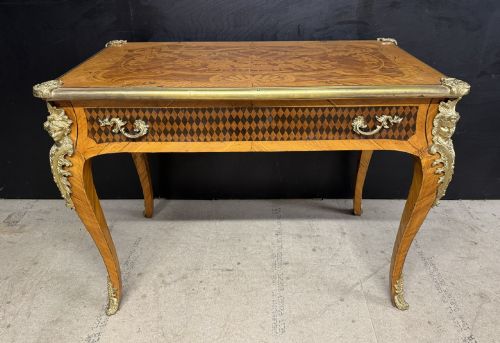
Craftsmen built these desks using foundational carcases of oak or pine, then applied geometric veneers of kingwood, tulipwood, rosewood, and walnut to create patterned surfaces. Parquetry relies on precise cutting of small wood blocks to form cubes, chequers, or diagonal motifs.
Cast ormolu and gilt bronze mounts frame the corners, drawer edges, and legs, often secured with brass screws. Leather writing inserts, sometimes finished with gilt tooling, line the central working area, while marble tops appear on select vertical secrétaires.
Listings feature eighteenth, nineteenth, and twentieth-century periods, utilising kingwood, walnut, rosewood, tulipwood, ormolu, and leather.
Distinctions in construction and execution
The precision of the veneer work defines the calibre of a parquetry bureau desk, where tight joints and balanced grain alignment distinguish master workshops from standard production. Superior examples maintain crisp geometry across curved bombe shapes without lifting or shrinkage in the wood blocks.
The weight, chasing, and finishing of the ormolu mounts indicate workshop standards, with finer pieces showing sharp relief and hand-chased detail rather than soft cast surfaces. Drawer linings in solid oak rather than deal and signed bronze hardware further elevate the standing of a desk.
JAS Shoolbred·Paul Sormani·CH Jeanselme and Co·Blake London·Donald Ross
The Parquetry Bureau Desk Glossary
- Parquetry
- A geometric mosaic of wood veneers used to surface furniture panels. The technique creates patterns like cubes and lozenges.
- Bureau Plat
- A double-sided freestanding writing table with drawers in the frieze. It lacks the vertical superstructure of a sloping bureau.
- Ormolu
- Gilt bronze mounts applied to furniture for decoration and edge protection. This material was widely cast and chased in French workshops.
- Secrétaire Abattant
- A tall wall-mounted or freestanding cabinet with a drop-front writing flap. It conceals pigeonholes and small drawers inside.
- Bonheur du Jour
- A light lady's writing desk featuring a small cabinet or shelving superstructure on top. These appeared frequently in nineteenth-century revival outputs.
- Kingwood
- A dense, heavily figured Brazilian timber featuring dark brown and violet stripes. It served as a primary veneer in high-status French furniture.
Parquetry Bureau Desk: Frequently Asked Questions
How do I use a bureau desk safely?
Keep these desks away from direct heat sources and strong sunlight to prevent the timber veneers and leather inserts from drying out or splitting. Maintain a stable room temperature to protect the underlying wood movement.
Support drop-front panels and pull-out slides properly when writing, avoiding excessive weight on extended ledges. Clean surfaces with a dry cloth and avoid harsh chemical polishes that can degrade nineteenth-century French finishes.
How do I distinguish Louis XV revival pieces from original eighteenth-century items?
Nineteenth-century revival pieces often display machine-sawn veneer thicknesses and standardised construction methods inside the carcase. The timber seasoning and secondary woods like oak or mahogany differ from earlier eighteenth-century stock.
Examine the lock mechanisms, screw types, and mounting pins, which typically reflect industrial manufacturing standards of the 1860s to 1900s. Maker stamps and signatures from firms like François Linke also point directly to later revival production.
Can I place a parquetry desk in a modern interior?
These desks integrate well into contemporary rooms by serving as focal points against neutral walls or functioning as compact home workstations. Their geometric parquetry patterns add texture alongside minimalist furniture.
Ensure the desk dimensions match your seating requirements, as nineteenth-century kneeholes can sit lower than modern office chairs. Position the piece where natural light illuminates the kingwood and tulipwood grain without fading the surface.