


Vintage River View Artwork
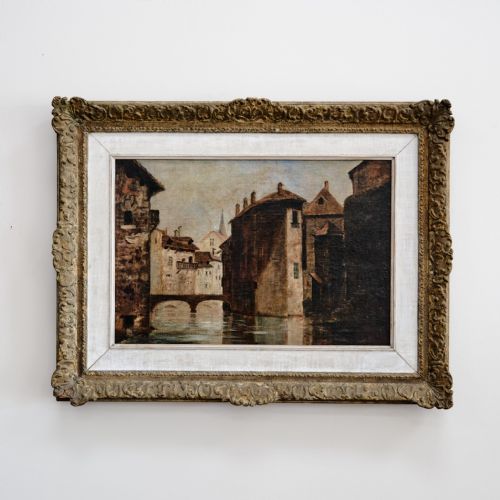
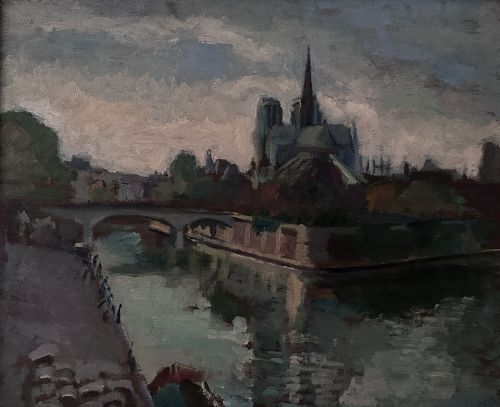
Vintage river view artwork captures stretches of water through the eyes of painters working from the seventeenth century to the mid-twentieth century.
Vintage River View Artwork
When you search for vintage river view artwork, you are looking at topographical and impressionistic depictions of watercourses, bridges, and cityscapes. These pieces record the changing light and traffic along waterways like the Thames, the Seine, and rural streams.
The selections available here range from eighteenth-century hand-coloured aquatints and Victorian watercolours to twentieth-century oil paintings on canvas and board. You are most likely to meet twentieth-century oils and watercolours capturing British and French river scenes.
Makers span named academic painters, regional artists, and French school practitioners working in impressionist and post-impressionist idioms. Their subjects stretch from grand London landmarks to quiet mountain streams.
How they were made
These works rely primarily on oil paint applied to canvas or wood panels, alongside watercolours and pastels on paper. Painters built up their compositions using brushwork that varied from tight, illustrative detail to loose, impressionistic dabs of pigment.
Graphic works utilise engraving and aquatint techniques on paper, often finished with hand-colouring to delineate architecture and water reflections. Support materials range from stretched linen canvas and wooden boards to heavyweight paper and card.
Materials span canvas, paper, wood, oil paint, watercolour, and pastel across periods from the seventeenth century to the 1960s.
What varies in quality
Quality rests on the surety of the draughtsmanship and the artist's ability to render the luminosity of water and sky. Stronger examples demonstrate confident handling of perspective, particularly in complex architectural settings such as bridges and cathedrals.
The distinction between standard decorative output and a finer collector's piece lies in atmospheric depth and the economy of brushstrokes. Works by recorded artists command greater attention through their established provenance and compositional balance.
Ron Folland·Joseph Farrington RA·Joseph Constantime Stadler·Walter Duncan·Noel Harry Leaver·Henry John Kinnaird·George Willis Pryce·Edward Fletcher·John Hayes·William A. Macdonald·Peter Greenham·Maud Raphael Jones·Jacob Knyff·R. Allan·Julius Caeser Ibbetson
The Vintage River View Artwork Glossary
- Aquatint
- A printmaking technique that produces tonal areas resembling watercolour washes. It was frequently used in the eighteenth and nineteenth centuries for topographical prints.
- Impressionism
- A style of painting emphasising loose brushwork and the depiction of light in its changing qualities. Artists working in this manner often captured outdoor scenes en plein air.
- Pastel
- A dry medium consisting of powdered pigment and a binder, formed into sticks. It produces velvety surfaces that require framing under glass for protection.
- Topographical
- Representing specific real-world locations with a degree of geographical accuracy. These views served as historical records before the widespread adoption of photography.
Vintage River View Artwork: Frequently Asked Questions
What periods do these artworks cover?
The selections span multiple centuries, starting from seventeenth-century works and moving through Georgian aquatints and Victorian watercolours. Later pieces extend into mid-twentieth-century oil paintings and impressionist views.
This broad chronological range allows collectors to trace the evolution of landscape painting from precise topographical recording to freer, atmospheric interpretations of water and light.
How should I care for oil and watercolour river views?
Oil paintings on canvas or wood require stable indoor humidity and protection from direct sunlight to prevent cracking or fading of the pigments. Watercolours and pastels must be framed behind glass with acid-free mounts to protect the paper substrate.
Keeping works away from direct heat sources ensures the longevity of both the supporting materials and the delicate paint layers.
What subjects typically appear in these river scenes?
Artists focused heavily on major waterways such as the River Thames in London and the River Seine in Paris, capturing bridges, shipping, and cathedral backdrops. Other compositions explore rural waterways, mountain streams, and architectural landmarks like castles and abbeys.
These subjects reflect both urban commerce and the picturesque appeal of pastoral riverbanks.
How do watercolours differ from oil paintings here?
Watercolours use transparent pigments applied to paper, creating luminous, light-filled washes that rely on the white of the paper for highlights. Oil paintings utilise heavy, opaque pigment applied to canvas or board, allowing for textured brushwork and richer colour blending.
Both mediums offer distinct ways of capturing the fluid reflections and atmospheric conditions of rivers.