
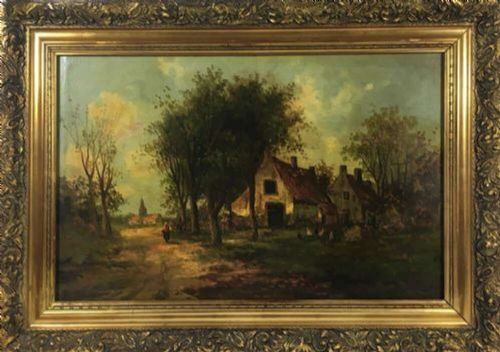

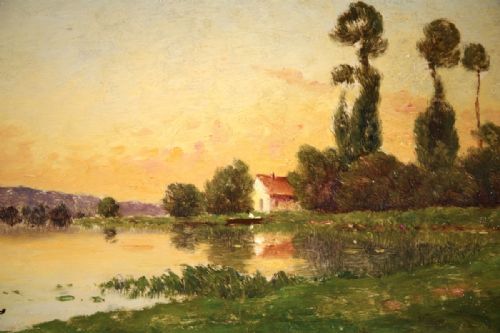


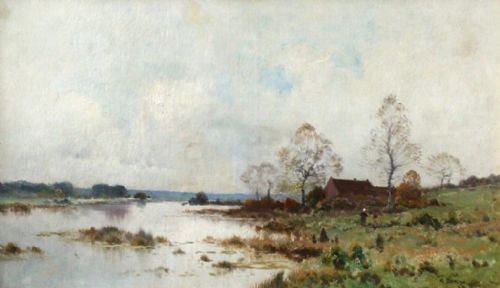
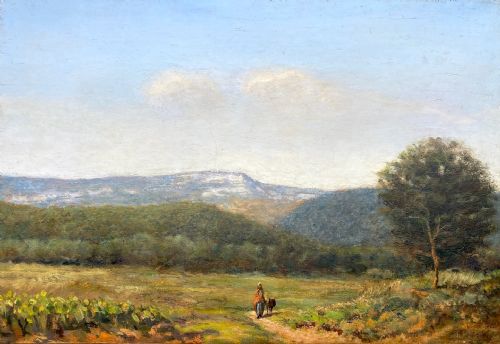


French Barbizon School Painting
A french barbizon school painting captures the quiet rural life and pastoral landscape of nineteenth-century France through direct observation of nature.
French Barbizon School Painting
A french barbizon school painting turns away from grand historical narratives to focus on the intimate realities of forests, riverbanks, and farmyards. Buyers search for these works to bring the atmospheric restraint and atmospheric light of nineteenth-century French landscape art into domestic interiors.
The pieces available on this page span the nineteenth century and the early twentieth century, taking the form of oil on canvas, oil on paper on panel, and watercolour on paper. Most examples depict pastoral scenes, cattle grazing, woodland paths, and rural landscapes set in locations such as Fontainebleau forest and the South of France.
Works associated with this style range from pieces by identified artists of the period to paintings created within the wider circle of the movement. Collectors find both finished gallery works and smaller plein air studies that record the changing moods of the countryside.
Materials and Methods
Artists of this tradition worked primarily with oil paint on canvas or prepared panels, frequently taking their materials outdoors to paint en plein air. This direct engagement with the subject allowed painters to capture shifting light and natural atmospheric effects directly from the landscape.
Watercolour on paper also appears among these works, offering a lighter medium for swift landscape studies. Canvases are frequently housed within period giltwood or gesso frames that complement the tonal depth of the paintings.
Listings feature works created between the nineteenth and early twentieth centuries, utilising oil on canvas, oil on panel, and watercolour.
Distinguishing Quality
Quality in these paintings rests on the confidence of the brushwork and the handling of tonal relationships within a subdued palette. Stronger pieces demonstrate a sure command of chiaroscuro and atmospheric depth, whereas lesser examples rely on formulaic composition and stiff draughtsmanship.
The preservation of the original surface and the condition of the canvas or panel influence the integrity of the work. Contemporary framing that suits the period adds to the cohesion of the piece.
Paul Désiré Trouillebert·Henri Jaques Delpy·Henri Joseph Harpinies·Alphonse Robert·Pierre Emmanuel Eugene Damoye
The French Barbizon School Painting Glossary
- Barbizon School
- A nineteenth-century French art movement centered on the village of Fontainebleau that championed realist landscape painting. Artists associated with this group worked directly from nature.
- Plein air
- The practice of painting outdoors to capture direct observations of natural light and weather. This technique allowed artists to record fleeting atmospheric conditions.
- Chiaroscuro
- The treatment of light and shade in a drawing or painting. It creates a sense of volume and dramatic depth in rural landscapes.
- Giltwood
- Wood that has been covered with a thin layer of gold leaf. Period frames utilising this finish frequently accompany nineteenth-century fine art.
French Barbizon School Painting: Frequently Asked Questions
What is a French Barbizon school painting?
These works are nineteenth-century landscapes that focus on rural scenery, forests, and agricultural life in France. Artists stepped away from academic history painting to observe nature directly.
Such paintings often depict quiet woodlands, riverbanks, and pastures with an emphasis on natural light and atmospheric weather conditions.
How do I date these paintings?
Dating relies on stylistic markers, artist signatures, biographical dates, and framing materials typical of the nineteenth century. Many works carry specific dates or reflect the working periods of artists active between the mid-nineteenth and early twentieth centuries.
Archival records and period canvas stamps can also assist in narrowing down the date of creation.
Where were these scenes painted?
Many works originate from the forest of Fontainebleau and surrounding rural regions of France, including Provence and river valleys. Painters travelled to these specific locales to record the natural landscape away from urban centres.
Locations are often noted in titles or historical documentation attached to individual works.
How should I display an oil painting?
Oil paintings on canvas require stable indoor environments away from direct sunlight and extreme humidity fluctuations. Hanging them on interior walls helps preserve both the canvas and the original giltwood frame.
Proper wall placement ensures the artwork remains protected while retaining its visual impact in a room.