
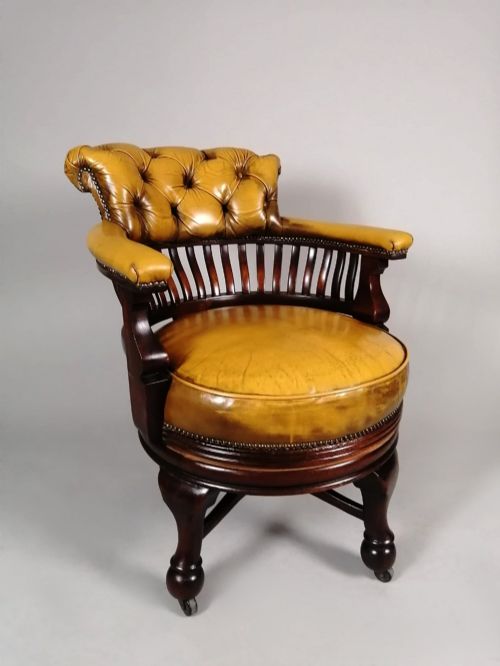
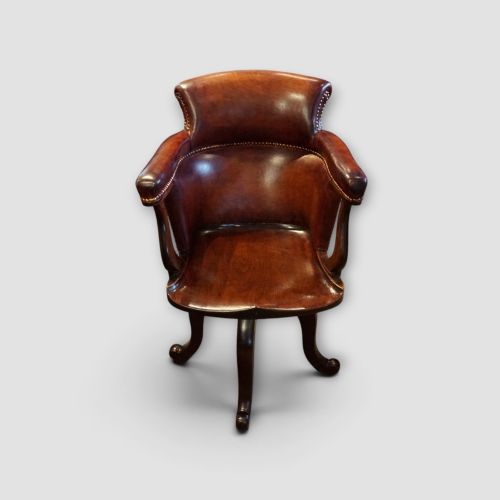
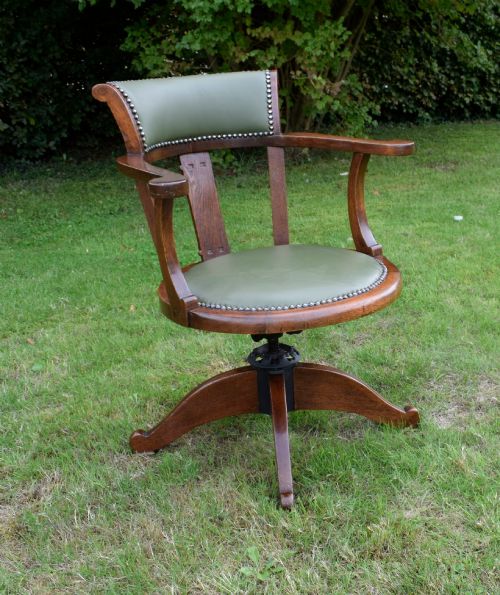
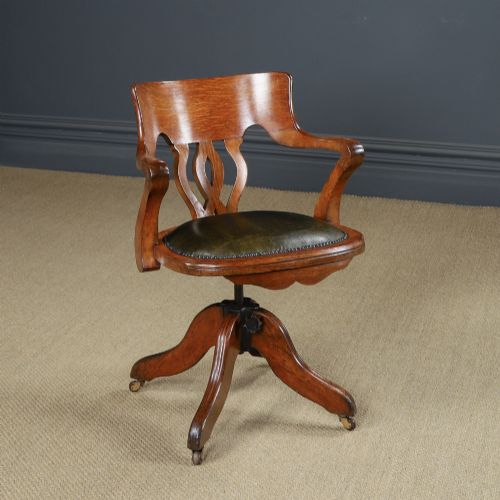

Vintage Revolving Desk Chair
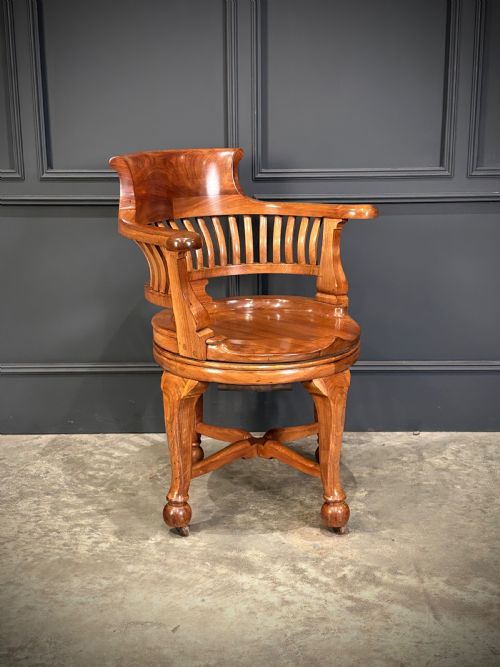
A vintage revolving desk chair brings functional timber and leather craftsmanship into a modern study with swivel mechanics.
Vintage Revolving Desk Chair
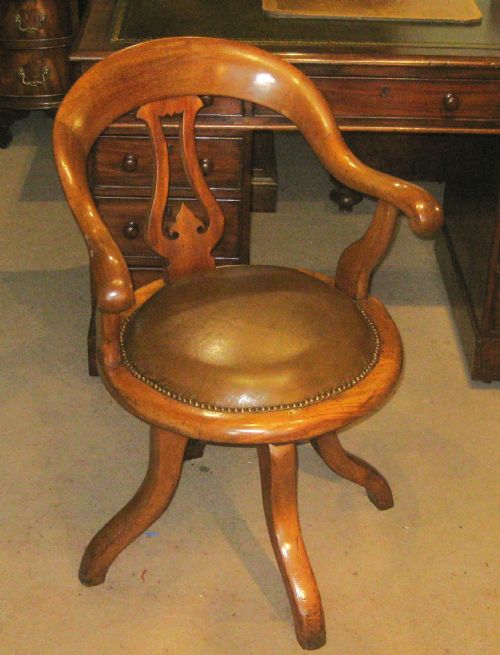
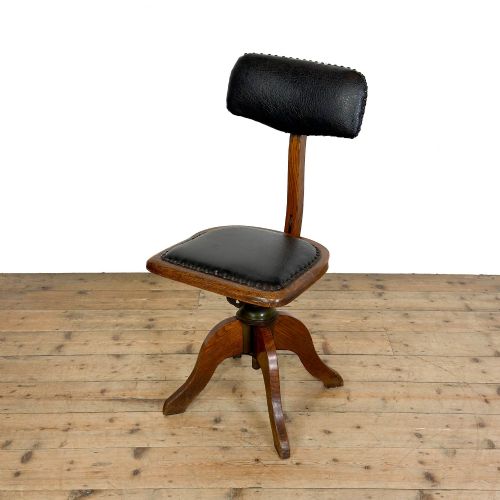
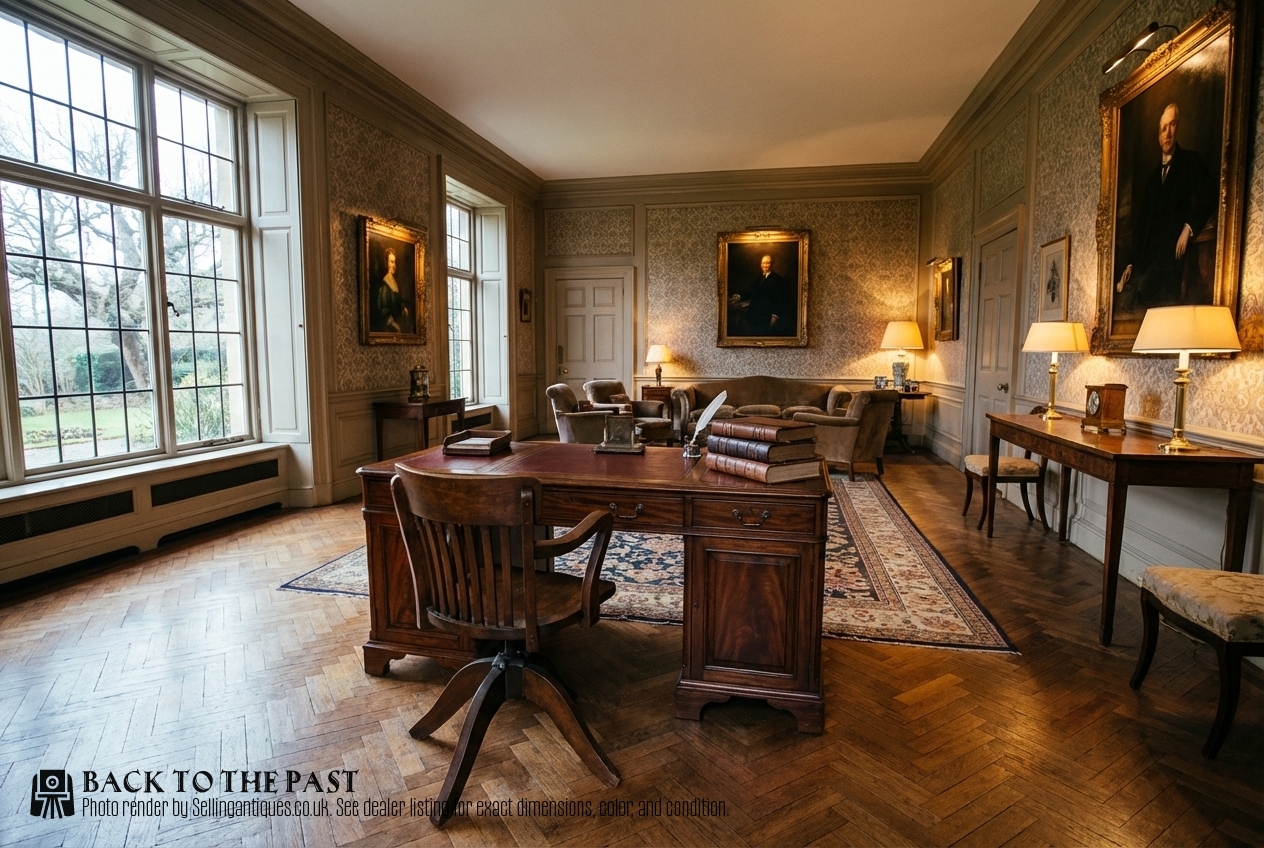
A vintage revolving desk chair serves as a practical workspace seat built around a central swivel mechanism. These pieces combine traditional woodwork with adjustable height functions designed for heavy office use.
The selections available here span from Victorian and Edwardian periods into the early 20th century. Buyers frequently encounter oak and mahogany frames paired with leather upholstery across these decades.
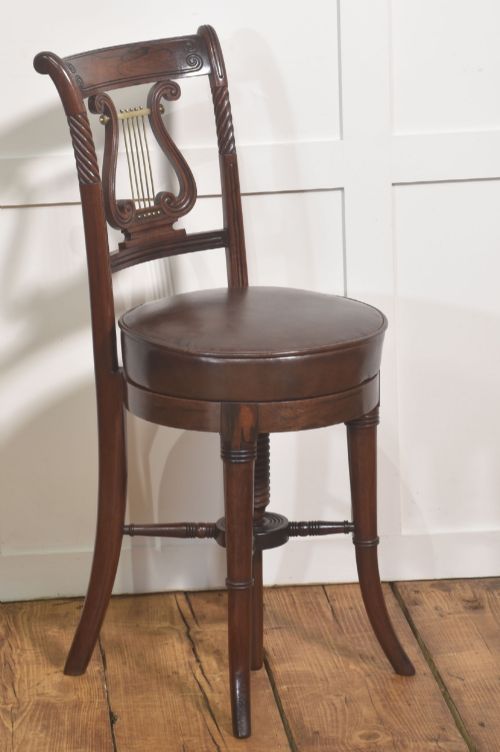
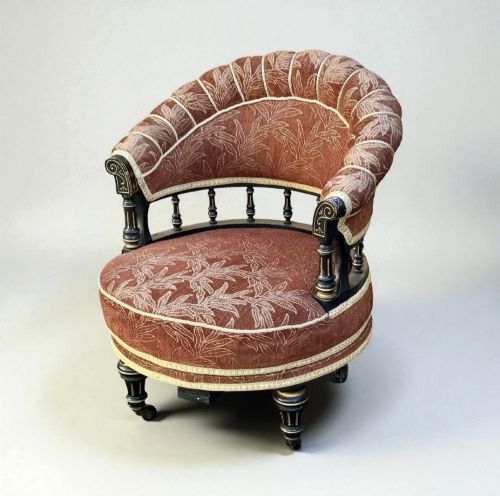
Forms range from conventional office armchairs and desk chairs to specialist seating like ships chairs and industrial stools. Many incorporate swivel and tilt actions suited to daily sitting.
Materials and Construction
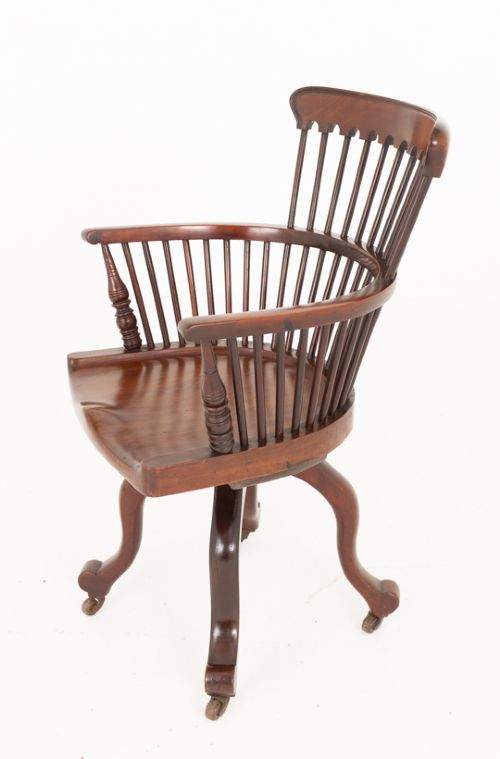
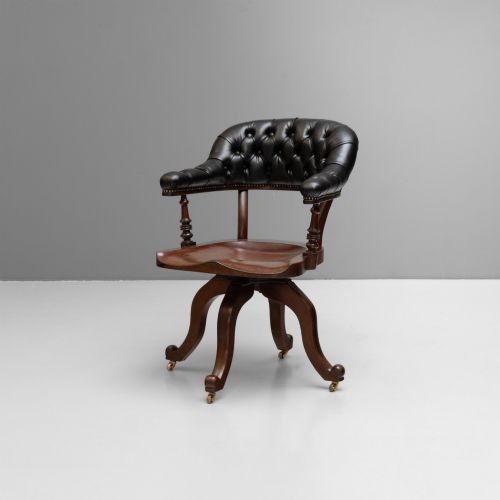
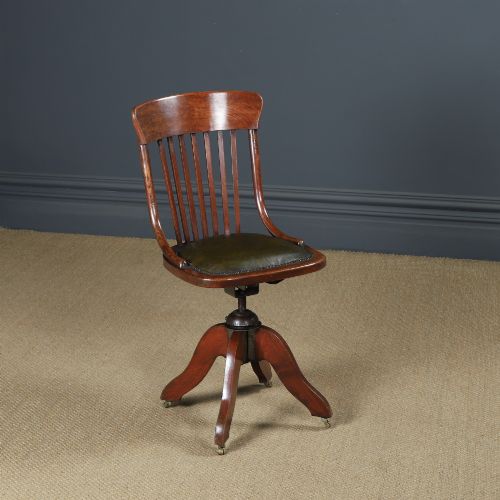
Craftsmen utilised robust timbers including oak, mahogany, walnut, ash, and beech to build structural frames capable of enduring constant rotation. These woods often feature rich natural grains shaped into curved armrests and supportive backs.
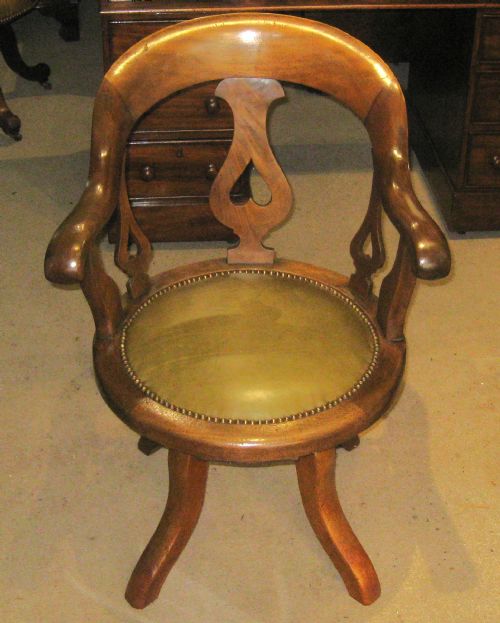
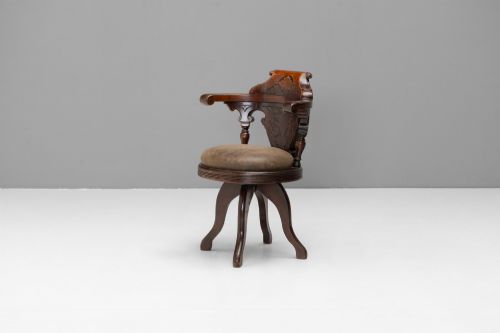
Seating surfaces typically incorporate leather upholstery, sometimes complemented by bentwood components or cane panels. Metal elements such as brass, iron, and cast iron form the adjustable swivel mechanisms hidden beneath the seat.
Certain maritime pieces originate from passenger vessels, bringing ocean-going swivel mechanics directly into domestic studies.
Distinctions in Quality
Quality rests upon the integrity of the timber framing and the mechanical smoothness of the swivel and rise-and-fall action. Superior examples maintain solid joinery without excessive play in the central column.
The refinement of the carving, the thickness of the leather hide, and the retention of original brass or iron hardware differentiate standard office models from finer architectural or aesthetic movement pieces.
Edward William Godwin
The Vintage Revolving Desk Chair Glossary
- Swivel
- A mechanical joint allowing the chair top to rotate fully around its vertical axis. This mechanism usually operates on a threaded spindle or central iron column.
- Rise and fall
- An adjustment system that alters the seating height of the chair. It relies on a threaded screw mechanism operated by turning the seat.
- Bergere
- A type of upholstered armchair featuring woven cane panels set into wooden frames. This technique appears on specific early 20th-century office variants.
- Gothic Revival
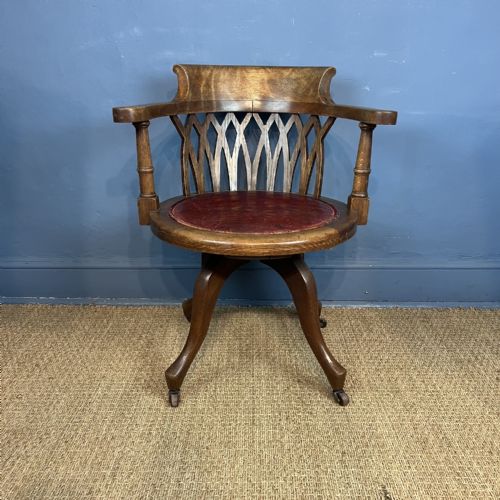
- A nineteenth-century design style incorporating medieval architectural motifs such as pointed arches and heavy geometric carving. This aesthetic occasionally influences office chair backs.
- Aesthetic Movement
- A late 19th-century design approach favouring simplicity and artistic craftsmanship over ornate Victorian revivalism. Pieces from this movement often display clean structural lines.
Vintage Revolving Desk Chair: Frequently Asked Questions
How do I adjust the height on these chairs?
Many vintage revolving desk chairs utilise a threaded spindle beneath the seat that raises or lowers the wooden top when rotated.
Others incorporate mechanical tilt and swivel functions developed during the late 19th and early 20th centuries to assist desk work.
What woods were commonly used for office chairs?
Cabinet makers predominantly selected dense hardwoods such as oak and mahogany to withstand daily commercial use.
Alternative timbers like walnut, ash, beech, and lighter mahogany variants also appear across Victorian and Edwardian examples.
Are these chairs suitable for daily computer work?
These pieces provide sturdy structural support and ergonomic swivel movement intended for traditional administrative duties.
Buyers frequently place them at modern desks, though the fixed tilt mechanisms differ from contemporary office seating.
How do I distinguish Victorian from Edwardian models?
Victorian pieces often feature heavier timber sections, darker mahogany finishes, and more ornate carved details reflecting 19th-century tastes.
Edwardian designs tend toward lighter oak construction, simpler lines, and practical Arts and Crafts or early office influences.