



Vintage Religious Wall Art
Vintage religious wall art brings centuries of devotion into a room through oil paintings, crosses, and prints.
Vintage Religious Wall Art
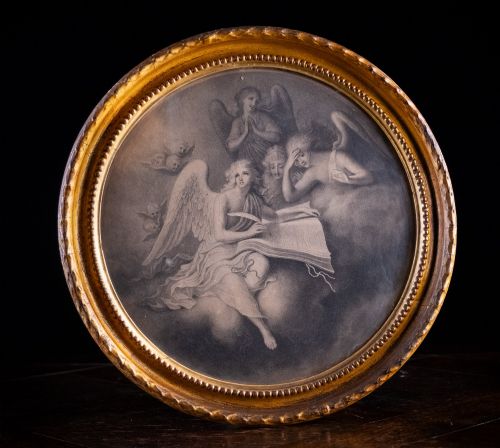
Vintage religious wall art covers devotional pieces designed for hanging, from oil paintings and engravings to crosses and plaques. These objects span periods from the eighteenth century through the mid twentieth century, drawing on Renaissance Revival, Baroque Revival, and Italian devotional styles.
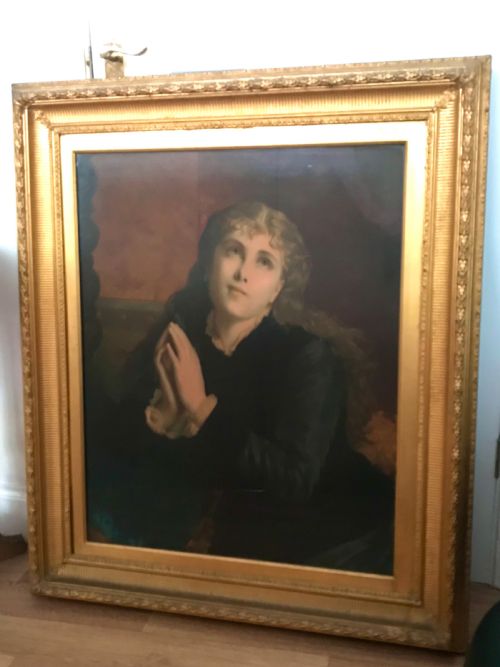
Buyers will most frequently encounter nineteenth century works, including oil portraits under glass, devotional prints, and carved wooden crosses. The selection also encompasses regional traditions, such as Russian icons on wood panels and Himalayan thangkas.
How vintage religious wall art was made
Techniques range from oil painting and engraving to pyrography on wood and painted textile wall cloth. Artisans applied traditional methods like leaf gilding and detailed wood carving to achieve rich surface textures.
Listings feature items from the eighteenth, nineteenth, and twentieth centuries, using materials including glass, canvas, brass, and giltwood.
What varies in quality in vintage religious wall art
Quality rests in the precision of the handwork, whether in the brushwork of an oil painting or the depth of a carved oak crucifix. Superior pieces show confident draughtsmanship and refined detail, particularly in facial expressions and drapery.
The integrity of original materials dictates value, such as intact giltwood surfaces, clear glass protecting early canvas, and stable wood panels. Works executed by skilled followers of classical masters stand apart from mass produced decorative prints.
The Vintage Religious Wall Art Glossary
- Oleograph
- A mechanical colour print on canvas designed to imitate an oil painting. These prints capture the texture of brushstrokes to mimic original artworks.
- Ex Voto
- A votive offering placed in a sacred place for the fulfilment of a vow. These devotional objects often take metal forms associated with specific prayers.
- Thangka
- A Tibetan Buddhist painting on cotton or silk appliqué, usually depicting a deity or scene. They are mounted on textiles and framed for wall display.
- Pyrography
- The art of decorating wood or other materials by burning a design with a heated tool. This technique appears in nineteenth century American panels.
- Gesso
- A plaster mixture used as a smooth base for painting or gilding on wood panels. It provides a stable surface for intricate sculptural details.
Vintage Religious Wall Art: Frequently Asked Questions
How do I hang a heavy wooden cross?
Heavy wooden crosses and carved panels require secure wall anchors rated for the weight of the timber. Fasten the mounting hardware directly into wall studs where possible.
Ensure the hanging wire or integrated brackets on the reverse are robust enough to support the piece safely over time.
Are oil paintings on canvas fragile?
Oil paintings on canvas respond to shifts in room temperature and humidity, which can cause the canvas to slacken or the paint to crack. Keep them away from direct heat sources and strong sunlight.
Glazed pieces benefit from glass protection, but unglazed canvases need gentle dusting with a soft, dry brush.
How do I identify a Russian icon?
Russian icons typically feature sacred figures painted on prepared wood panels, often incorporating metal rizas or mounts. The iconography follows strict traditional compositions passed down through generations.
Look for Cyrillic inscriptions and traditional pigment layers applied over gesso grounds on older timber boards.
What is an ex voto used for?
Ex votos serve as physical tokens of gratitude or devotion left at shrines by worshippers. They often represent specific bodily parts healed or prayers answered.
In domestic settings, they function as striking wall sculptures with deep historical and spiritual significance.