


Virgin Mary Child Art
Virgin mary child art spans centuries of devotion, uniting painters and sculptors who rendered the sacred mother and infant across canvas, wood, and gold.
Virgin Mary Child Art
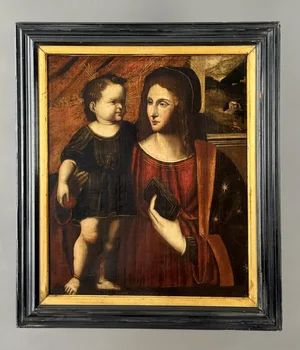
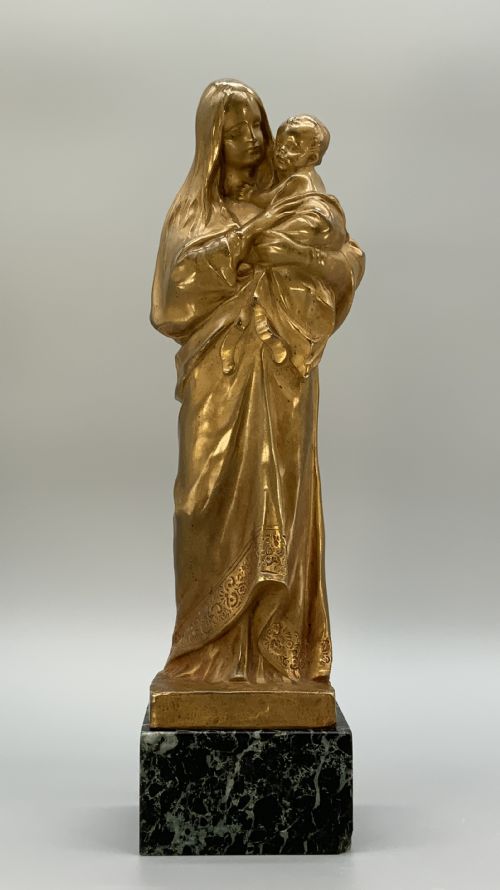
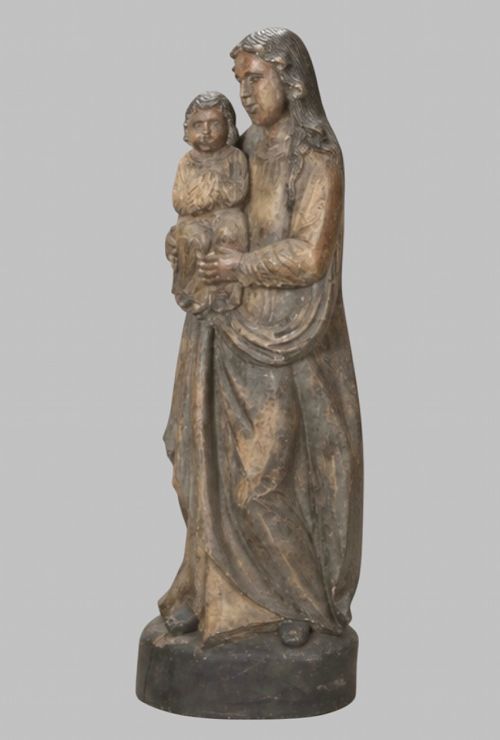
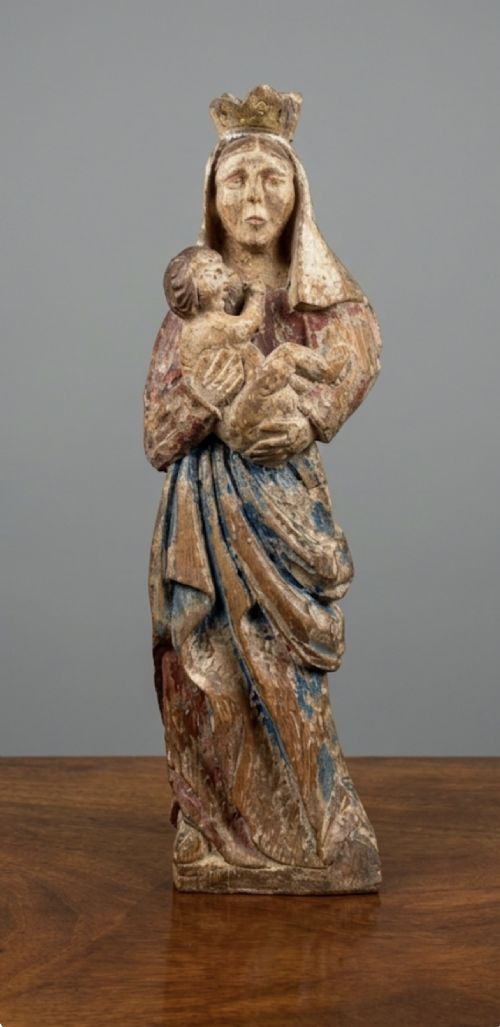
When you search for virgin mary child art, you encounter oil paintings, carved wood sculptures, and devotional pendants that capture the mother and infant motif. These works draw on historical painting traditions, often reflecting the styles of the Renaissance and Baroque periods.
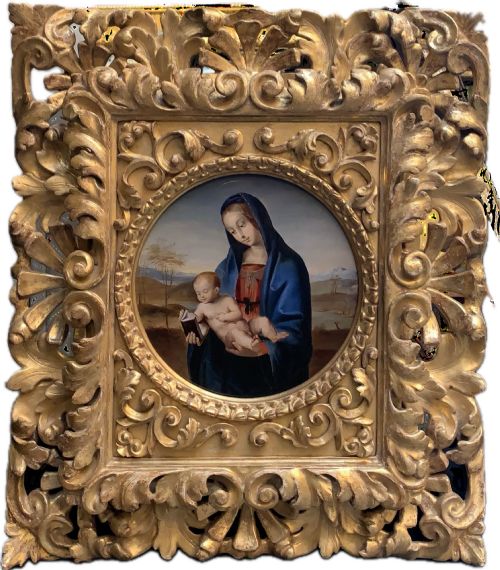
The pieces on this page range from oil paintings on canvas and panel to carved wooden devotional figures and gold charms. Many examples echo famous compositions by Raphael and other masters, filtered through later centuries of interpretation.
You will find formats varying from large framed canvases to small jewellery pendants set with enamel or precious metals. This diversity reflects how artists and makers adapted the subject for both public altars and private devotion.
Materials and construction
Painters utilised oil on canvas and wood panel, frequently incorporating gold leaf and gilt frames to elevate the devotional imagery. Sculptors shaped carved wood, gilt bronze, and painted surfaces to give the figures three-dimensional form.
Jewellery pieces combine 18k yellow and rose gold with plique-à-jour enamel, demonstrating meticulous craftsmanship on a miniature scale. Icons feature painted surfaces beneath protective metal oklads, pairing pigment with repoussé metalwork.
Listings for virgin mary child art encompass works spanning from the sixteenth century through to mid-century outsider art and modern icons.
Assessing quality in the pieces
Quality rests on the precision of the brushwork or the depth of the carving, distinguishing confident studio output from mechanical reproduction. In paintings, the handling of drapery, facial expression, and light determines the visual power of the composition.
Sculptural works depend on the crispness of the chisel work and the preservation of the original polychrome or gilt surface. For metalwork and pendants, the fineness of the enamel and the weight of the gold define the standard.
Hans Müller·Bernardino Luini·Benvenuto Tisi·George Kemper·Bartolomé Murillo
The Virgin Mary Child Art Glossary
- Oil on panel
- A painting executed on a flat wooden board rather than stretched canvas, common in earlier periods before canvas became dominant.
- Giltwood
- Wood that has been treated with a thin layer of gold leaf or gold paint, frequently seen on elaborate frames and devotional altarpieces.
- Oklad
- A protective metal cover placed over an icon, typically leaving only the faces and hands of the figures visible through cut-out apertures.
- Plique-à-jour
- A vitreous enamelling technique where the enamel is applied without a backing, allowing light to shine through the transparent colour like stained glass.
- Putti
- Representations of small winged infants, often resembling cherubs, appearing alongside the principal figures in religious compositions.
Virgin Mary Child Art: Frequently Asked Questions
How do I care for antique oil paintings?
Keep paintings away from direct sunlight and dramatic shifts in temperature or humidity to protect the canvas and wood.
Dust the surface gently with a soft, dry brush and avoid using liquid cleaners or chemical solvents on the paint.
What distinguishes an icon from a standard painting?
Icons follow strict theological traditions and often incorporate metal oklads, serving as ritual objects rather than purely decorative art.
They are typically painted on prepared wooden panels using specific mineral pigments mixed with egg tempera.
Can I wear antique gold pendants daily?
Gold charms and pendants from the early twentieth century are durable, but delicate enamel work requires careful handling.
Remove jewellery before swimming, sleeping, or engaging in heavy manual work to prevent scratching the gold or cracking the enamel.
How can I tell if a painting is after Raphael?
Works described as after Raphael are later interpretations or copies of his famous compositions, rather than original pieces by the master.
Look at the brushwork and canvas characteristics to help determine the approximate century in which the copy was painted.