
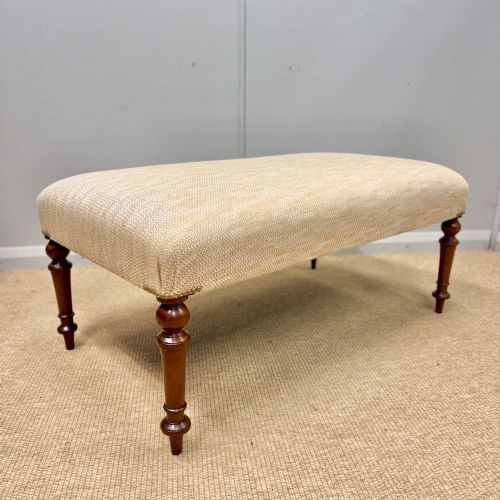
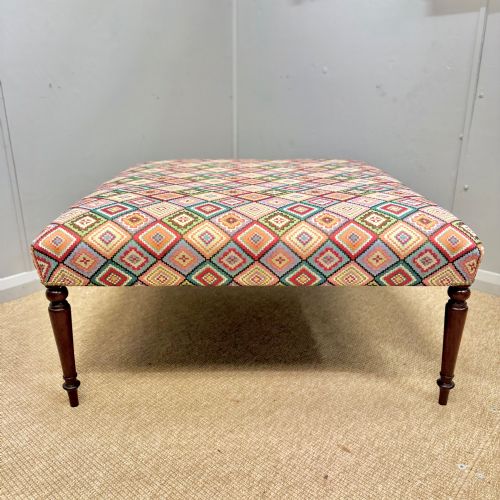
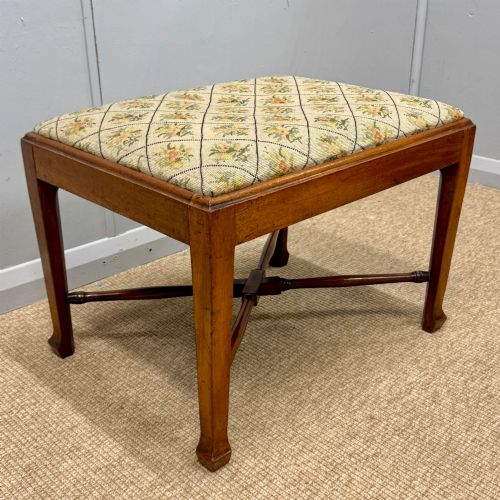


Vintage Rectangular Stool
These vintage rectangular stool examples offer solid utility and classic form, bringing character and practical seating to any traditional or period interior.
Vintage Rectangular Stool
A vintage rectangular stool serves as a versatile seat or footrest, taking various forms from dressing table seats to large footstools and ottomans. When searching for a vintage rectangular stool, buyers encounter pieces spanning the 18th century through to the art deco period.
The selection here encompasses diverse styles including Victorian, Georgian revival, and English country house aesthetics. These items range from compact salon seats to substantial centre stools designed for daily utility.
How they were made
Construction relies heavily on traditional timbers such as mahogany, oak, walnut, and teak, often shaped with carved details or cross stretchers. Frames are joined securely to support frequent use as seating or footrests.
Upholstery methods vary from buttoned leather and woven rattan to decorative tapestry, fabric, and damask coverings. Skilled makers applied traditional padding techniques to secure top fabrics over internal webbing and stuffing.
Listings feature timbers including mahogany, oak, walnut, and teak across 19th-century, regency, and 1930s periods.
What varies in quality
Quality shows in the selection and preparation of timber, seen in the depth of grain on mahogany and walnut frames and the crispness of carved woodwork. Substantial construction of the frame ensures long-term stability without looseness at the joints.
The grade of upholstery materials and the neatness of finishing work set apart finer examples from simpler utility seating. Original textile choices or thoughtful reupholstery maintain the intended aesthetic balance of the period.
Howard and Sons
The Vintage Rectangular Stool Glossary
- Cross stretcher
- A system of intersecting wooden bars between the legs of a stool that adds structural rigidity. This feature is frequently seen on dressing table stools and heavier framework.
- Giltwood
- Timber treated with a thin layer of gold leaf or gilt finish for decorative effect. This surface treatment appears on baroque style decorative seating.
- Damask
- A reversible figured fabric traditionally woven on a jacquard loom with patterns visible on both sides. It is utilised for fine upholstery finishes on period stools.
Vintage Rectangular Stool: Frequently Asked Questions
How do I clean leather upholstery?
Wipe leather surfaces gently with a dry or slightly damp cloth to remove surface dust. Avoid harsh chemical cleaners that can dry out vintage hide.
Condition the leather periodically with a suitable balm to preserve suppleness and prevent cracking over the years.
Are these stools sturdy enough to sit on?
Most examples are constructed from dense hardwoods like mahogany and oak, designed specifically for regular weight bearing. Checking the joints underneath ensures the frame remains stable for daily seating.
Lighter footstools or cane-seated variants suit lighter use as perches or footrests rather than heavy daily seating.
How do I identify a Victorian stool?
Victorian pieces often display darker hardwoods, buttoned leather upholstery, or robust turned legs characteristic of the 19th century. Stylistic cues draw from historical revivals popular during that era.
Examining the underside reveals construction methods and tool marks consistent with 19th-century workshop practices.
Can I use an ottoman as a coffee table?
Larger rectangular footstools and ottomans provide a stable surface that accommodates a decorative tray for stable placement of items. Their firm upholstery supports daily living room activities alongside traditional footrest duties.
Selecting a piece with durable leather or tightly woven fabric ensures the surface withstands regular domestic placement.