


Vintage Putto Sculpture
Vintage putto sculpture captures the timeless appeal of winged cherubs, offering classic decorative charm for both interior spaces and garden settings.
Vintage Putto Sculpture
A vintage putto sculpture represents winged cherubs and classical figures, appearing across garden statues, architectural fragments, and mantel ornaments. These pieces span multiple centuries and stylistic revivals, reflecting classical motifs that remain perennially popular among collectors.
Buyers encountering this category will find works rendered in various media, from interior porcelain figurines to heavy garden ornaments made of stone and lead. The selections range from 18th-century decorative carvings to mid-20th-century garden statuary.
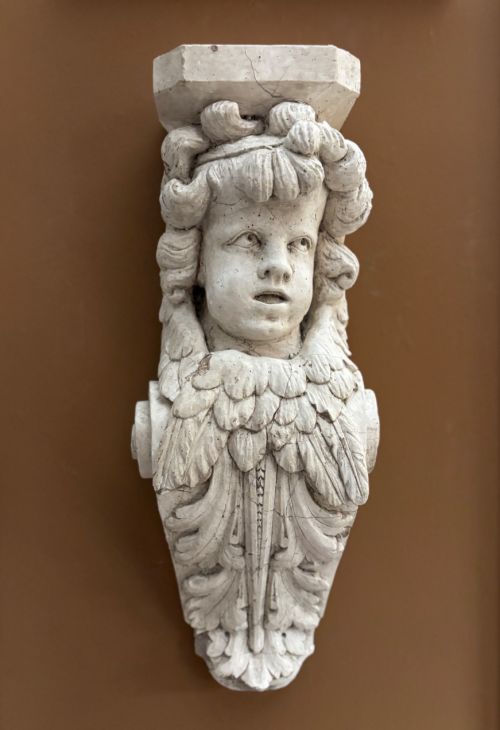
The physical forms vary significantly, including architectural wall corbels, doorstops, table figures, and large garden pieces standing on plinths. Each variation serves a distinct display purpose within traditional interiors or landscaped grounds.
Materials and construction techniques
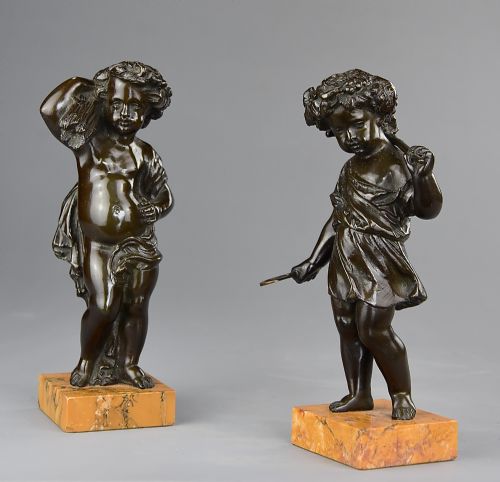
Metals form a substantial portion of the works, utilising bronze cast through traditional foundry methods, alongside durable lead and iron. These metallic pieces often feature detailed chasing or weathering that highlights the underlying sculptural contours.
Masonry and ceramics represent another core group, comprising carved marble, reconstituted stone, concrete, and glazed porcelain. These mediums allow for both delicate interior figurines and robust garden statues designed to withstand external elements.
Specialised techniques such as leathermaché and plaster provide lighter alternatives for interior architectural decorations and wall brackets. These diverse manufacturing methods dictate whether a piece is suited for domestic tabletops or exterior garden display.
Materials span traditional bronze and marble alongside lead, porcelain, and concrete.
Evaluating sculptural quality
The integrity of the material and its surface patina significantly influence the overall character, whether through natural weathering on lead and stone or the preserved glaze on fine porcelain. Original patination and crisp casting lines demonstrate superior craftsmanship.
Claude Michael Clodion·Royal Dux Bohemia·H Schubert·Royal Worcester·Karl Tutter·Ferrand·Moreau
The Vintage Putto Sculpture Glossary
- Putto
- A figure of a small winged infant, commonly found in classical art and architectural decoration. Plural form is putti.
- Spelter
- An alloy of zinc and lead used as a cheaper substitute for bronze in decorative figures and lamps. It is frequently painted to resemble bronze.
- Neoclassical
- A Western cultural movement drawing inspiration from the art and culture of classical antiquity. It heavily influences the poses and drapery seen in these sculptures.
- Patina
- A thin layer that naturally develops on the surface of bronze, stone, or lead through age and exposure. It adds depth and character to the material.
Vintage Putto Sculpture: Frequently Asked Questions
What is a putto sculpture?
A putto sculpture depicts a small, often winged infant figure derived from classical mythology and art. These figures appear frequently in European decorative arts and garden statuary.
They serve primarily as ornamental details in architecture, furniture, and freestanding art objects across various historical periods.
Where should I place a stone cherub?
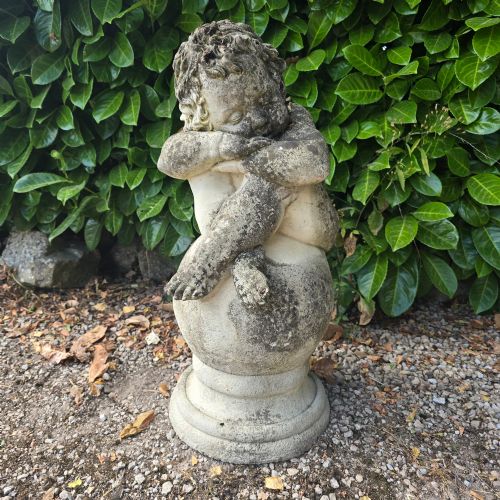
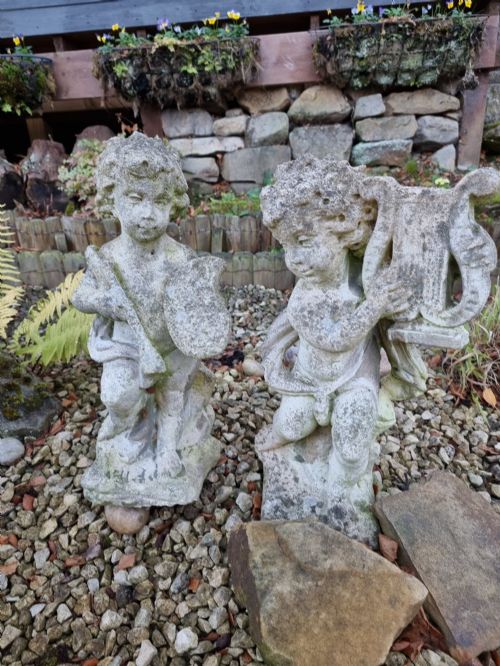
Stone cherub statues and garden figures suit outdoor settings like patios, lawns, and garden borders where weather-resistant materials can weather naturally.
Larger stone pieces often sit on dedicated plinths to create a focal point in landscape designs.
How do I identify bronze from spelter?
Bronze objects feel heavier, exhibit a warmer metallic resonance, and develop a stable copper-based patina over time. Spelter is softer, lighter, and often shows silvery grey metal beneath chips in the painted surface.
Bronze also permits finer detail in the casting process compared to the more brittle zinc alloy.
Are porcelain cherubs fragile?
Porcelain figures, such as those from continental and English potteries, require careful placement on stable indoor surfaces away from high-traffic areas.
Their delicate appendages and painted glazes make them strictly suitable for interior display rather than garden use.