



Vintage Platinum Diamond Necklace
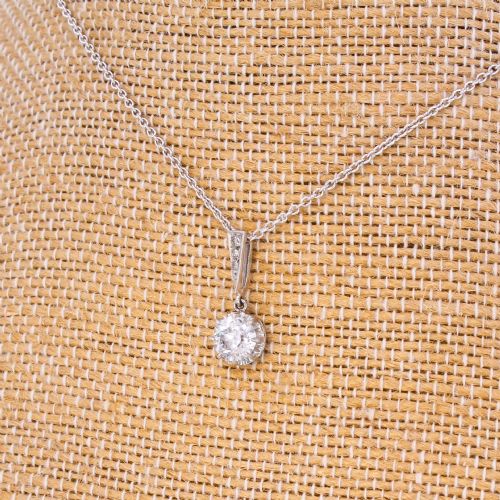
A vintage platinum diamond necklace brings together the cool lustre of precious metal and the sharp brilliance of old cut stones.
Vintage Platinum Diamond Necklace
A vintage platinum diamond necklace comprises pieces from distinct periods including Edwardian, Art Deco, Victorian, Art Nouveau, and Mid-Century designs. Buyers encounter pendant necklaces, lavalieres, negligee styles, and fringe necklaces alongside simpler diamond drops.
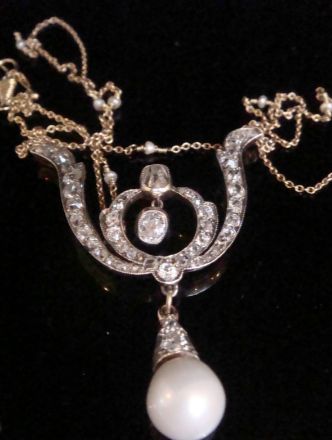
The core materials combine platinum settings with diamonds, frequently paired with pearls, aquamarine, sapphire, ruby, emerald, and jadeite, occasionally supported by gold components. These items range from delicate single stone pendants to substantial multi-carat fringe and line necklaces.
Materials and construction techniques
Goldsmiths utilised platinum for its exceptional strength, allowing jewellers to create ultra-fine wirework, knife-edge bars, and delicate millegrain settings that hold diamonds securely without heavy metal surrounds. This white metal provided a neutral background that maximised the perceived whiteness and sparkle of old cut stones.
Combination pieces frequently integrated yellow or white gold for structural robustness, particularly in chains, clasps, or backing plates where softer gold alloys accommodated mechanical components. Stones were meticulously hand-set using bezel, channel, or pavé techniques typical of the early twentieth century.
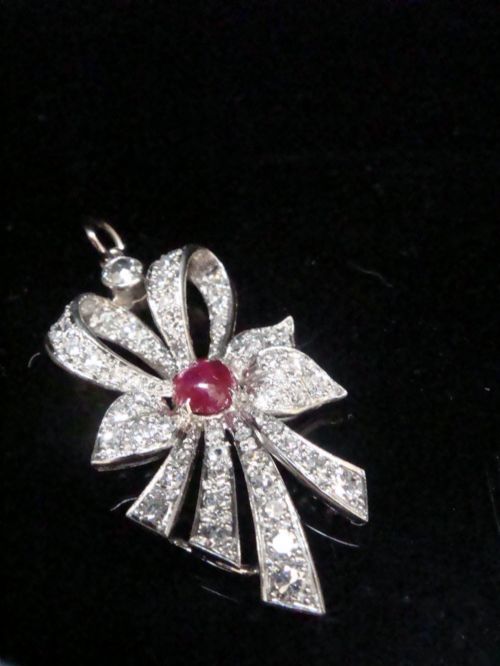
Some Edwardian platinum necklaces doubled as convertible brooches, allowing the wearer to unscrew the pendant frame for daytime lapel duty.
Distinguishing quality across periods
Quality separates pieces through the precision of the piercing and hand-worked millegrain edges, where superior examples exhibit crisp, even beadwork alongside perfectly symmetrical geometric motifs in Art Deco designs or fluid botanical lines in Edwardian work. The integration of the primary gemstones with supporting pearls or coloured stones such as sapphires, emeralds, and aquamarines dictates the overall balance of the piece.
The choice of diamond cuts, particularly old European and old mine cuts, influences the depth of light refraction, while the condition of delicate platinum chain links and original clasps indicates the level of preservation over time.
Eduard Foehr
The Vintage Platinum Diamond Necklace Glossary
- Millegrain
- A decorative technique involving a row of tiny raised metal beads along the edge of a setting, softening the transition between platinum and stone.
- Negligee pendant
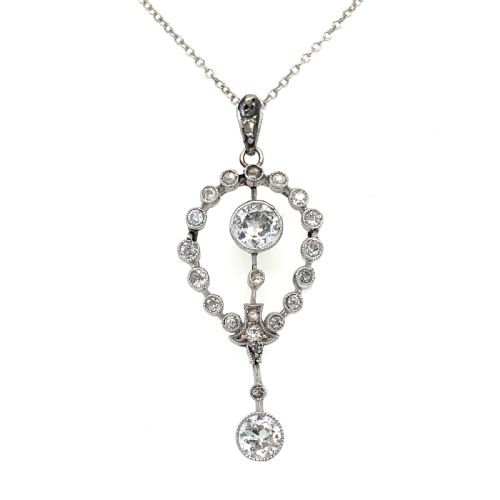
- A necklace style featuring two unequal drops suspended from a central link, popular during the Edwardian period.
- Lavalier
- A pendant design featuring a main drop suspended from a smaller component, named after the Duchess of La Vallière.
- Old cut
- A diamond cutting style preceding modern round brilliants, characterised by a smaller table, higher crown, and open culet that produces a distinctive candlelit glow.
- Fringe necklace
- A necklace featuring vertical pendants or drops suspended along the front section of the chain, creating a cascading effect.
Vintage Platinum Diamond Necklace: Frequently Asked Questions
How do I care for a platinum diamond necklace?
Clean platinum and diamond pieces gently using warm soapy water and a soft brush to remove accumulated oils from the settings. Avoid harsh chemical dips, particularly if the necklace incorporates pearls, emeralds, or opals.
Store the necklace flat in a lined box or separate compartment to prevent delicate platinum links from tangling or scratching adjacent pieces.
Can I change the length of the chain?
Altering the length requires caution, as many vintage platinum chains feature integrated construction or original clasps that should remain unmodified to preserve historical integrity. A specialist jeweller can often add a matching extender or source a complementary period chain if a longer drop is necessary.
Original fittings and hallmark placements on the chain should be documented prior to any modification work.
What is the difference between Edwardian and Art Deco styles?
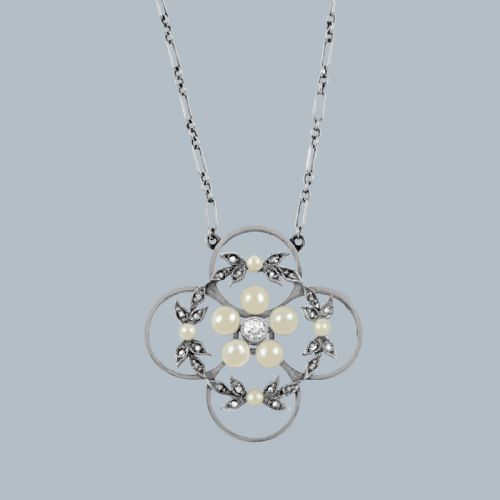
Edwardian platinum and diamond necklaces emphasise light, lace-like platinum work, floral garlands, bows, and fluid organic curves influenced by the Belle Époque. Stones are set to appear weightless and airy.
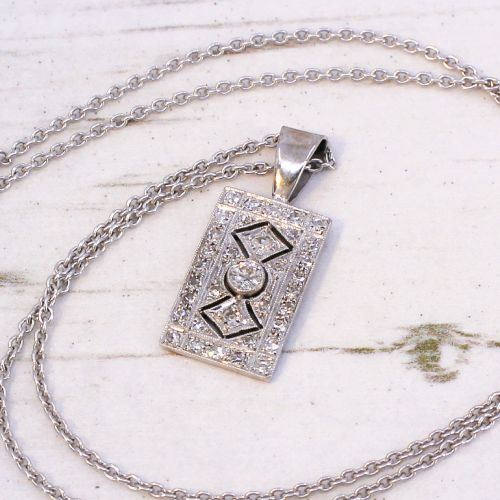
Art Deco necklaces shift toward bold geometric patterns, symmetrical lines, strong contrasts with onyx or calibre-cut gems, and streamlined architectural shapes characteristic of the 1920s and 1930s.
Are coloured gemstones natural in these necklaces?
Many pieces incorporate untreated sapphires, emeralds, aquamarines, rubies, and natural saltwater pearls that reflect the mining sources and gemological standards of the early twentieth century. Certification reports often accompany significant coloured stones to verify their origin and treatment status.
Coloured gems were chosen to complement the bright white sparkle of old cut diamonds within platinum mountings.