
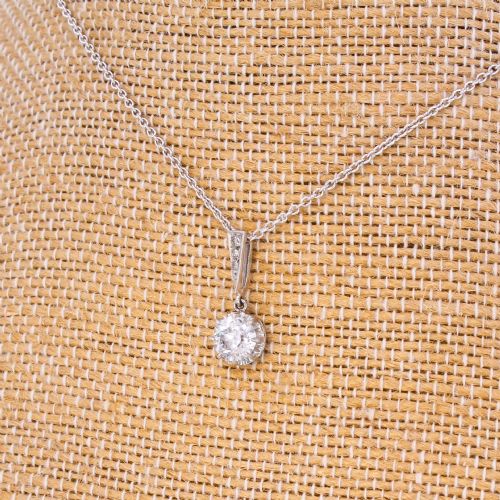


European Cut Diamond Pendant
These european cut diamond pendant pieces combine historical stones with intricate precious metal settings.
European Cut Diamond Pendant
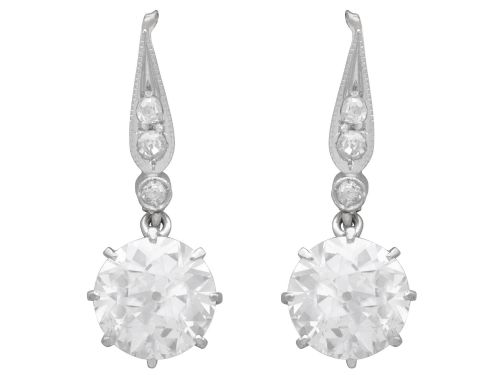
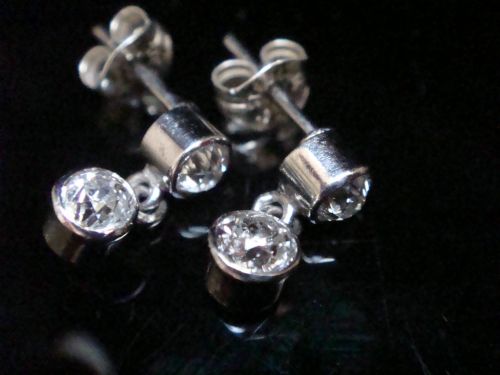
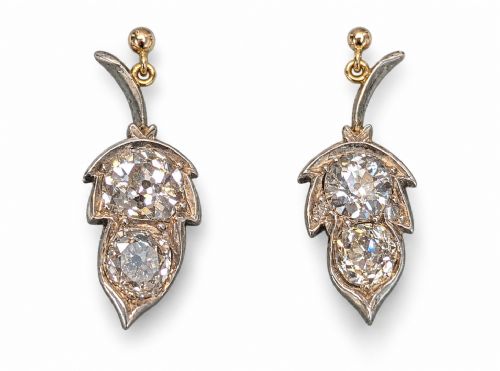
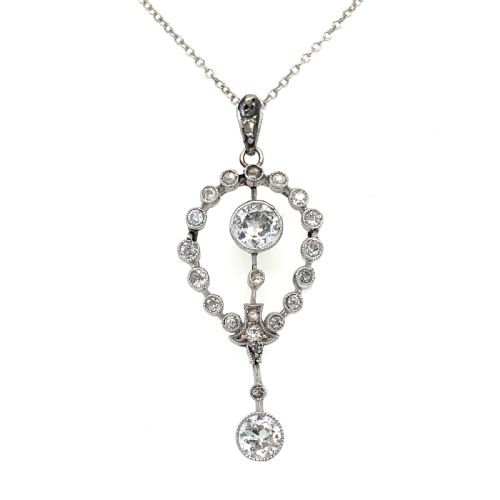
A european cut diamond pendant brings together stones shaped with characteristically broad facets and open culets, mounted in drop earrings, convertible brooches, and traditional necklaces. These items span Victorian, Edwardian, Art Deco, and Mid-Century periods, showing how goldsmiths adapted settings across changing stylistic eras.
Buyers browsing this selection frequently encounter Edwardian platinum and gold drop earrings alongside solitaire and halo pendants dating from the late nineteenth century through to nineteen fifty. Each piece showcases stones cut by hand before modern symmetrical standards took over, giving them a distinct visual warmth under candlelight.
How they were made
Craftsmen mounted these stones using platinum, 18ct white gold, standard gold, and silver, often combining metals to support intricate pierced work. Silver was frequently employed alongside gold in earlier Victorian items to brighten the appearance of the metalwork surrounding the diamonds.
The stones themselves feature the deep pavilions and smaller tables typical of old European cutting techniques. Jewelers secured these gems within delicate claw settings, millegrain borders, and halo arrangements that emphasised the unique hand-polished facets of each diamond.
Many pieces started life as brooches before being thoughtfully adapted into pendants for modern necklines.
What varies in quality
Quality rests upon the harmony between the hand-cut diamond and its metal mounting, where precision in the piercing and grain setting dictates the refinement of the piece. Finer examples maintain original settings without structural alterations, preserving the integrity of the period design.
The condition of the metalwork and the retention of original seed pearls or supplementary gemstones also separate standard examples from superior ones. Pieces that display crisp millegrain edges and robust clasp or suspension mechanisms demonstrate superior original craftsmanship.
The European Cut Diamond Pendant Glossary
- European cut
- A vintage diamond cutting style characterised by a round girdle, small table, and prominent open culet. This historic cut creates distinctive soft light patterns.
- Millegrain
- A decorative jewellery technique featuring a border of tiny raised metal beads along the edges of a setting. It adds a refined texture typical of Edwardian and Art Deco pieces.
- Culet
- The small facet at the bottom tip of a gemstone. In older European cut stones, this facet is often noticeably broad and visible to the naked eye.
- Seed pearl
- A very small, naturally formed or cultured pearl often used as an accent material in historic necklaces. These delicate pearls provide a subtle contrast to bright diamond facets.
European Cut Diamond Pendant: Frequently Asked Questions
How do I care for a vintage pendant?
Clean your piece gently using warm soapy water and a soft brush to remove everyday oils from the diamond facets. Avoid harsh chemical dips, particularly if the setting incorporates softer materials like seed pearls.
Store the item separately in a lined box to prevent the metalwork from scratching neighbouring pieces. Regular checks by a professional jeweller will ensure the old settings remain secure.
Are these diamonds certified?
Many historic pieces retain their original stones without modern laboratory certification. The absence of a certificate is standard for antique jewellery of this age.
Evaluation relies on visual inspection of the cutting style, symmetry, and mounting characteristics. Independent appraisals can be arranged separately if specific gemstone gradings are required.
Can I change the chain on my pendant?
Most pendants allow for chain replacement provided the suspension loop or bail is large enough to accommodate a new finding. Selecting a chain that matches the metal colour of the original mount maintains the visual balance.
Consult a jeweller if the jump ring needs modification to fit securely onto a heavier modern chain. Preserving original integrated bails maintains the historical integrity of the piece.
How can I tell an Edwardian piece from a Victorian one?
Edwardian items frequently utilise platinum settings that allowed for lighter, more intricate openwork designs. Victorian pieces often combine silver and gold, leaning towards heavier, more substantial mounting styles.
Examining the overall weight and structural motifs helps distinguish between the two eras. Hallmark evidence and stylistic cues such as garlands or star bursts further clarify the dating.