





Vintage Pine Tool Chest
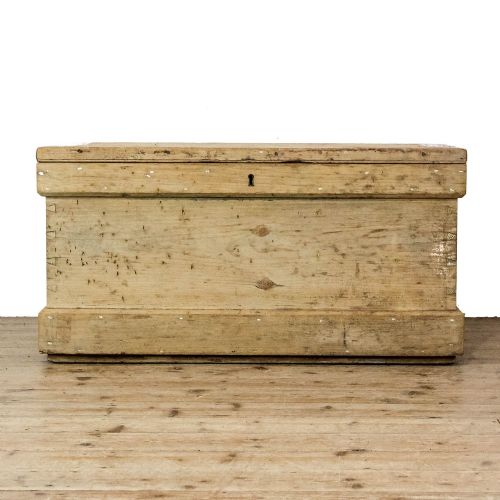
A vintage pine tool chest is a sturdy working container built to carry heavy tradesman equipment, offering robust utility and character for modern storage.

Vintage Pine Tool Chest
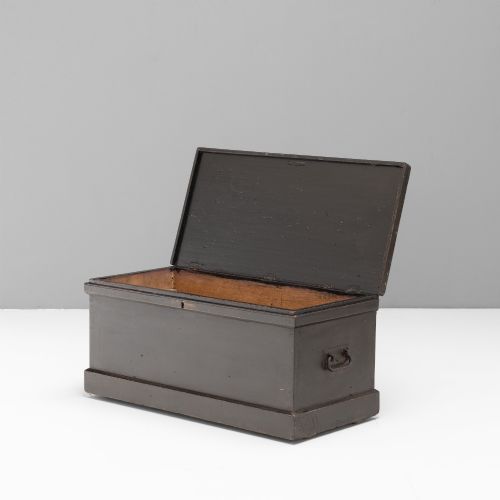
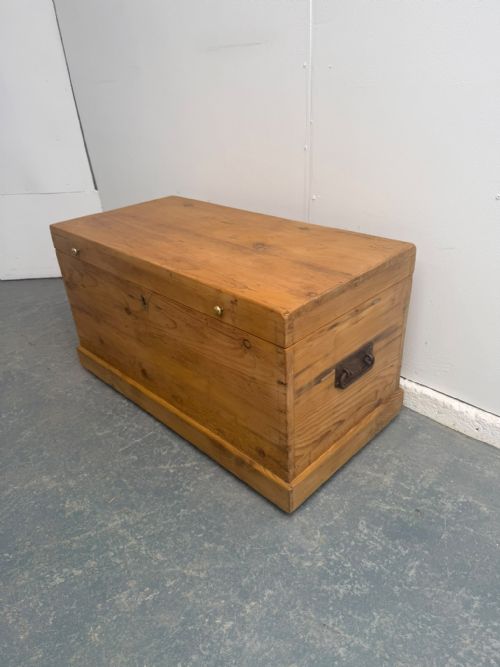
When you search for a vintage pine tool chest, you are looking at heavy-duty wooden boxes built for carpenters, shipwrights, and mechanics during the nineteenth and early twentieth centuries. These pieces served as portable workshops that protected valuable hand tools from dampness and theft during transport.
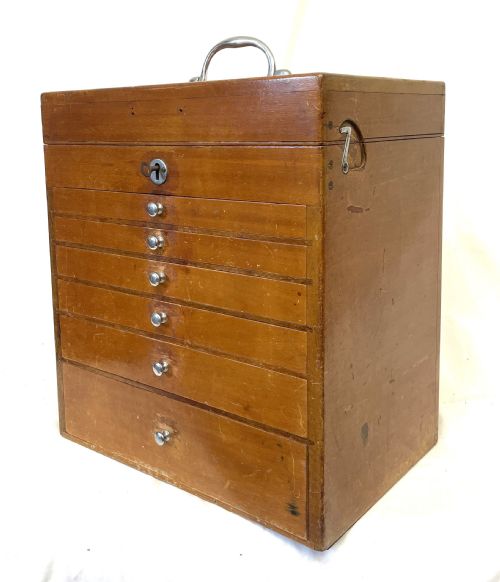
The versions most common on this page date from the Victorian and Edwardian eras, spanning simple farmhouse storage boxes to elaborate fitted carpenter chests with internal drawers. Alongside standard pine, you will find pitch pine variants and examples reinforced for maritime or military use.
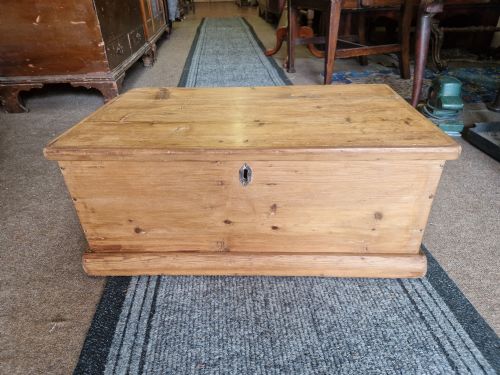
Beyond traditional workshop duties, these trunks function well in modern interiors as coffee tables or blanket boxes. Their utilitarian origins mean they bring a genuine sense of history and honest construction to any room.
How they were made
Makers built these chests primarily from solid pine and pitch pine, selecting softwood for availability and ease of working while ensuring thick walls to absorb knocks. Joints were typically robust dovetails or finger joints at the corners to withstand the heavy stresses of transit.
Hardware played a crucial role in construction, with heavy iron or brass hinges, strap handles, and working locks fitted to secure the contents. Some maritime or military variants added painted finishes or ebonised surfaces for extra weather resistance.
Listings feature pieces spanning the Victorian period, the Edwardian era, and the nineteen-twenties, constructed from pine, pitch pine, mahogany, and walnut.
What varies in quality
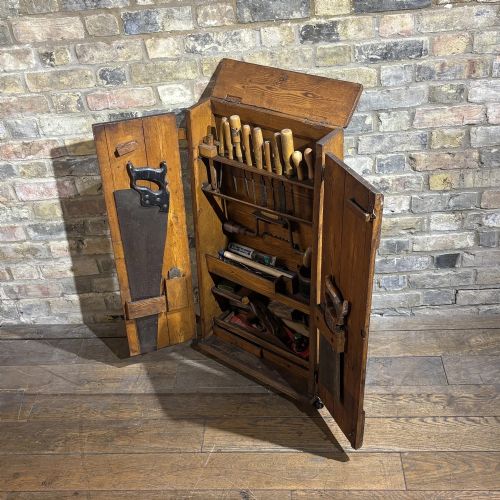
Quality in a vintage pine tool chest depends heavily on the sophistication of the interior layout and the integrity of the original hardware. Simple blanket boxes offer straightforward open storage, whereas pieces made for cabinet makers or shipwrights feature complex fitted interior tills, secret compartments, and dovetailed small drawers.
The grade of timber and the precision of the joinery also separate standard utility boxes from superior examples. Tighter dovetailing, thicker stock pine, and retained original brass or iron fittings indicate a higher standard of original craftsmanship.
Gnome Et Le Rhone Engine Company
The Vintage Pine Tool Chest Glossary
- Pitch pine
- A dense, resinous variety of pine often used in nineteenth-century maritime and heavy utility pieces for its superior durability.
- Dovetail joint
- An interlocking wood joint formed by fan-shaped tenons that provides exceptional tensile strength at the corners of a chest.
- Till
- A small internal sliding tray or compartment built inside a chest to hold smaller tools, nails, or personal items.
- Ebonised
- Wood finished with a dark stain or polish to imitate the appearance of expensive ebony, sometimes found on maritime trunks.
- Seaman's chest
- A specialised storage trunk built to withstand damp shipboard conditions, often featuring rope handles and painted decoration.
Vintage Pine Tool Chest: Frequently Asked Questions
What were vintage pine tool chests used for?
These chests were designed for tradesmen such as carpenters, shipwrights, and engineers to store, organise, and transport their heavy hand tools safely between jobs.
They travelled on ships, in carts, and across workshops, functioning as secure mobile toolboxes that kept valuable equipment protected from moisture and theft.
How do I date a pine tool chest?
Dating relies on observing construction details like dovetail size, hardware types, and timber choice, alongside any maker marks or painted inscriptions.
Victorian and Edwardian examples often feature hand-cut joints and heavy cast iron or brass fittings, while specific periods show distinct regional styles and locks.
Can I use a tool chest as a coffee table?
Many people repurpose these sturdy chests as living room coffee tables because their flat tops and strong construction handle daily use easily.
Their substantial proportions and lift-up lids also provide hidden storage space for blankets, books, or living room clutter.