



Vintage Pharmacy Bottle
A vintage pharmacy bottle brings practical medical history into the modern interior through deep amber glass, rich blue tones and authentic labels.
Vintage Pharmacy Bottle
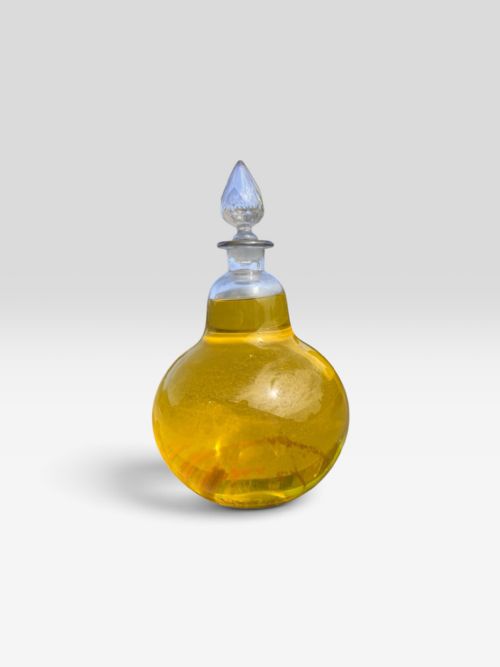
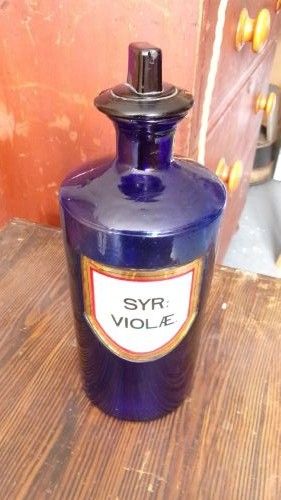
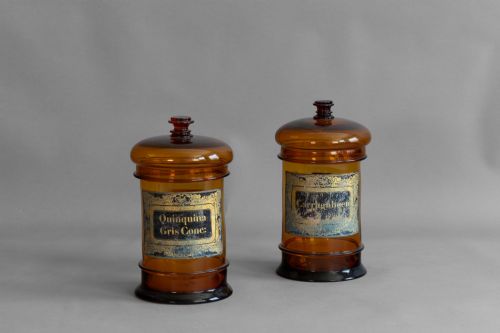
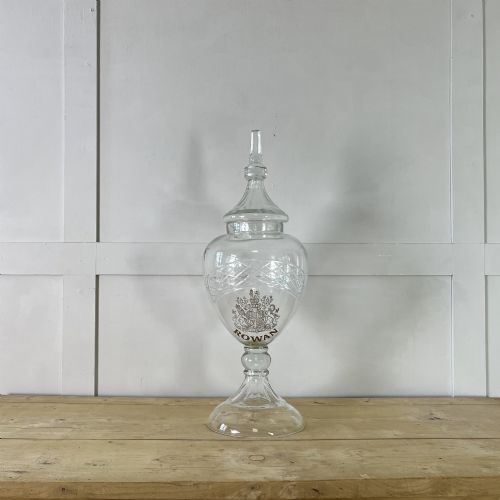
When you search for a vintage pharmacy bottle, you encounter a specialised range of medical containers spanning from the Georgian and Regency periods through the Victorian and Edwardian eras into the 1930s. The selection includes large display carboys, individual chemists bottles, pairs of amber or blue jars, and fitted travelling cases complete with internal vessels.
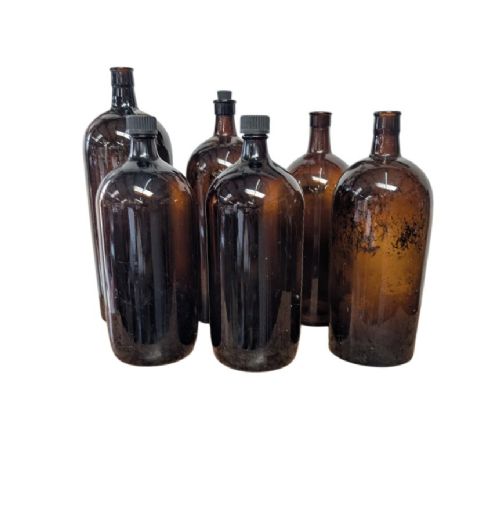
Most pieces date from the 19th century and the Victorian era, offering clear glass, Bristol blue and rich amber finishes. You will also find ceramic faience jars and substantial mahogany cabinets housing smaller drug bottles and drawers.
Materials and construction
Glass vessels rely on hand blown manufacturing techniques, evident in the uneven walls, pontil marks and bubbles characteristic of early production. Makers utilised clear, amber and Bristol blue glass, often finished with cut glass stoppers, etched surfaces or applied paper labels with gold leaf detailing.
Enclosed storage pieces employ dense timbers such as mahogany, sometimes featuring boxwood inlay, brass fittings and velvet lined interiors to secure delicate glass bottles and drawers during transit or display.
Listings feature glass, mahogany, brass and paper materials across the Victorian, Georgian, Edwardian and Regency periods.
Assessing craftsmanship and survival
Quality rests upon the preservation of fragile components, particularly the survival of original matching stoppers, legible paper labels and undamaged glass rims without chips. Fine examples demonstrate crisp glass moulding, deep colour saturation in blue and amber pieces, and intricate joinery in fitted wooden cases.
The presence of complete sets, original contents or internal drawers elevates a piece beyond single utilitarian containers. The clarity of etched decoration and the precision of gold leaf application further distinguish superior examples.
The Vintage Pharmacy Bottle Glossary
- Carboy
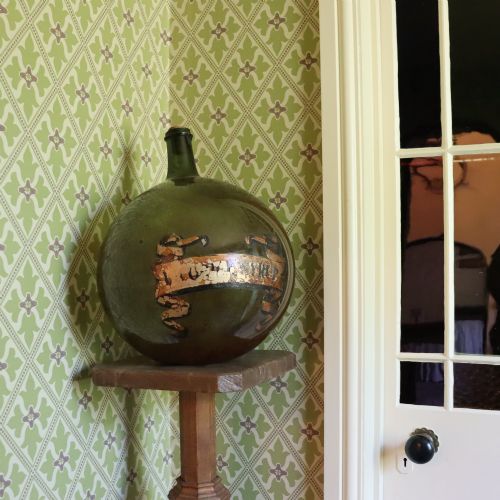
- A large spherical glass vessel traditionally used in shop windows to hold medicinal liquids. These impressive pieces often feature heavy blown glass and matching stoppers.
- Tincture bottle
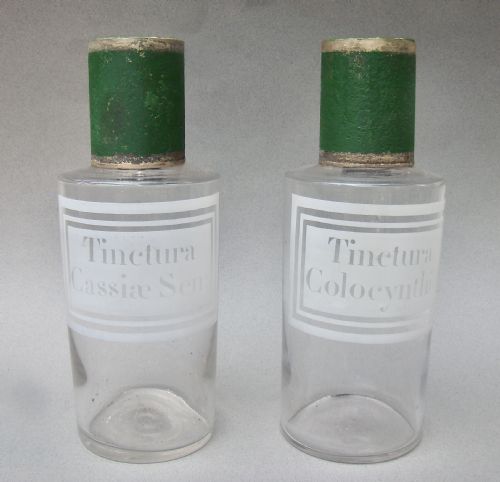
- A smaller glass container designed to hold alcoholic solutions of medicinal substances. They frequently appear in matched pairs or sets within fitted wooden chests.
- Faience
- Tin glazed earthenware used for ceramic apothecary jars. These vessels typically display hand painted inscriptions denoting specific medicinal contents.
- Pontil mark
- A scar left on the base of hand blown glass where the punty rod was detached. Its presence confirms traditional manufacturing methods.
- Bristol blue
- A distinctive deep cobalt blue glass produced in significant quantities during the Georgian and Victorian periods. Chemists favoured this colour to protect light sensitive compounds.
Vintage Pharmacy Bottle: Frequently Asked Questions
How were pharmacy bottles used?
Apothecaries and chemists utilised these vessels to store, mix and dispense various medical drugs, dry ingredients and liquid tinctures. Larger carboys served as striking window displays to advertise the profession to the street.
Smaller bottles sat neatly on dispensary shelves or inside portable mahogany cases designed for travelling doctors. Each container kept its contents safe from light and moisture until required for patient treatment.
How do I date a glass apothecary bottle?
Dating relies on observing manufacturing traits like pontil marks, glass colour, and stopper style. Hand blown pieces with irregular bubbles generally point to the 18th or 19th centuries.
Later Victorian and 20th century examples display more uniform machine moulding and standardised threads or ground glass joints. Comparing label types and typographical styles also helps narrow down the decade of production.
What is the difference between a jar and a bottle?
Bottles feature narrow necks designed for pouring liquids such as tinctures, syrups and chemical solutions. They often accommodate glass stoppers or cork closures.
Jars possess wide mouths intended for powders, ointments, roots and dried herbs. These broader openings allowed easy access with a spatula or fingers during compounding.