



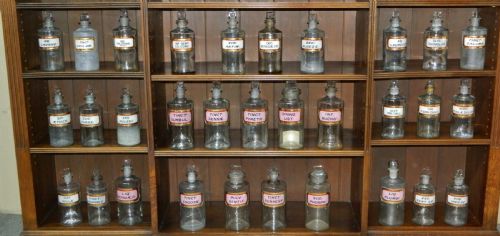

Antique Apothecary Jars Stoppers
These antique apothecary jars stoppers hold the colourful liquids and dried drugs of nineteenth-century dispensaries, offering tactile glass forms for modern interiors.
Antique Apothecary Jars Stoppers
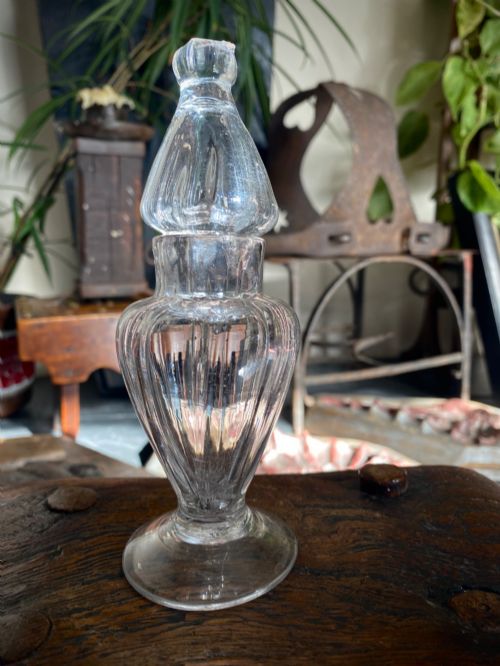
When you search for antique apothecary jars stoppers, you encounter functional glass vessels originating from Victorian, Georgian, and eighteenth-century dispensaries. The pieces available on this page span apothecary bottles, dry mustard jars, and larger chemist pharmacy containers.
You are most likely to meet Victorian examples alongside nineteenth-century French and English pieces. These items serve as tangible reminders of historical medicine, often retaining their original ground glass stoppers.
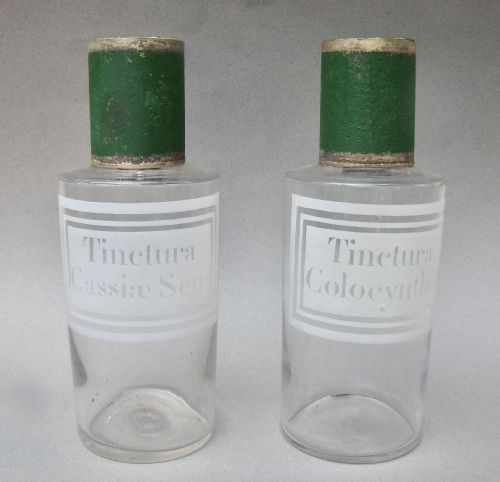
Forms range from small tincture bottles to substantial chemist jars and sets of pharmacy containers. Each piece reflects the practical needs of historical apothecaries while offering decorative appeal for contemporary spaces.
Materials and manufacture
The material record relies heavily on glass, including hand-blown glass, cobalt glass, clear glass, Bristol green glass, and Bristol blue glass. Certain vessels incorporate gold leaf, paper labels, and painted details to identify contents.
Manufacturing techniques centre on traditional glassblowing and hand-finishing, which produces slight irregularities and bubbles within the walls. Ground glass stoppers are individually fitted to their respective necks to create secure closures.
Antique Apothecary Jars Stoppers Retail Price Guide 2026
Typical asking prices for apothecary jars stoppers among the pieces listed under this phrase on Sellingantiques today, from the lower quarter to the upper quarter. They describe what is for sale here now, not the wider market.
Listings feature glass, paint, and paper across Victorian, Georgian, and eighteenth-century periods.
Qualities that distinguish the range
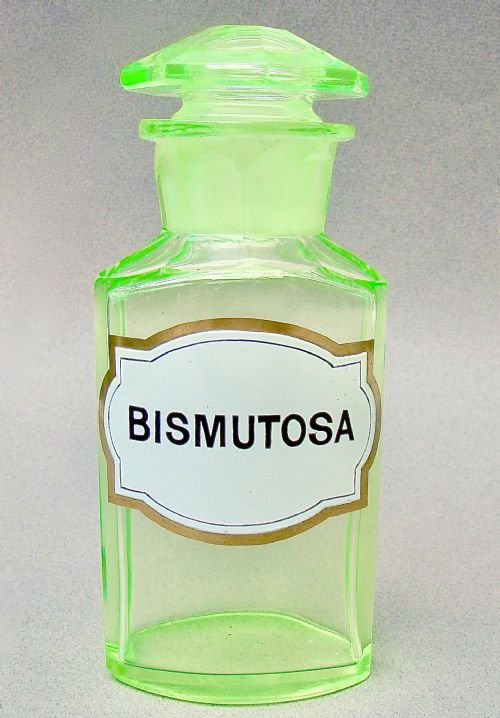
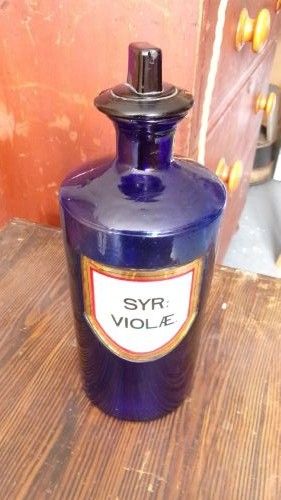
Quality rests upon the depth and saturation of the glass colour, whether in rich Bristol blue, vibrant green, or uranium glass. The presence of matching pairs and original labels elevates a piece above standard utilitarian examples.
The preservation of the matching ground glass stopper significantly influences the desirability of each vessel. Subtle differences in proportion, etching quality, and overall clarity separate everyday apothecary items from superior specimens.
The Antique Apothecary Jars Stoppers Glossary
- Stopper
- A ground glass plug designed to seal the neck of an apothecary jar or bottle tightly. These are turned to fit an individual vessel.
- Tincture
- A medicinal solution made by dissolving a drug in alcohol. Tincture bottles typically held these liquid preparations in the pharmacy.
- Bristol Blue
- A deep cobalt blue glass traditionally produced in Bristol during the eighteenth and nineteenth centuries. It protected sensitive contents from light degradation.
- Uranium Glass
- Glass containing small amounts of uranium dioxide, which glows brightly under ultraviolet light. It appears in transparent yellow or green shades.
Antique Apothecary Jars Stoppers: Frequently Asked Questions
What were apothecary jars stoppers used for?
These glass vessels stored medicinal drugs, dried herbs, and liquid chemicals in historical pharmacies and dispensaries. The tight-fitting stoppers prevented moisture and air from degrading the sensitive contents inside.
Pharmacists arranged rows of these bottles on wooden shelves for quick identification during compounding. Their distinct colours often protected light-sensitive compounds from spoiling.
How can I date my apothecary jar?
Examine the manufacturing marks, pontil scars on the base, and the overall method of glass construction. Hand-blown pieces with heavy kick-ups usually point towards earlier Georgian or eighteenth-century origins.
Standardised machine-made finishes and specific label styles often indicate later Victorian or nineteenth-century production. Comparing the stopper fit and glass tint also helps establish the period.
Are the stoppers original to the jars?
Ground glass stoppers were individually fitted to each bottle during manufacture, creating a unique seal. Original stoppers often share the same degree of wear and matching glass characteristics as the body.
Inspect the ground surfaces on both the neck and the stopper for consistent age indicators. A matching fit confirms the integrity of the piece.