




Vintage Medical Bottle
A vintage medical bottle brings tangible history to a room, offering the appeal of hand-blown glass, amber hues and utilitarian forms.
Vintage Medical Bottle
When you search for a vintage medical bottle, you encounter glass pharmacy containers, chemist jars and fitted travel chests dating from the Georgian, Regency and Victorian eras through to the early twentieth century. These items originate from apothecary shops and dispensaries, serving originally to hold drugs, chemicals and remedies.
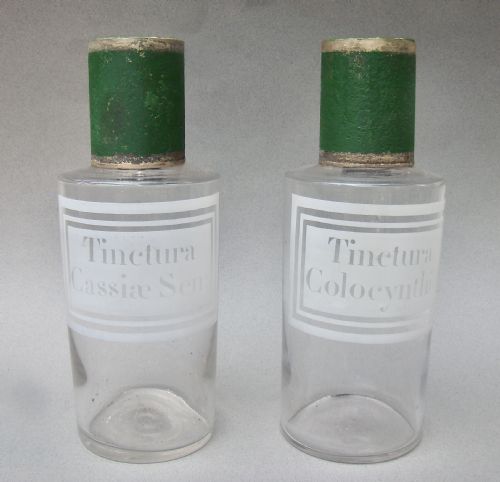
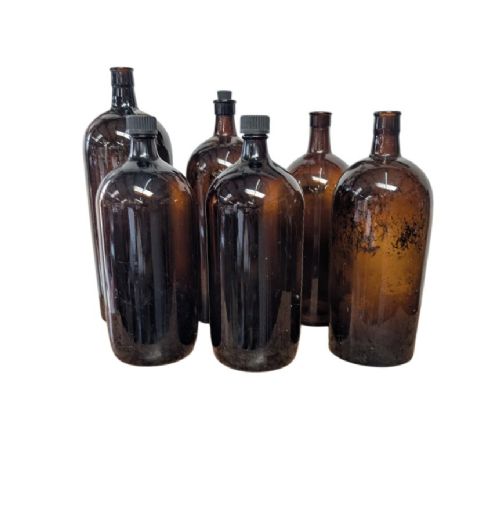
The versions most commonly met on this page include nineteenth-century amber Winchester bottles, green drug jars and glass carboys alongside fitted mahogany travelling cases containing smaller glass vessels. Styles span simple industrial utilities to decorative French etched jars and cased sets complete with drawers.
Materials range from clear and coloured glass to mahogany, brass, paper and gold leaf, occasionally accompanied by oak tools such as cork compressors. The forms vary from large display carboys meant for shop windows to compact pocket and travel chests designed for medical practitioners on the move.
How they were made
Glass vessels in this category rely on hand-blowing techniques, evident in the irregular bubbles, pontil marks and thickness variations seen across nineteenth-century chemist jars and carboys. Amber and green glass formulations give these containers their distinct utilitarian colouration.
Wooden cases utilise mahogany and oak, often constructed with dovetailed joints, brass campaign handles and internal partitions tailored to hold specific bottle sizes securely. Paper labels, velvet linings and gold leaf lettering complete the fitted interiors of travelling chests and apothecary cabinets.
Vintage Medical Bottle Retail Price Guide 2026
Typical asking prices for vintage medical bottle among the pieces listed under this phrase on Sellingantiques today, from the lower quarter to the upper quarter. They describe what is for sale here now, not the wider market.
Periods represented span the Georgian, Regency, Victorian and Edwardian eras, alongside early twentieth-century industrial pieces.
What varies in quality
Quality rests upon completeness, particularly in fitted mahogany boxes and chests that retain their original set of glass bottles, stoppers and internal drawers. The presence of original paper labels and intact gold leaf detailing elevates an individual piece above plain utilitarian examples.
Manufacturing characteristics also define the tier of an item, distinguishing standard blown glass from finely etched French jars or large carboys with clear blown bubbles and strong structural integrity in their brass hardware and wooden carcases.
The Vintage Medical Bottle Glossary
- Carboy
- A large glass bottle with a narrow neck, traditionally used in laboratories and apothecary shops for holding liquids. These were often displayed in chemist windows.
- Pontil mark
- A scar left on the base of hand-blown glassware where the pontil rod was snapped off after shaping. Its presence confirms traditional manufacturing methods.
- Winchester
- A standard heavy-duty glass bottle shape, frequently in amber glass, designed for storing chemical reagents safely. They remain popular for their robust industrial form.
- Cork compressor
- A mechanical press used to squeeze cork stoppers to fit bottle necks snugly. These wooden and metal tools form part of historic apothecary equipment.
Vintage Medical Bottle: Frequently Asked Questions
What did apothecary bottles hold?
These glass vessels contained various pharmaceutical preparations, dried drugs, chemicals and liquid remedies used by nineteenth-century chemists and doctors.
Larger carboys and jars sat on pharmacy shelves or in shop windows, while smaller bottles travelled inside fitted mahogany chests.
How do I clean an old glass bottle?
Wash the glass gently using warm water and mild soap, avoiding harsh abrasives that might damage historic surfaces or etched designs.
If paper labels are present, keep them completely dry to prevent detachment or staining.
Are wooden apothecary boxes rare?
Fitted mahogany travelling cases and desktop cabinets appear regularly, though finding one with a complete set of matching original bottles is less common.
Cases from the Georgian and Regency periods often feature brass handles and secret drawers designed for medical instruments.
How do I date a medical bottle?
Examine the glass for hand-blown characteristics such as uneven thickness, surface ripples and pontil marks on the base, which typically point to nineteenth-century manufacture.
Style, wood type and the presence of original paper labels or embossed lettering also help narrow the period.