





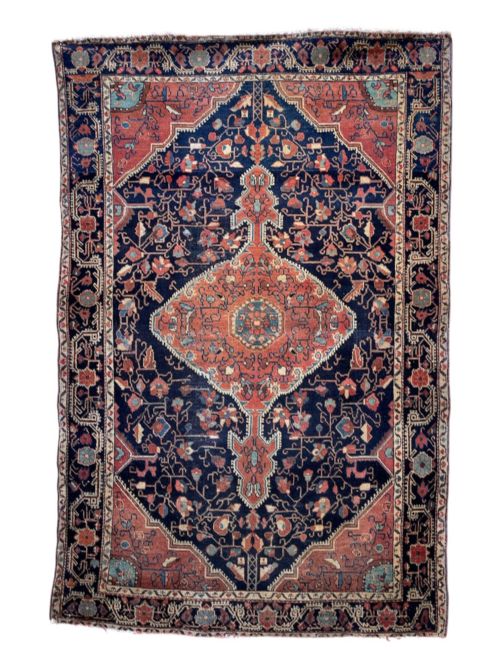
Vintage Persian Wool Rug
These vintage persian wool rug examples bring character and warmth to floors through enduring materials and traditional designs.
Vintage Persian Wool Rug
A vintage persian wool rug encompasses floor coverings, carpets, runners and tribal textiles originating from Persia and neighbouring regions. Buyers searching for a vintage persian wool rug will find pieces spanning the nineteenth century up to the 1930s, including village and nomad makes.
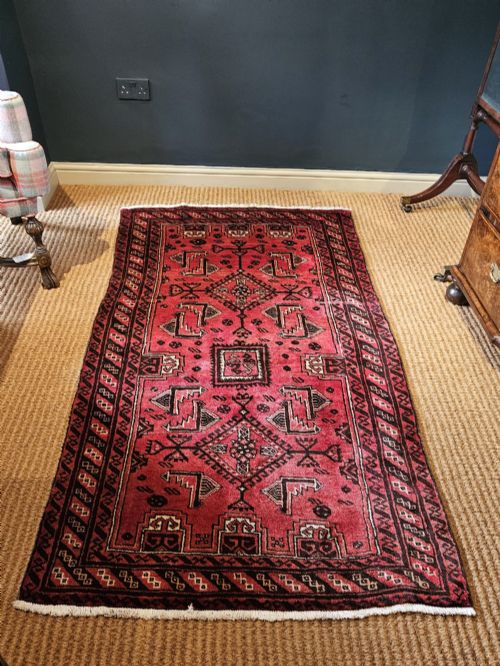
Village and tribal workshops produced the bulk of these floor coverings, often utilising geometric layouts, medallion compositions or all-over patterns. Buyers encounter pieces created for domestic use in country houses and village settings.
How they were made
Weavers constructed these carpets using hand-spun wool for the pile, often combined with cotton foundations for stability and durability. Natural dyes provided the palette, producing rich tones of red, rust and olive green that developed patinas over time.
Nomadic and village weavers employed hand-weaving techniques, knotting the wool by hand onto warps. Certain finer pieces incorporated silk highlights to accentuate specific motifs within the design.
Vintage Persian Wool Rug Retail Price Guide 2026
Typical asking prices for vintage persian wool rug among the pieces listed under this phrase on Sellingantiques today, from the lower quarter to the upper quarter. They describe what is for sale here now, not the wider market.
What varies in quality
The density and tightness of the hand-knotting dictate the crispness of the design and the longevity of the pile. Finer weaves allow for intricate curves and detailed medallion work, particularly evident in city carpets.
The choice of dyes and wool grade influences the depth of colour and how the textile ages under foot traffic. Hand-spun wool combined with natural dyes yields variations in tone that enhance the visual texture of the surface.
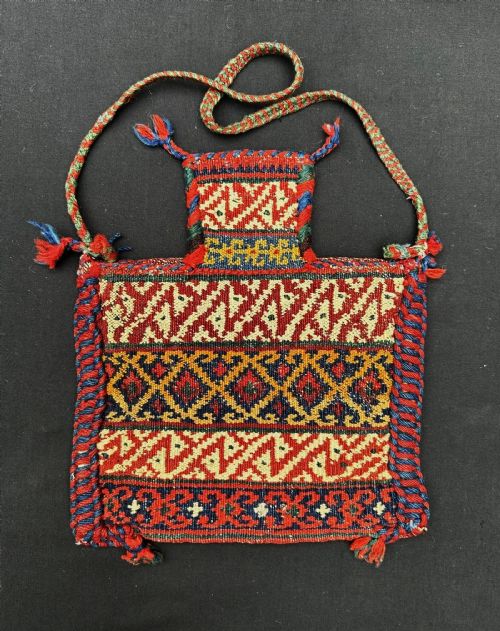
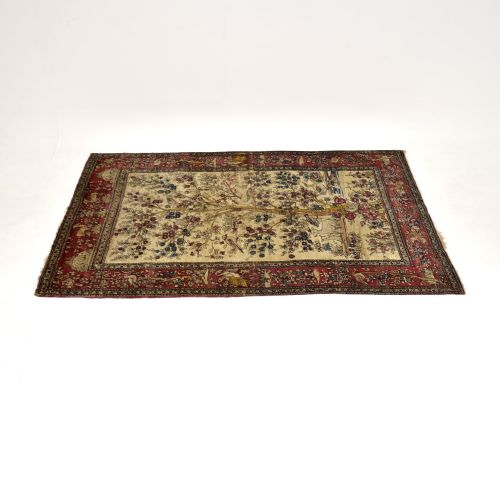
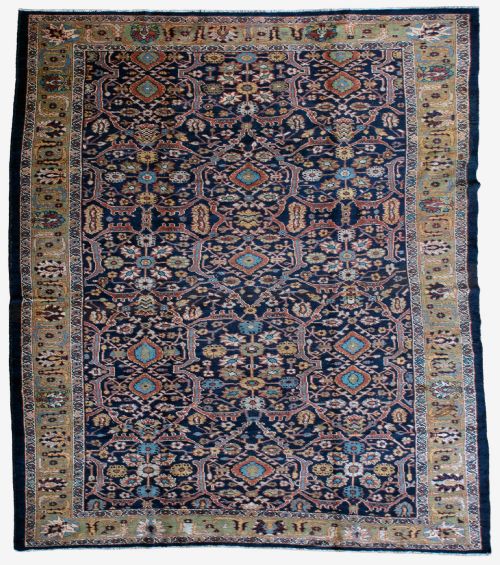
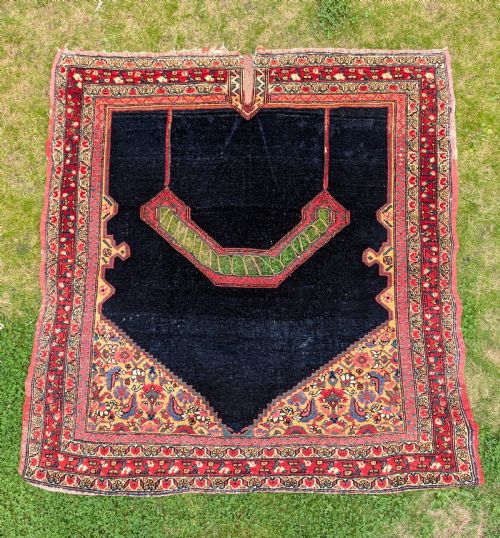
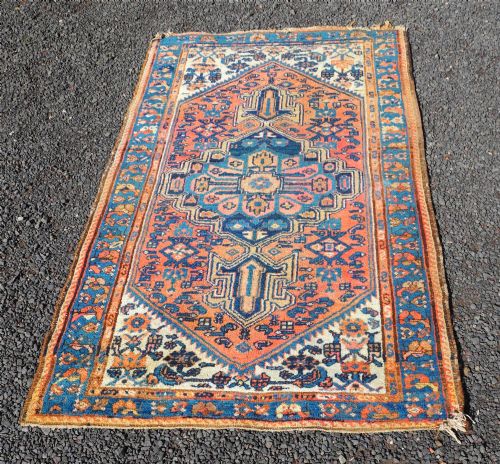
Afshar Nomads·Kerman Province·Senneh Saddle cover·Kashan rug
The Vintage Persian Wool Rug Glossary
- Medallion
- A large central ornamental motif found in the middle of many carpet designs. It often anchors the composition of traditional Persian rugs.
- Warp
- The vertical threads stretched on the loom that form the structural foundation of the textile. Wefts are then passed horizontally through these threads.
- Pile
- The cut or uncut loops of wool that stand up from the foundation to form the usable surface of the rug. Pile thickness varies depending on the regional tradition.
- Runner
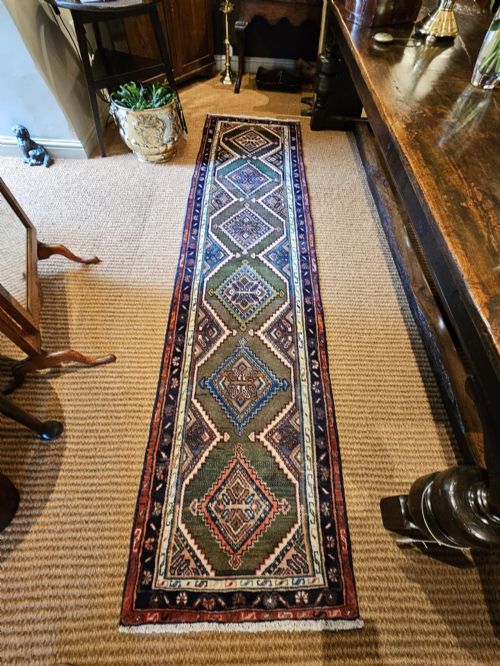
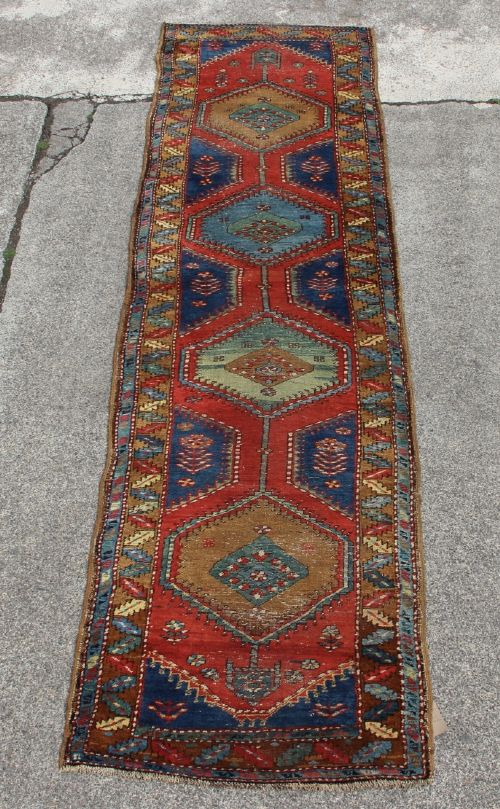
- A long and narrow carpet format specifically suited for hallways, corridors or staircases. These pieces often feature repeating geometric or floral borders.
Vintage Persian Wool Rug: Frequently Asked Questions
How do I clean a wool rug?
Regular gentle vacuuming without a beater bar removes loose dust and debris from the wool pile. Professional cleaning remains necessary for deeper washing to protect the natural fibres and dyes.
Avoid harsh chemical detergents or excessive water immersion. Prompt blotting handles accidental spills before moisture sets into the cotton foundation.
Where should I place a runner?
Runner rugs suit narrow spaces such as hallways, entryways and corridors where linear floor coverage works best. They add warmth and texture while protecting high-traffic flooring underneath.
Ensure a suitable underlay is used beneath the runner to prevent slipping on hard wood or tile surfaces.
What is a village rug?
Village rugs are hand-woven textiles produced by independent weavers in rural settlements rather than large urban manufactories. These pieces frequently display spontaneous geometric patterns and distinctive regional colour choices.
Such carpets reflect the local traditions and everyday environment of the makers.
How do I date a carpet?
Dating relies on examining the types of wool, the chemical or natural composition of the dyes, and structural construction methods. Stylistic indicators like specific border motifs and medallion shapes also help narrow down the period.
Archival comparisons with known nineteenth and early twentieth-century examples provide further context for age estimation.