

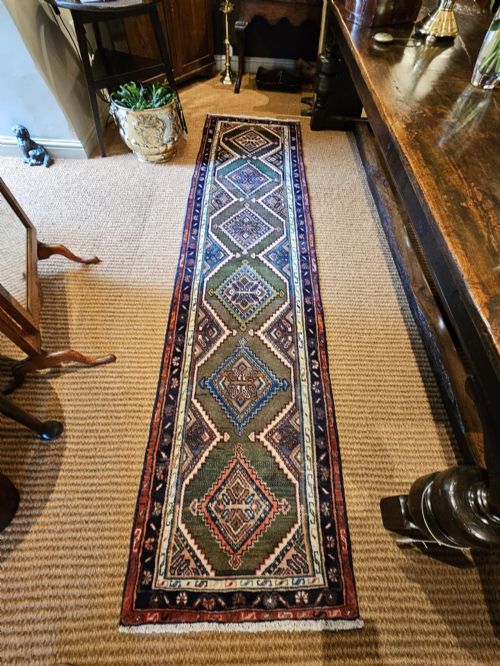



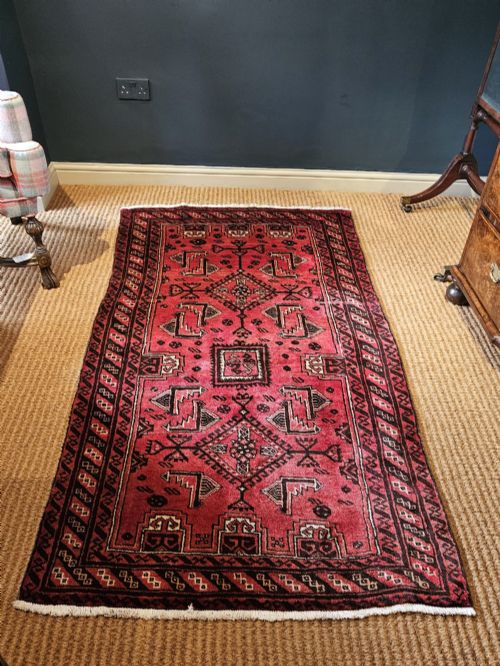
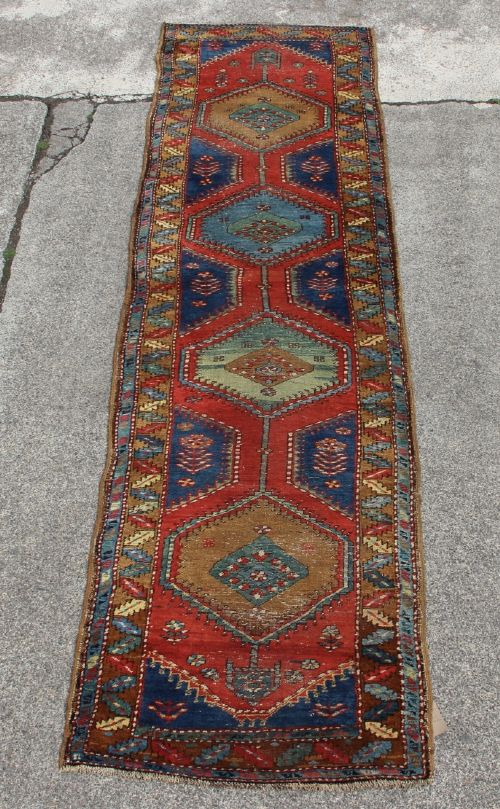


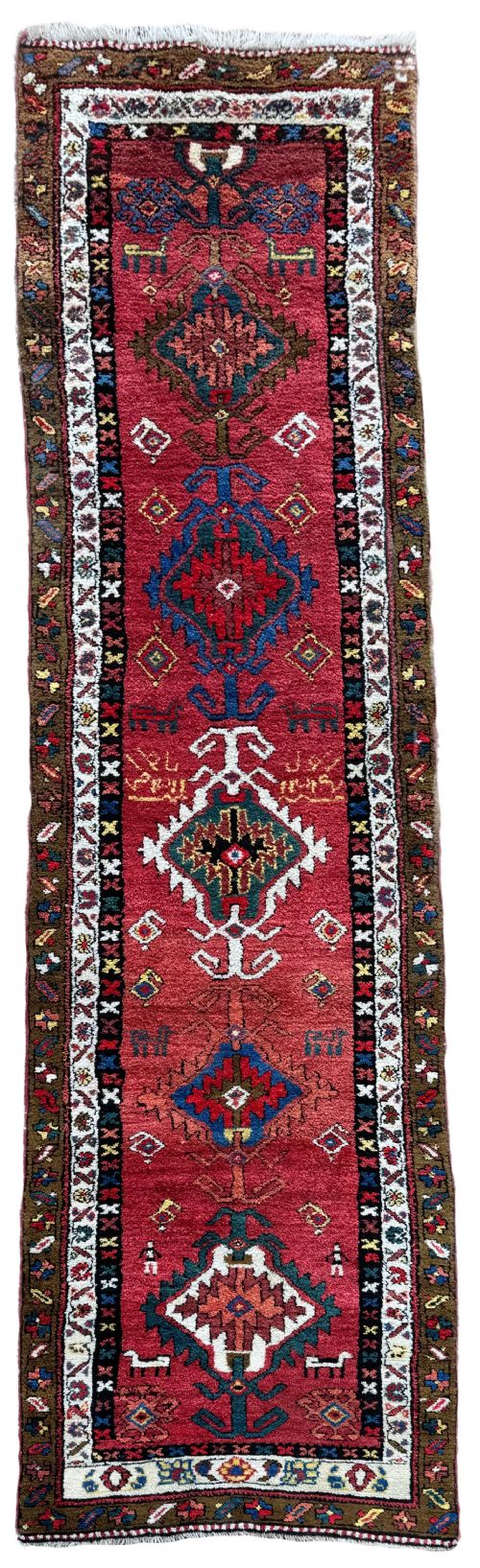
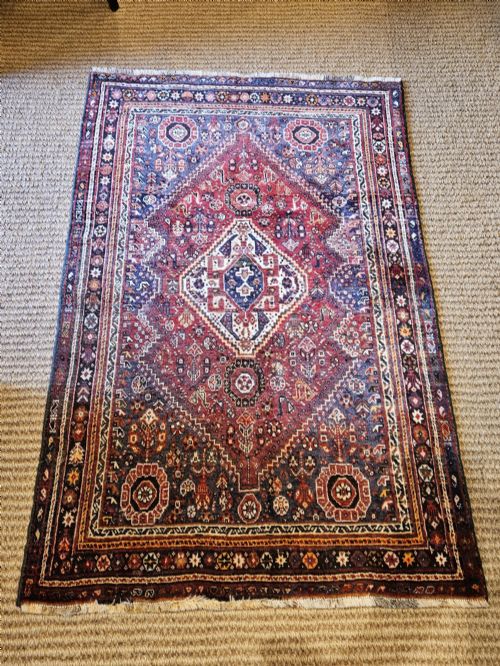
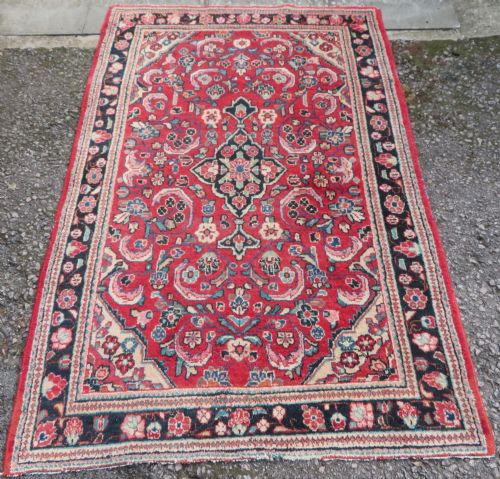
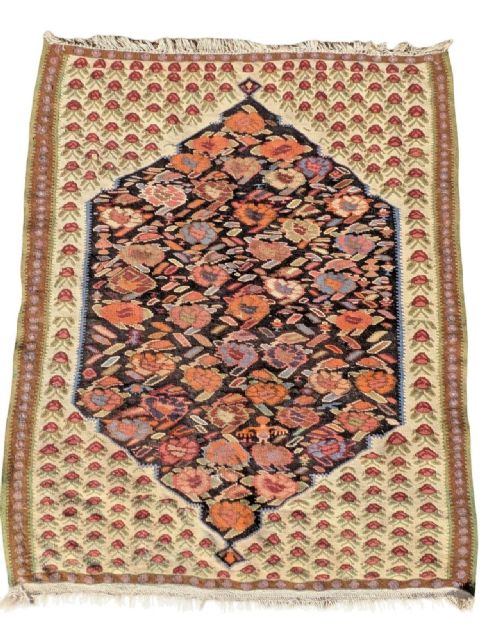
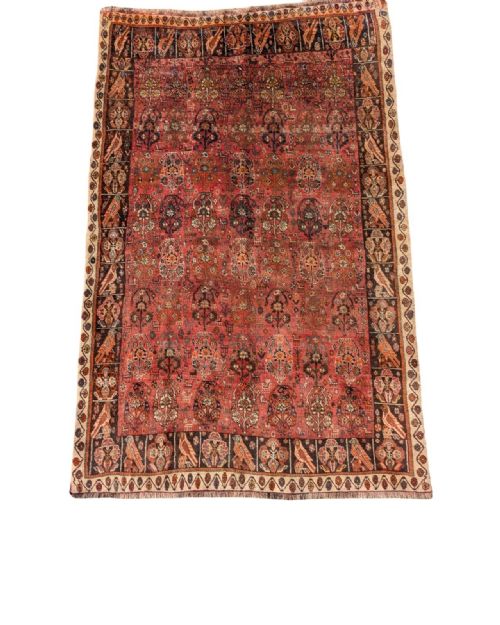
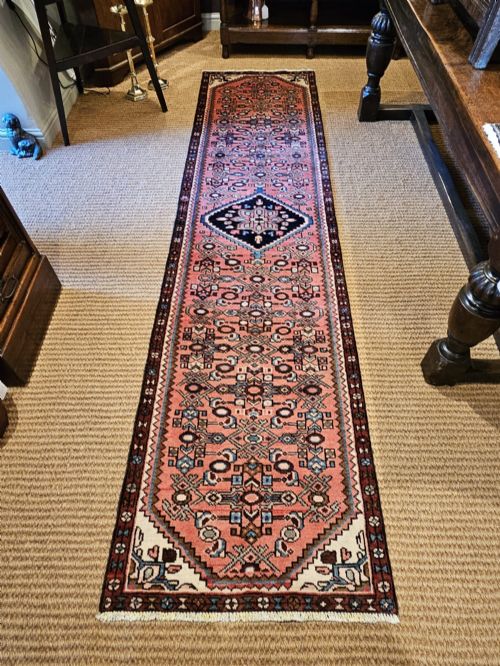
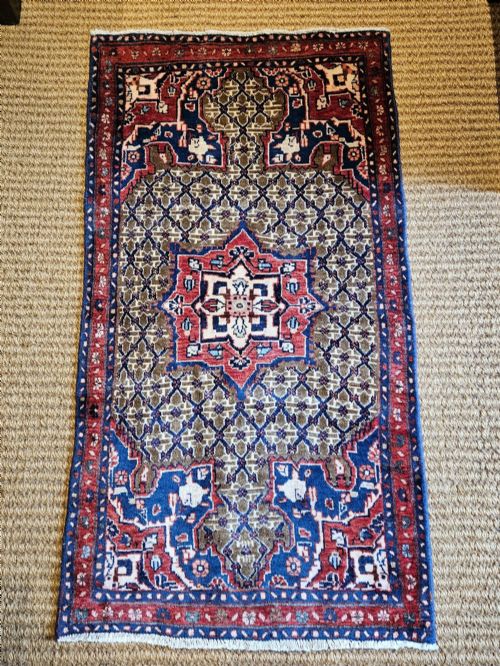
Vintage Persian Runner Rug
These vintage persian runner rug examples bring lasting character and length to corridors, built from enduring wool and natural dyes.
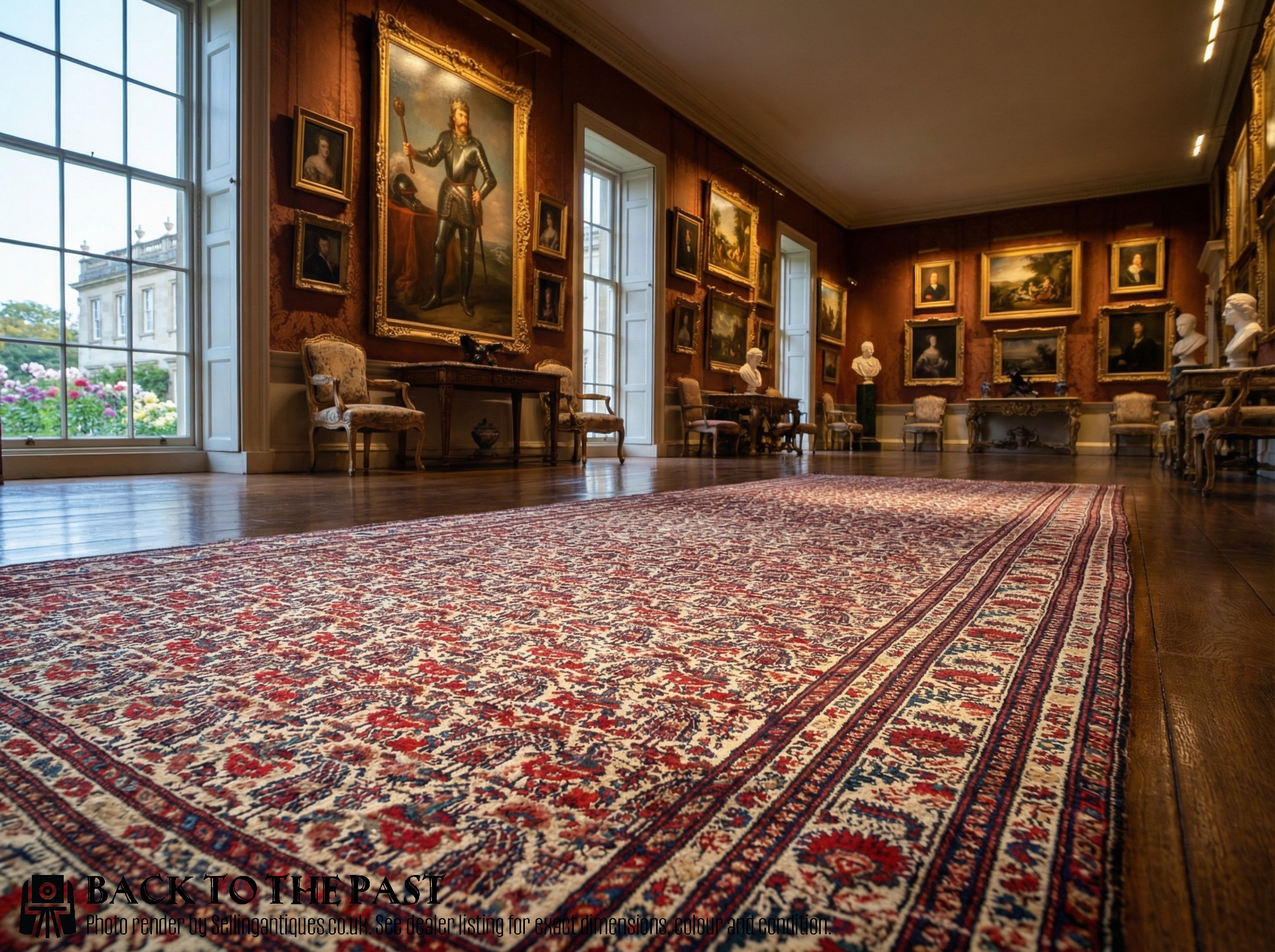
Vintage Persian Runner Rug
A vintage persian runner rug serves narrow spaces like hallways, landings, and long corridors, taking the form of an elongated floor covering. The pieces on this page span from the late nineteenth century through to the mid twentieth century, including examples originating from workshops, villages, and tribal groups.
Buyers encounter formats that range from compact hallway runners exceeding three metres in length to broader village and tribal carpets. Design traditions encompass Heriz, Saroukh, Bidjar, Bakhtiar, and Kurdish styles, each displaying distinct geometric or floral layouts.
Origins stretch across Persian weaving centres and surrounding regions, yielding works produced for domestic use rather than mass manufacture. These floor coverings bridge utility and traditional artistry, designed to endure heavy foot traffic while retaining visual depth.
How They Were Made
Weavers constructed these pieces predominantly using wool, hand-spun wool, and cotton foundations, with occasional inclusion of silk and camel hair. Natural dyes provided the palette, producing rich tones of rust, olive green, and navy blue that soften gradually over decades.
The hand-knotting technique secured pile fibres onto warp and weft threads, creating dense structures capable of withstanding heavy daily wear. Tribal and village weavers worked from memory or traditional motifs, while workshop pieces utilised more formal cartoons.
Vintage Persian Runner Rug Retail Price Guide 2026
Typical asking prices for vintage persian runner rug among the pieces listed under this phrase on Sellingantiques today, from the lower quarter to the upper quarter. They describe what is for sale here now, not the wider market.
Listings feature pieces spanning from the 1860s to the 1960s, incorporating wool, cotton, silk, camel hair, and natural dyes.
What Varies in Quality
Quality rests upon knot density, the integrity of the foundation, and the fineness of the materials used in execution. Tighter knots allow for sharper geometric or floral definition, while finer wool or silk enhances the surface handle.
The source of the dye and the skill of the dyer determine how well the colours age and interact across the field. Workshop pieces from established centres often display precise symmetry, whereas tribal works derive distinction from spontaneous variations in design.
Saroukh Mahal·Bakhtiar·Heriz·Bidjar·Tabriz
The Vintage Persian Runner Rug Glossary
- Runner
- A long, narrow carpet format designed specifically for hallways, stairs, and corridors. These pieces measure significantly longer than they are wide.
- Pile
- The upright yarn loops or cut ends that form the soft surface of the rug. It provides both cushioning underfoot and protection for the foundational weave.
- Warp
- The vertical threads stretched lengthwise on the loom before knotting begins. Cotton and wool are the standard materials used for these structural elements.
- Weft
- The horizontal threads passed across the warp threads between rows of knots to bind the structure. Together with the warp, it forms the grid of the foundation.
- Natural Dyes
- Colourants derived from plants, insects, and minerals rather than synthetic compounds. They create nuanced tones that develop a characteristic patina over time.
Vintage Persian Runner Rug: Frequently Asked Questions
Where should I place a runner rug?
These long formats suit narrow spaces such as hallways, corridors, and landings where linear floor coverage is required. They soften footfall while adding structure and colour to transitional areas of a home.
Position them away from constant dampness and utilise a suitable underlay to prevent sliding on smooth flooring.
How do I clean an old wool rug?
Regular gentle vacuuming without a rotating brush roll removes surface grit from the wool pile. Professional cleaning remains necessary for deep washing to protect natural dyes and fibres.
Avoid saturation and harsh chemical treatments that can strip the natural lanolin from the wool.
How can I tell tribal from workshop rugs?
Tribal pieces display asymmetrical motifs, geometric abstractions, and a spontaneous approach to design drawn from nomadic traditions. Workshop examples feature balanced floral medallions, precise symmetry, and formal composition.
Materials and palette also offer clues, with village and tribal works often employing bolder, saturated tones.
Do natural dyes fade over time?
Natural dyes mellow softly when exposed to light, developing a harmonious patina across the wool pile. This gentle ageing process enhances the character of the piece rather than detracting from its appearance.
Rotating the rug periodically helps ensure even exposure across the entire surface.