

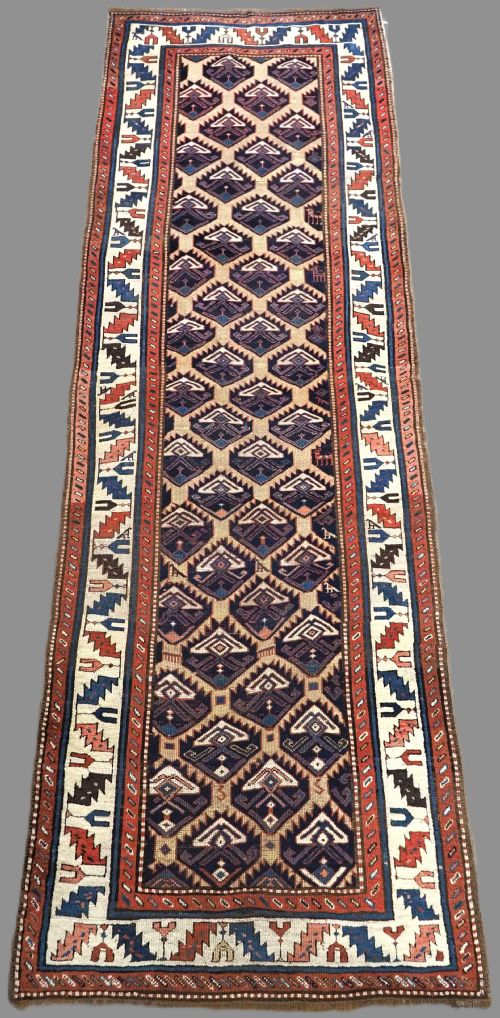


Cream Persian Hallway Runner
These cream persian hallway runner pieces bring genuine tribal character to long spaces, offering durable wool construction and traditional regional designs from the nineteenth and early twentieth centuries.
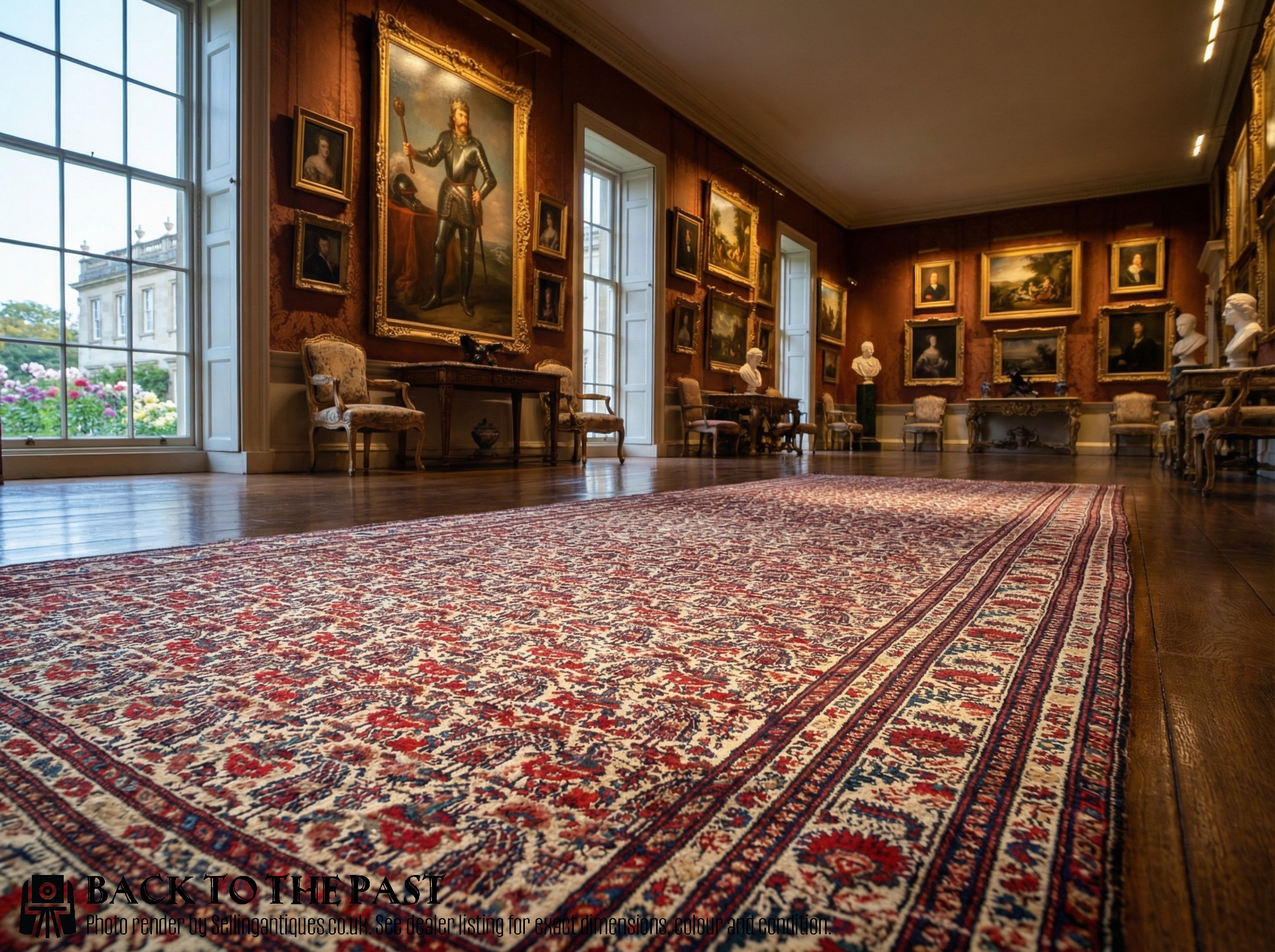
Cream Persian Hallway Runner
A cream persian hallway runner provides a narrow format designed specifically for corridors and narrow passages. These rugs draw upon traditional Persian and Caucasian weaving traditions dating from the mid nineteenth century through to the 1920s.
The selection centres on regional village and tribal work, featuring pieces originating from Kurdish, Hamadan, Sarab, Malayer, Afshar, Bakhtiari, and Kirman traditions. Buyers encounter elongated formats with ivory or light grounds, often decorated with lattice and boteh motifs.
These items range from compact hallway runners to substantial corridor carpets and kelleh formats. Each piece reflects the distinctive aesthetic choices of Western Persia and the Caucasus during the Victorian and Edwardian eras.
How they were made
Makers utilised natural wool for the pile, providing resilience and warmth for high-traffic corridors. Foundation structures typically employ sturdy cotton or wool warps and wefts to maintain the elongated runner shape.
Weavers employed traditional hand-knotting techniques characteristic of tribal workshops and village production across Persia and the Caucasus. These time-tested methods ensured dense pile construction capable of enduring decades of daily footfall.
Listings span the mid-nineteenth century to the 1920s, featuring wool and cotton construction across diverse Persian and Caucasian tribal styles.
What varies in quality
The refinement of knot density and the precision of geometric or boteh patterning distinguish finer examples from simpler village work. Superior pieces display crisp definition in the lattice design and careful balance across exceptionally long proportions.
Material selection and dye depth also shape the character of each runner, with richer wool quality and nuanced ivory grounds marking out the most accomplished nineteenth-century and early twentieth-century weaving.
The Cream Persian Hallway Runner Glossary
- Runner
- A long, narrow rug format intended for corridors, hallways, and stairs. This shape accommodates confined spaces while displaying continuous repeating motifs.
- Boteh
- A stylised almond or pear-shaped motif representing a floral spray or cypress tree. It appears frequently in traditional Persian and Kurdish weaving.
- Kelleh
- A large format carpet that is longer than it is wide, though typically wider than a standard runner. These pieces suit spacious reception rooms and large halls.
- Lattice
- A symmetrical network of intersecting lines forming diamond or grid compartments across the field. This geometric arrangement often frames secondary floral ornaments.
- Ground
- The main background colour of the rug field against which the primary patterns and medallions sit. Ivory and cream grounds provide high contrast for saturated secondary tones.
Cream Persian Hallway Runner: Frequently Asked Questions
Where should I place a runner?
These narrow formats suit hallways, corridors, and passageways where foot traffic demands durable floor coverings. Their elongated proportions also work effectively beside beds or within galley spaces.
Measuring the corridor width and leaving an equal margin of exposed floor on either side ensures the piece sits harmoniously within the architectural space.
How do I care for antique wool rugs?
Regular gentle vacuuming without a beater bar removes surface grit and protects the wool pile. Professional cleaning by specialists in antique textiles preserves the natural lanolin.
Avoiding prolonged direct sunlight prevents fading of natural dyes, while quality underlays keep the rug stable on smooth hallway floors.
How can I tell regional styles apart?
Regional attribution relies on specific structural traits, palette choices, and motif arrangements. Kurdish and Hamadan pieces often display robust geometric structures, whereas Kirman and Sarab runners may feature finer floral or ivory compositions.
Examining the knotting density and fringe finish provides further clues regarding whether a piece originated in Western Persia or the Caucasus.
Are these rugs suitable for heavy traffic?
Traditional village and tribal weaving utilised robust wool pile designed for daily domestic use. Nineteenth-century and early twentieth-century examples were built to withstand generations of footfall in busy hallways.
Using a breathable rug pad underneath absorbs impact and reduces friction, extending the working life of the wool foundation.