

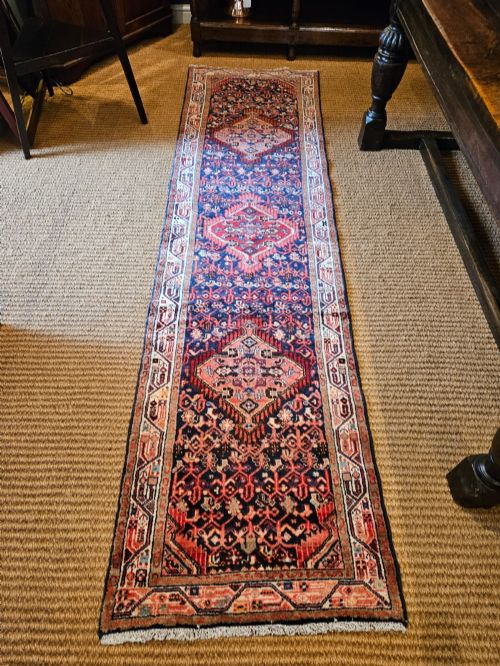
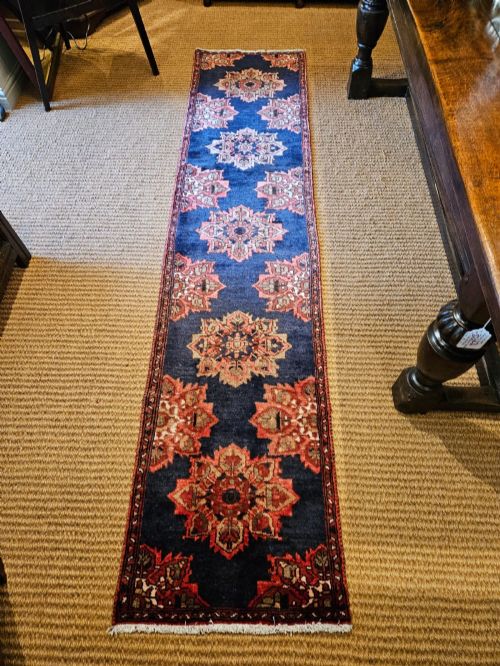
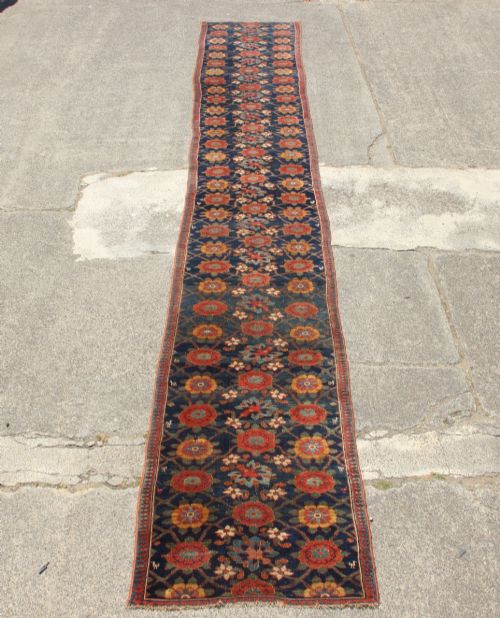
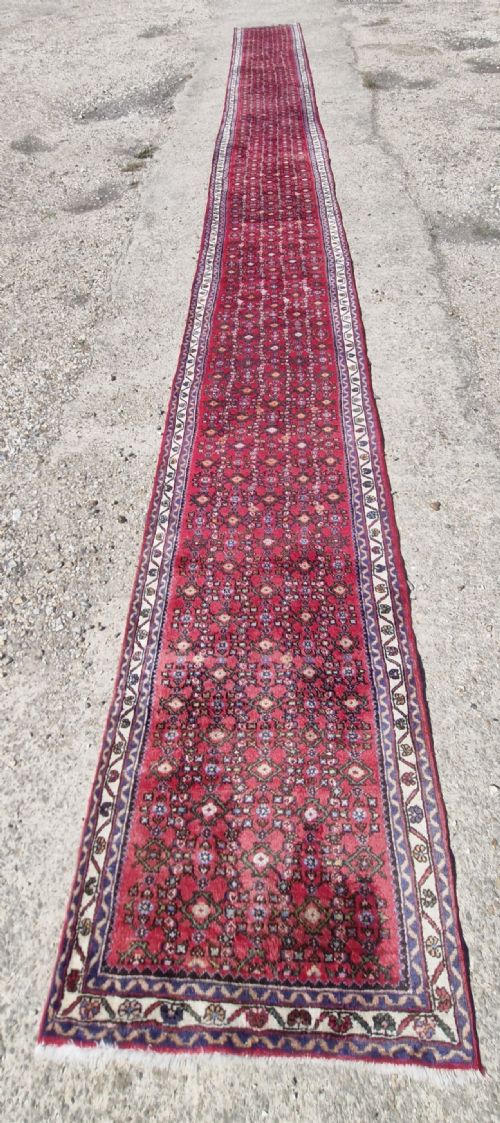
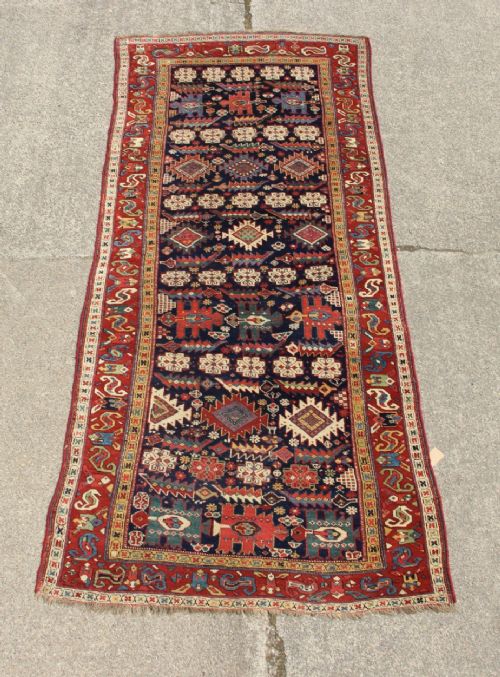
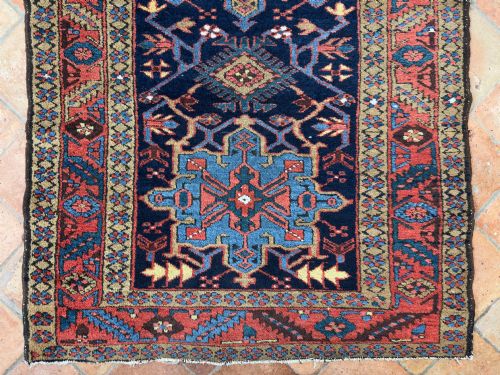

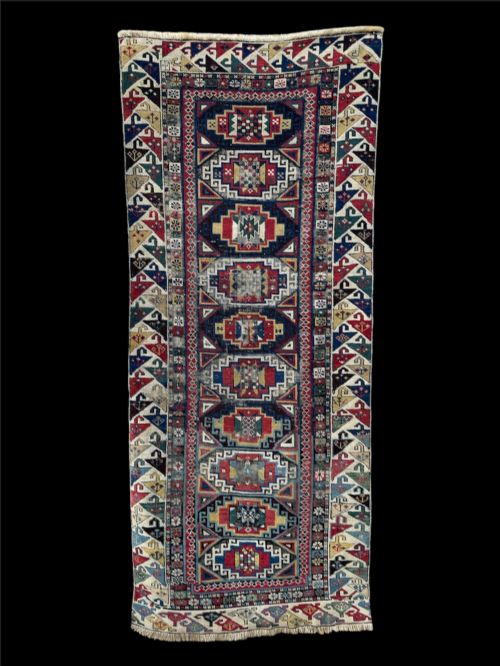
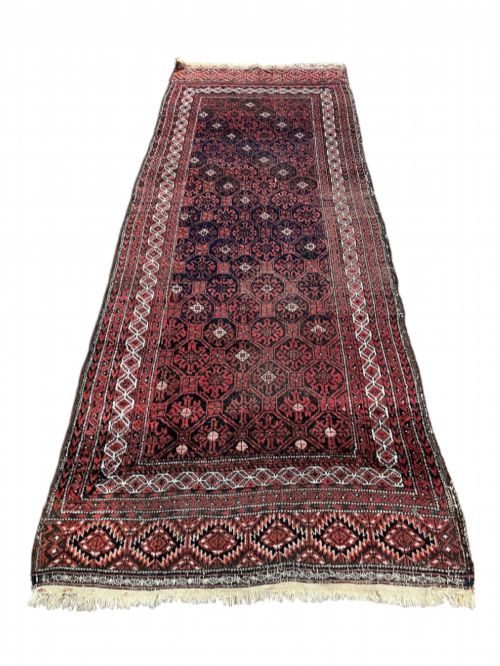
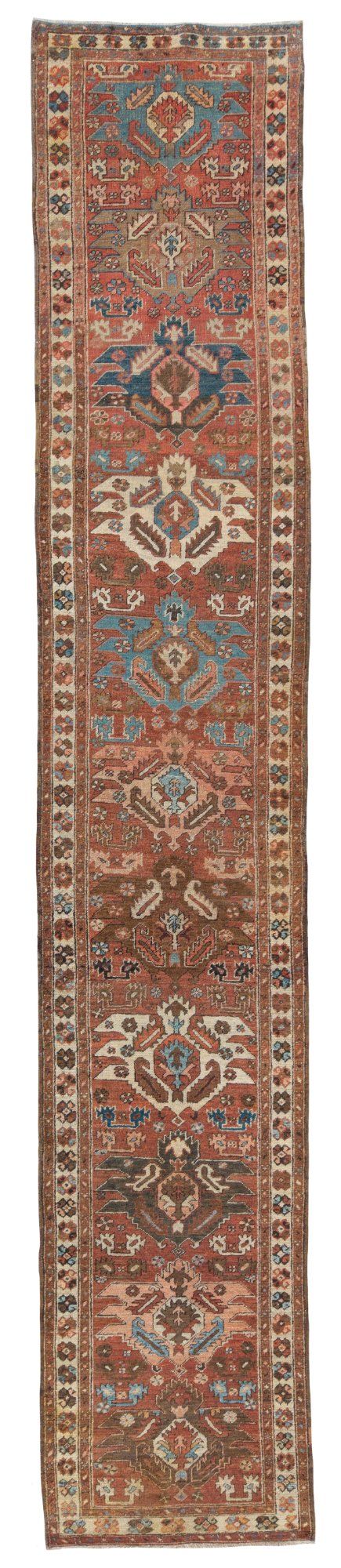
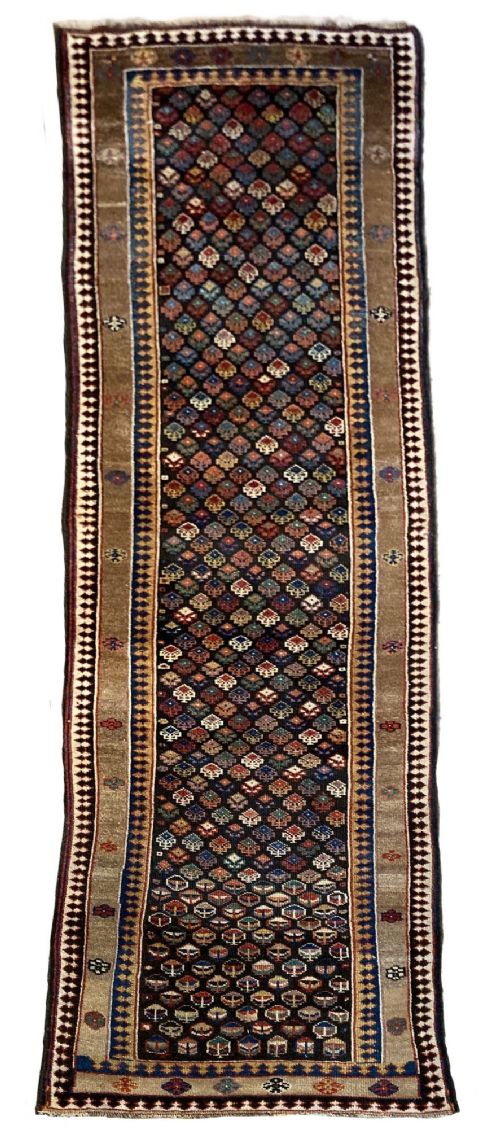
Vintage Persian Corridor Rug
A vintage persian corridor rug brings linear geometry and historic hand-knotted warmth to long halls, landings and narrow spaces.
Vintage Persian Corridor Rug
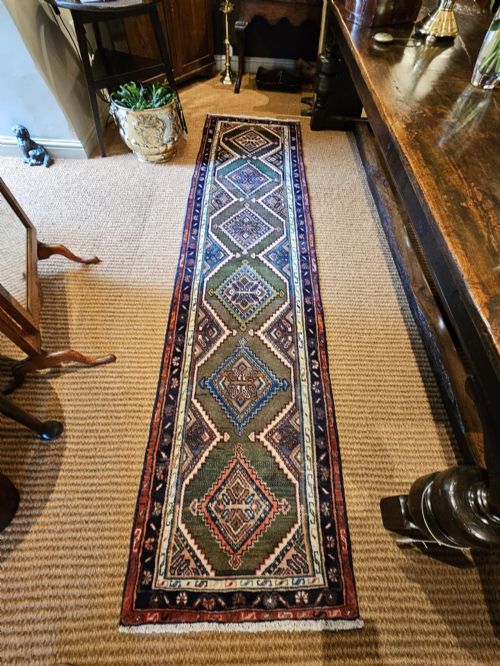
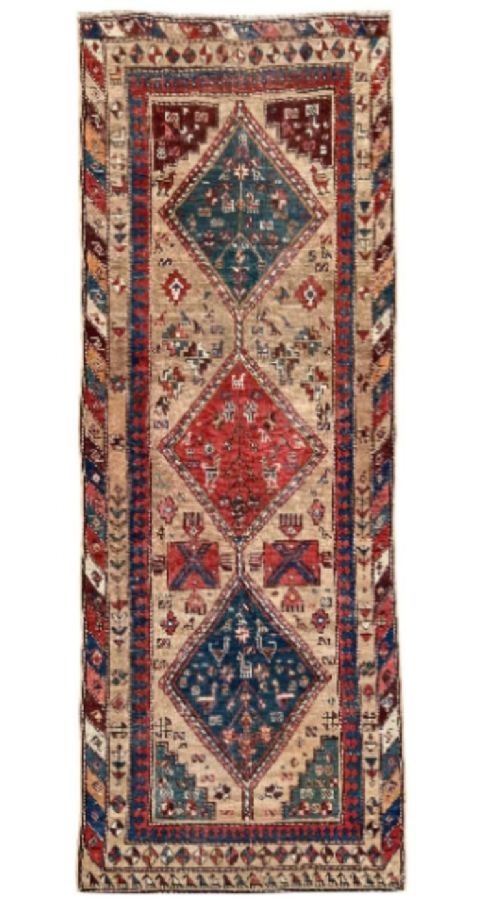
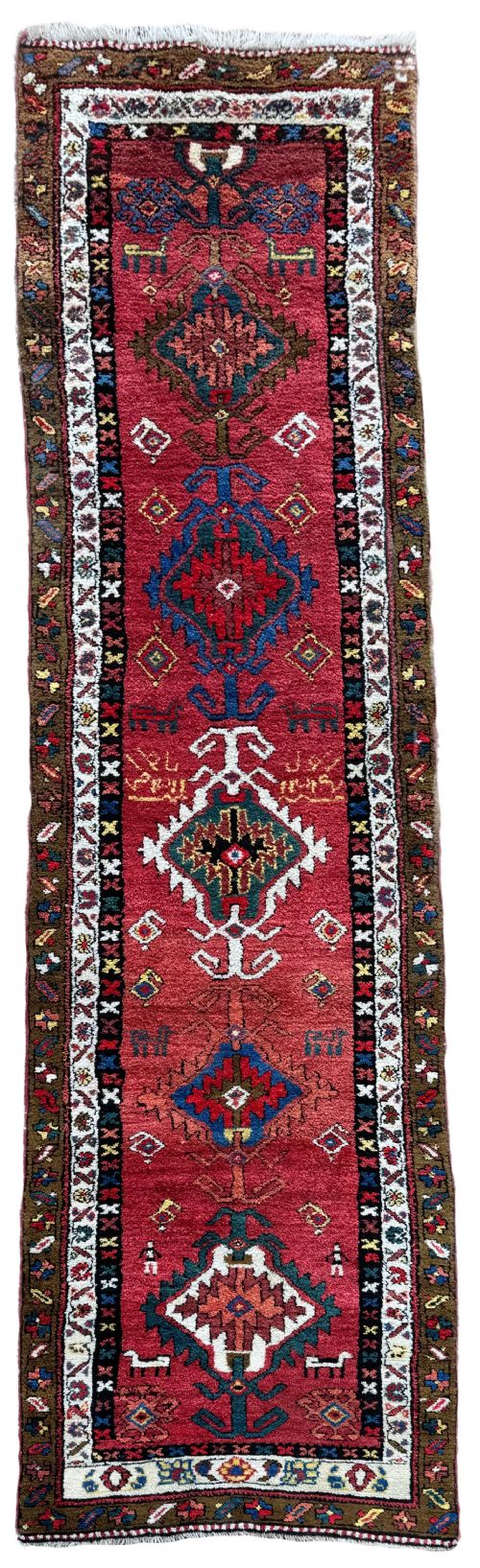
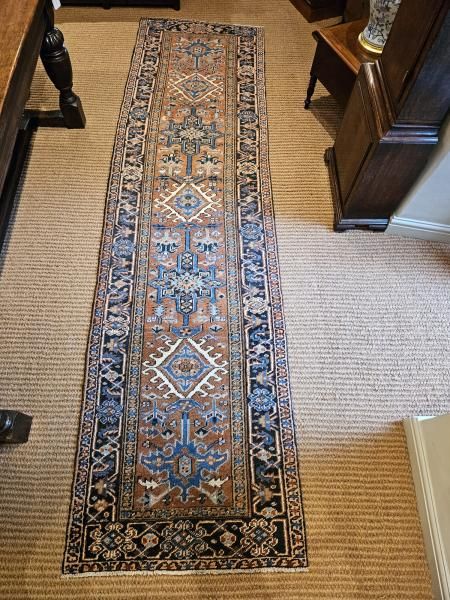
A vintage persian corridor rug is a long, narrow floor covering designed for hallways, landings and galleries. These pieces take the form of runners and kellehs, stretching linear proportions across domestic interiors.
The selection centres on antique and vintage examples originating from Persia, Anatolia and the Caucasus, dating from the nineteenth century through the early twentieth century.
Makers include various tribal and regional groups such as the Kurds, Heriz, Kurdish, Hamadan, and Ferahan weavers who produced these utilitarian formats for everyday use.
How they were made
Construction relies upon hand-spun wool and standard wool pile knotted onto sturdy cotton foundations. This pairing provides the density required for heavy footfall in corridors.
Weavers utilised natural dyes and traditional loom setups to construct these elongated carpets piece by piece, yielding distinct tribal and geometric motifs.
Vintage Persian Corridor Rug Retail Price Guide 2026
Typical asking prices for vintage persian corridor rug among the pieces listed under this phrase on Sellingantiques today, from the lower quarter to the upper quarter. They describe what is for sale here now, not the wider market.
Some antique runners arrive with wonderfully crooked geometry, recording the exact moment a weaver adjusted tension while sitting on a low loom.
What varies in quality
Quality separates by the fineness of the knotting, the crispness of the tribal design work, and the handling of the wool pile. Tighter structures and more articulate geometry elevate the piece.
The integrity of the foundation and the preservation of the original side cords and end finishes determine the overall condition and structural durability of the runner.
The Vintage Persian Corridor Rug Glossary
- Runner
- A long, narrow carpet format specifically proportioned for corridors, hallways, and stairs. These pieces guide movement through domestic architectural spaces.
- Kelleh
- A Persian room-size format that is longer than it is wide, sitting between a standard rug and a full carpet. It functions well in wider hallways and reception rooms.
- Hand-spun wool
- Wool yarn spun manually rather than by industrial machinery, retaining irregular thickness and natural lanolin content. This material absorbs dye unevenly, creating subtle tonal variations.
- Mina Khani
- A traditional all-over geometric pattern composed of repeating flower heads linked by a lattice network. It appears frequently in Kurdish and regional weaving.
- Foundation
- The underlying structural grid of warp and weft threads that supports the knotted wool pile. Cotton forms the standard foundation material for these runners.
Vintage Persian Corridor Rug: Frequently Asked Questions
Where should I place a long corridor rug?
These narrow formats suit hallways, landings, and entrance corridors where linear floor space requires softening. They also sit effectively in long galleries or alongside large bedroom furniture.
Ensure the dimensions leave a consistent border of exposed floorboards or stone around the perimeter of the passage.
What distinguishes a Heriz runner from a Kurdish runner?
Heriz runners typically display bold, geometric medallion designs with strong architectural lines and robust cotton foundations. They reflect village production from the Azerbaijan region.
Kurdish runners often feature denser, all-over tribal patterns, heavier wool, and deeply saturated darker colour palettes characteristic of nomadic and village workshops.
How can I tell the age of these runners?
Dating relies upon wool characteristics, dye analysis, structural wear patterns, and traditional tribal design motifs. Nineteenth-century examples often exhibit hand-spun wool with organic abrash variations.
Twentieth-century pieces tend toward more consistent synthetic or transitional dye usage alongside machine-spun elements in later decades.