



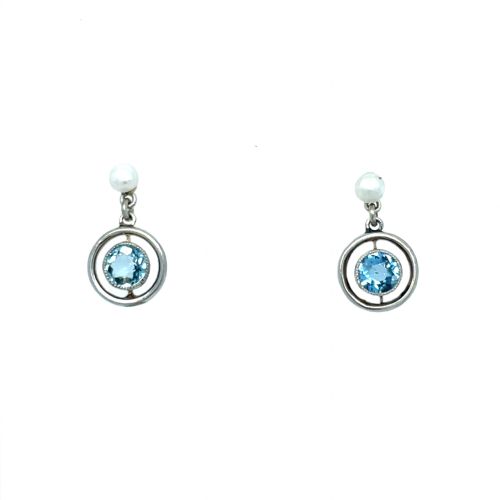


Vintage Pearl Earrings
Vintage pearl earrings span multiple eras from Georgian drops to mid-century clips, combining precious metals with organic gems.
Vintage Pearl Earrings
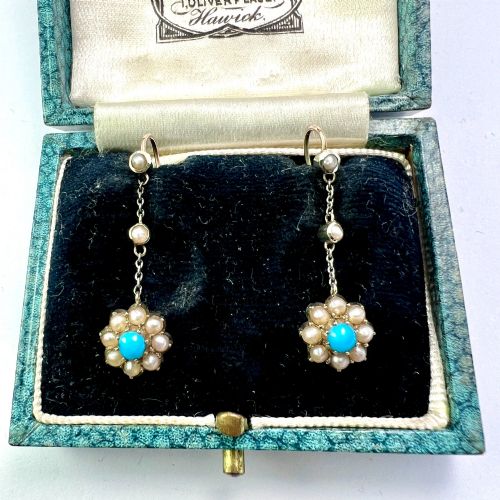
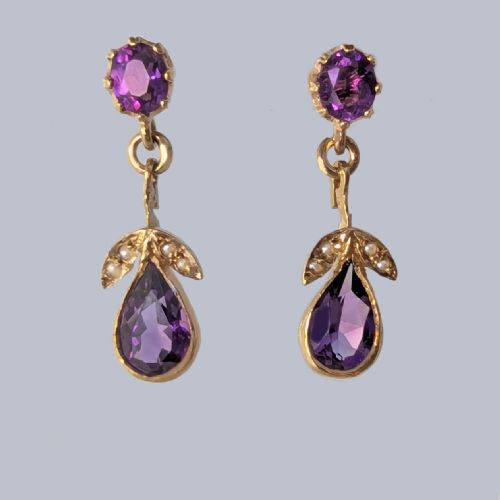
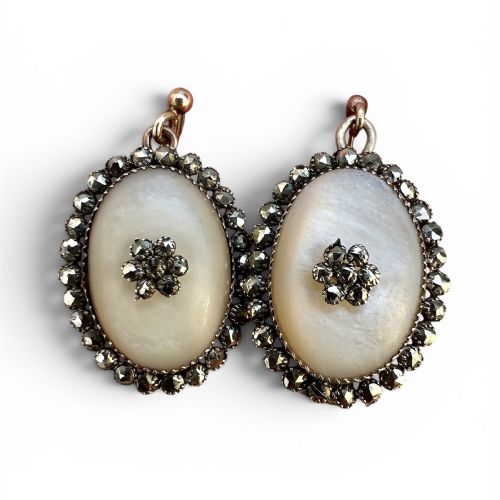
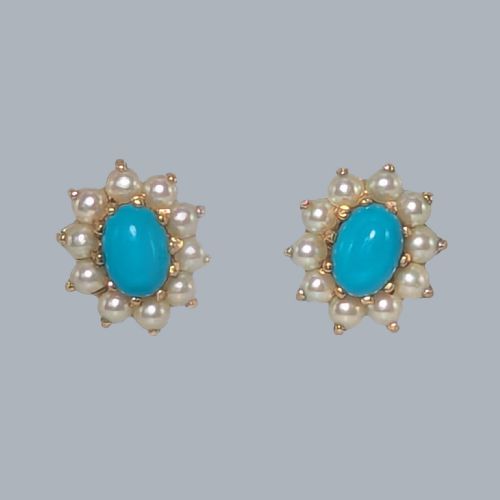
Vintage pearl earrings encompass diverse periods ranging from the Victorian and Edwardian eras through the 1920s Art Deco movement to mid-century designs. Buyers evaluating vintage pearl earrings encounter button studs, dangling drops, floral clusters, and structured clip-ons.
The materials paired with pearls in these pieces include yellow gold, white gold, platinum, and silver, alongside gemstones like diamonds, amethysts, turquoise, and garnets. Many examples feature seed pearls or larger mabe and baroque pearls arranged in distinct stylistic motifs.
Origins represented in these items stretch across British, European, and broader international workshops, utilising settings that transitioned from screw-backs and dormeuse fittings to standard posts and omega backs over the decades.
Materials and Construction
Goldsmiths utilised varying purities of gold, notably 9ct, 14ct, 15ct, and 18ct, alongside platinum and silver to mount pearls securely in settings like claws, bezels, and halos. Seed pearls were frequently threaded or seed-set into floral clusters, while larger cultured, mabe, or natural pearls served as central drop or button elements.
Assembly techniques evolved across the periods, incorporating structural wirework, cast mountings, and hand-cut diamonds such as rose-cuts and old European cuts. Mechanical fasteners like screw-backs, clip-ons, and omega backs arrived alongside traditional posts and dormeuse closures to accommodate pierced and unpierced ears.
Some Victorian dormeuse earrings were built so comfortably that owners could nap safely without taking them off.
Assessing Quality and Craftsmanship
Quality in vintage pearl earrings rests upon the integration of the pearl with its metal setting and accompanying gemstones. Superior examples demonstrate secure stone settings, clean metalwork with legible hallmarks, and pearls exhibiting robust nacre and matching lustre.
The precision of design work, such as detailed millegrain edging, balanced floral cluster symmetry, and robust mechanical clasps or screw mechanisms, elevates a piece above standard mass production. Matching colour and size in multi-pearl configurations further distinguishes finer artisan output.
Cropp & Farr·Mikimoto·Christian Dior·Tiffany & Co.
The Vintage Pearl Earrings Glossary
- Seed Pearl
- Tiny, naturally small pearls often used in clusters or strung together in antique jewellery.
- Mabe Pearl
- A cultured half-pearl grown against the inside shell of the oyster, known for its domed profile and flat back.
- Baroque Pearl
- A pearl with an irregular, non-spherical shape that creates organic asymmetry in jewellery design.
- Dormeuse
- A type of secure earring fitting traditionally designed to be comfortable enough to wear while sleeping.
- Omega Back
- A hinged clip-on mechanism shaped like the Greek letter omega, used to secure post or non-pierced earrings.
- Millegrain
- A decorative technique featuring a line of tiny metal beads along the edges of a setting.
Vintage Pearl Earrings: Frequently Asked Questions
How do I care for vintage pearl earrings?
Pearls are organic gems that require gentle cleaning with a soft, damp cloth rather than harsh chemical dips or ultrasonic cleaners. Store them separately from harder gemstones and metals to prevent surface scratching.
Applying perfumes, hairsprays, or cosmetics before putting on the earrings helps protect the delicate nacre and metal mountings from chemical degradation over time.
Are screw-back earrings easy to convert?
Screw-back closures were common on vintage non-pierced earrings, particularly from the mid-century and earlier decades. Many wearers keep them original, but a jeweller can often convert them to posts if preferred.
Converting the fittings may alter the original state of the piece, so collectors often weigh the convenience of modern posts against the historical integrity of maintaining the screw-backs.
What is the difference between seed pearls and cultured pearls?
Seed pearls are exceptionally small natural pearls that were historically utilised in intricate Victorian and Edwardian floral cluster and drop designs. They offer a delicate, textured appearance distinct from larger single pearls.
Cultured pearls, which became prevalent later in the twentieth century, are grown with human intervention inside oysters, resulting in uniform sizes like button shapes, mabe domes, or large round specimens.
How can I tell the era of pearl earrings?
Dating vintage pearl earrings involves examining the metal purity hallmarks, the cutting style of any accompanying diamonds, and the overall manufacturing technique. Victorian pieces often use lower carat golds or silver-topped gold with seed pearls, while 1950s designs frequently feature platinum or white gold with large mabe or cultured pearls.
Clasp styles also offer chronological clues, transitioning from early screw-backs and dormeuse fittings to mid-century omega clips and modern posts.