
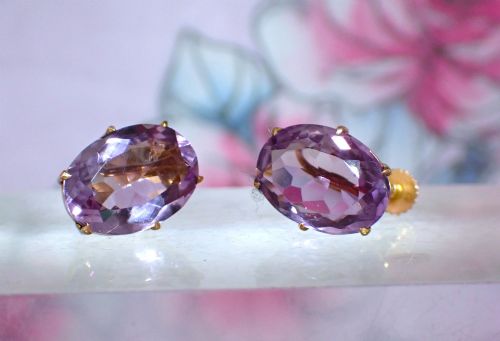
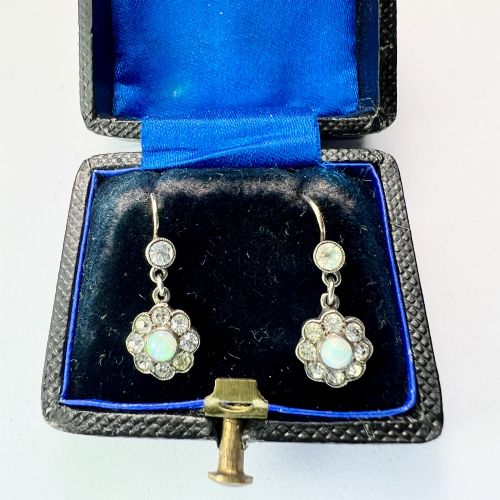
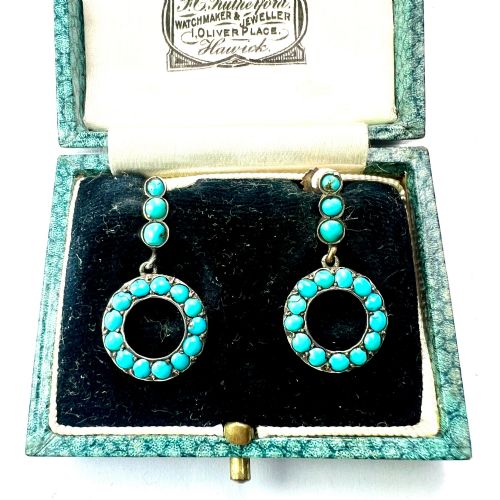


Vintage Cluster Earrings
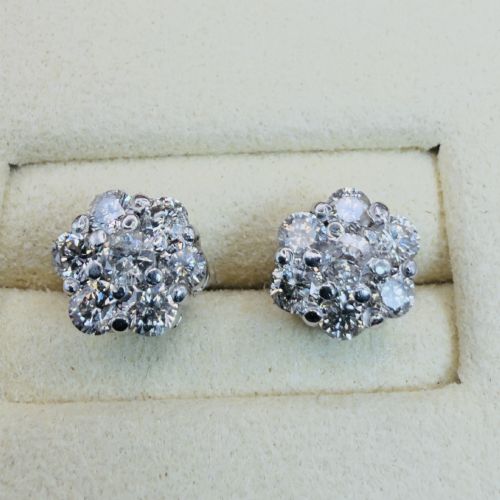
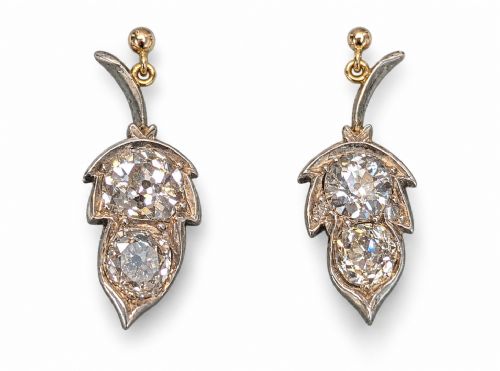
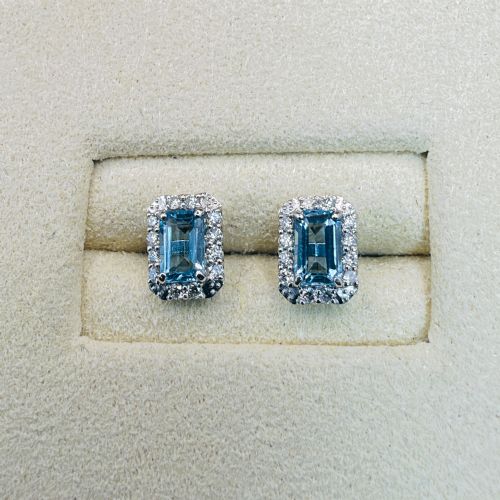
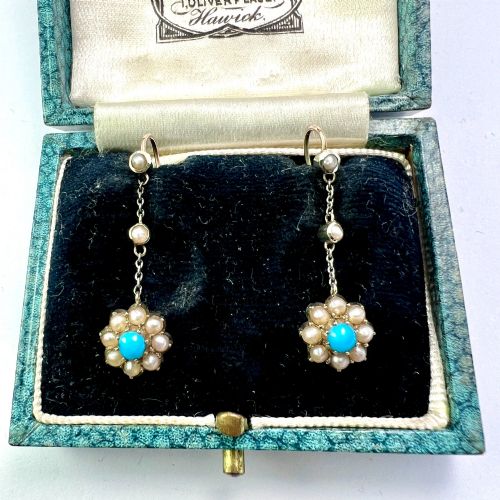
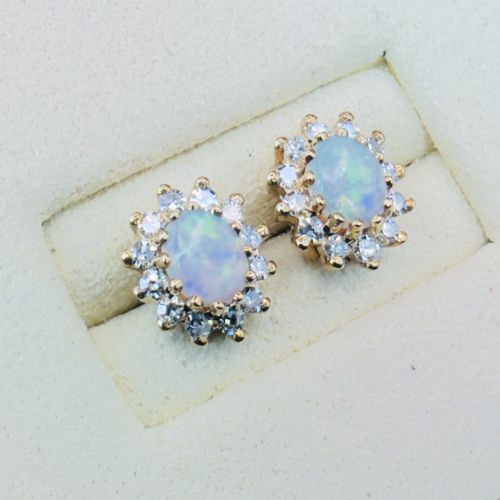
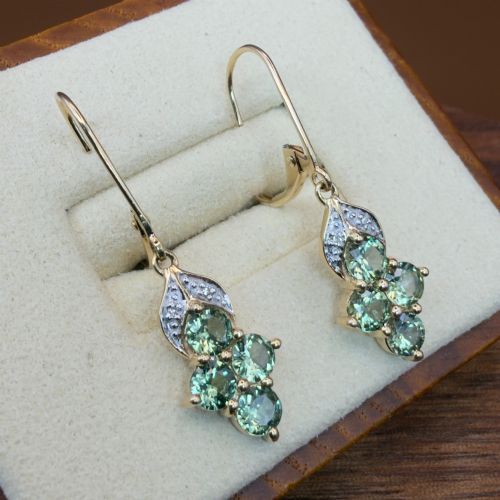
Vintage cluster earrings bring together central gemstones framed by smaller stones, offering distinct periods from Victorian designs to mid-century styles.
Vintage Cluster Earrings
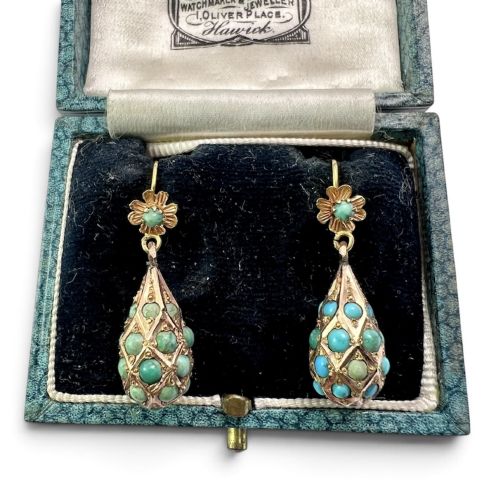
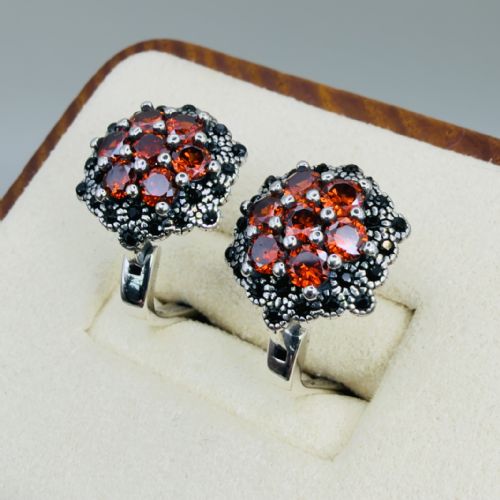
Vintage cluster earrings gather multiple stones into a concentrated arrangement, typically featuring a prominent central gem surrounded by smaller accents. When exploring vintage cluster earrings, buyers encounter formats ranging from close-fitting studs to articulated drop designs and hanging configurations.
The selections span several decades and stylistic movements, including Victorian, Edwardian, Art Deco, and mid-century periods. Common configurations rely on floral motifs, geometric arrangements, and halo settings that showcase various coloured gemstones alongside diamonds.
Ear fittings vary by era, incorporating screw backs, hinge backs, clip-on mechanisms, and standard posts. This variety allows collectors to match historical fastening types with individual preferences for pierced or non-pierced wear.
How they were made
Craftsmen utilised precious metals such as platinum, 18ct white gold, yellow gold, and sterling silver to form the structural mounts and settings. Platinum and white gold gained particular favour during the Art Deco period for securing intricate diamond arrangements.
Gemstone selection paired diamonds with coloured stones including sapphires, rubies, emeralds, aquamarines, garnets, and turquoise. Pearls and paste stones also appear frequently, set closely together to create dense floral or geometric patterns.
Listings feature periods spanning from the Victorian era through Edwardian, Art Deco, and mid-century decades.
What varies in quality
The calibre of a pair depends heavily on the uniformity, cut, and saturation of the set stones, particularly when matched with high-grade central diamonds. Master jewellers ensured even spacing and secure claw or bezel work that held every surrounding stone firmly in place.
Structural integrity of the metalwork and the original functionality of the screw backs, hinges, or clips distinguish finer examples from standard production. Superior craftsmanship is evident where the reverse of the mount displays as much attention to detail as the face.
Knoll And Pregizer·Christian Dior·Julius Cohen
The Vintage Cluster Earrings Glossary
- Cluster setting
- An arrangement where a central stone is encircled by a ring of smaller gems. This technique maximises visual impact and light reflection.
- Halo
- A specific type of cluster arrangement featuring a central gemstone bordered by a single continuous circle of smaller accent stones. It often enhances the perceived size of the main gem.
- Old cut
- A diamond cutting style prevalent in antique and vintage pieces predating modern brilliant cuts. These stones typically feature smaller tables and higher crowns.
- Paste
- Hand-cut glass used as an alternative to precious gemstones in historical jewellery. Quality paste stones exhibit deliberate faceting and high refractive qualities.
- Parure
- A matched set of jewellery pieces, such as earrings, necklaces, and brooches, designed to be worn together. They share uniform materials and stylistic elements.
Vintage Cluster Earrings: Frequently Asked Questions
How do I wear screw back earrings?
Screw back fasteners feature a threaded post and a small nut that tightens against the earlobe. Adjust the tension gently to achieve a secure fit without applying excessive pressure.
This mechanism was common in older earrings before standard butterfly backs became widespread. They provide reliable security for heavier drop and cluster designs.
What is the difference between Victorian and Art Deco clusters?
Victorian cluster earrings often emphasise romantic floral motifs, rich coloured gemstones like garnets and turquoise, and yellow gold or silver settings. They project a warm, organic aesthetic.
Art Deco pieces favour geometric precision, platinum and white gold mounts, and diamond-heavy configurations. The lines are sharp, symmetrical, and streamlined.
Are clip-on vintage earrings secure?
Vintage clip-on mechanisms rely on a hinged paddle that presses the earlobe against the decorative face. Properly adjusted clips hold firmly during regular wear.
Collectors can often have professional jewellers adjust the tension if the clip feels too loose. They offer an accessible option for those without pierced ears.
How do I date my cluster earrings?
Dating relies on examining the metal types, gemstone cuts, fastening mechanisms, and overall stylistic characteristics. For instance, platinum mounts and geometric layouts point towards the 1920s and 1930s.
Hallmarks stamped on the metal can also reveal the assay office and exact year of manufacture. Comparing the construction methods to known period examples narrows the timeline further.