





Gold Pearl Earrings
Gold pearl earrings bring together lustrous nacre and warm metal, offering centuries of refined personal adornment.
The Nature of Gold Pearl Earrings
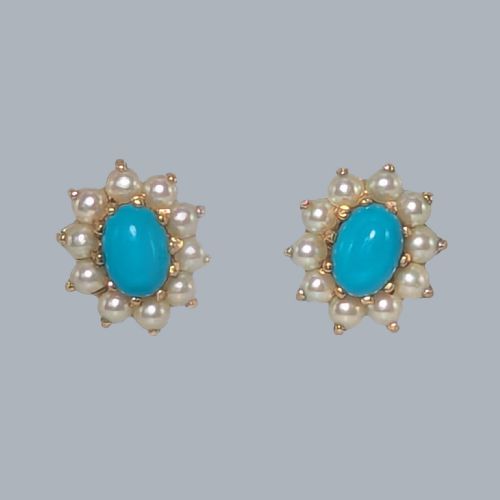
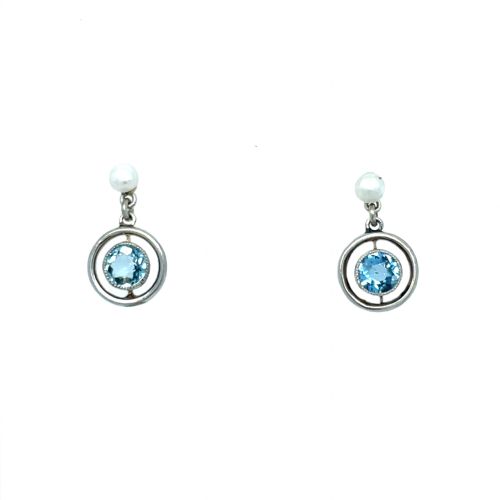
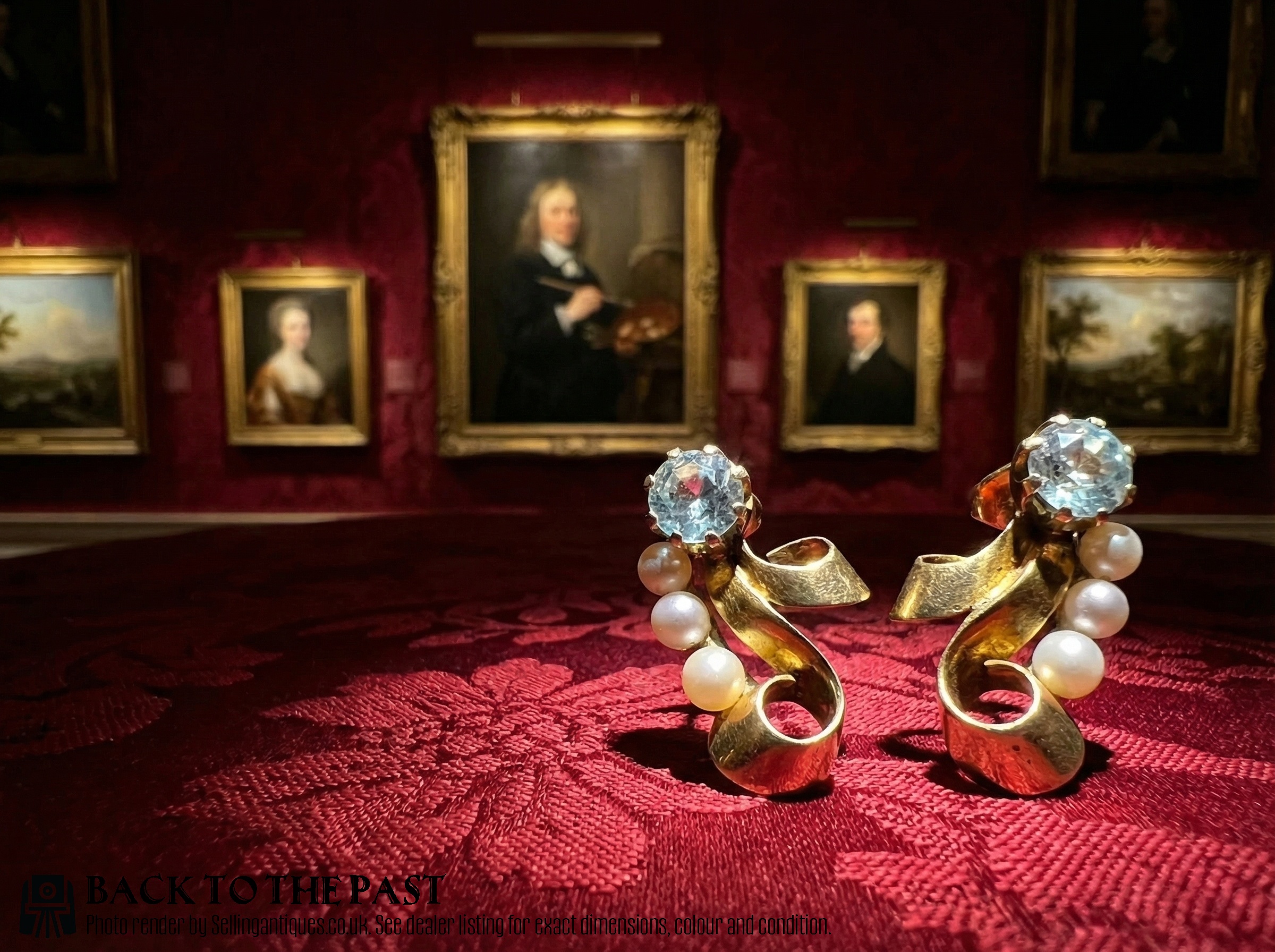
Gold pearl earrings span multiple eras, encompassing Georgian, Victorian, Edwardian, and mid-century designs. Buyers searching for gold pearl earrings encounter diverse configurations ranging from simple studs and clips to elaborate drop and dangle formats.
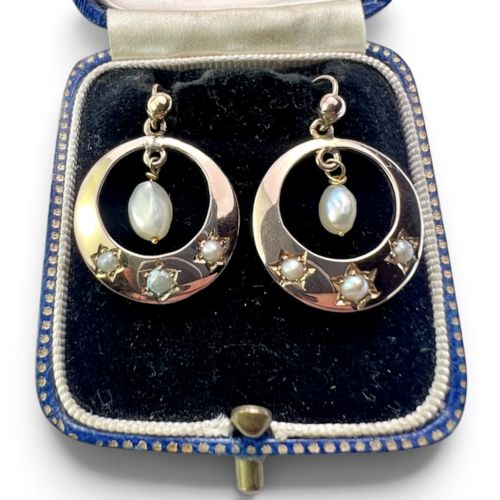
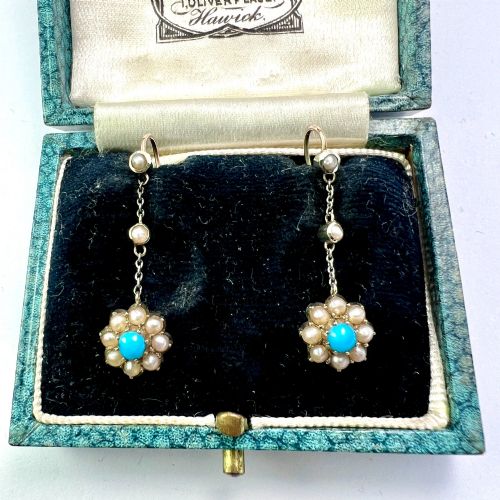
The evidence shows forms such as crescents, floral clusters, infinity symbols, and targeted clusters incorporating seed pearls, baroque pearls, and button-shaped freshwater varieties. These pieces reflect the prevailing tastes of their respective periods.
Ear fittings vary considerably across the selection, including hooks, screw backs, posts, and omega clips. This variety ensures that different eras contribute distinct mechanical properties alongside their visual charm.

Materials and Construction
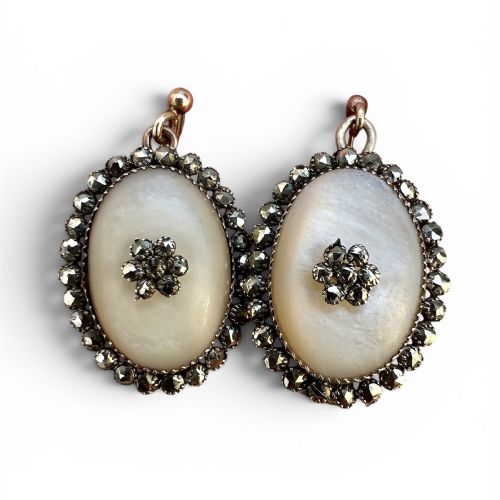
Metals span yellow and white gold in various purities, including nine-carat, fourteen-carat, fifteen-carat, and eighteen-carat standards. Some pieces combine gold settings with silver components or feature enamel guilloche.
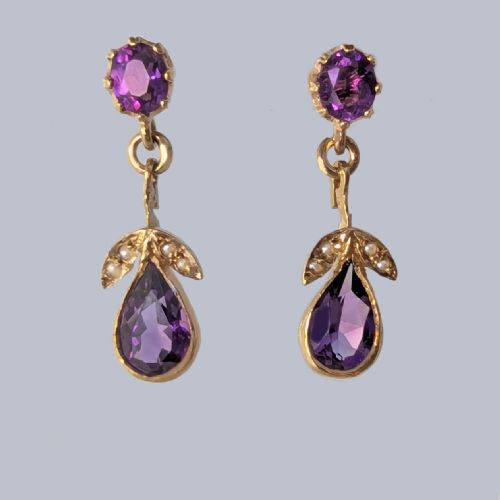
Pearls are paired with coloured gemstones such as peridot, blue zircon, turquoise, aquamarine, diamond, ruby, sapphire, and tourmaline. Construction techniques involve star-settings, bezel mounts, and delicate chain drops that suspend pearls below the earlobe.
Original boxes occasionally survive alongside Georgian seed pearl drops, keeping intact a miniature time capsule of Victorian travel.
Factors of Distinction
Quality rests in the harmony of the design and the integrity of the pearl nacre. Superior pieces display thoughtful gemstone integration, whether incorporating peridot, diamond, or turquoise around the central pearl.
The refinement of the goldwork, from chased floral knots to precise star-setting, separates standard production from exceptional examples. Hallmarks and original maker boxes further establish provenance and enduring value.
Mikimoto
The Gold Pearl Earrings Glossary
- Seed pearl
- Very small, natural or cultured pearls often used in clusters or floral motifs during the Georgian and Victorian eras. They require delicate setting techniques.
- Baroque pearl
- An irregularly shaped pearl prized for its unique, organic silhouette. These add asymmetrical character to drop and dangle designs.
- Star-set
- A technique where a gemstone or pearl is flush-set into the metal, with incised lines radiating outward to resemble a star. This secure method protects the stone edges.
- Omega back
- A hinged clip mechanism shaped like the Greek letter omega, used on earrings to secure the piece comfortably to the earlobe without requiring a pierced post.
Frequently Asked Questions
How do I clean antique gold pearl earrings?
Pearls are organic gems that require gentle care, avoiding harsh chemicals, ultrasonic cleaners, and abrasive cloths. Wipe them softly with a damp cloth after wearing to remove oils and residues.
Ensure the gold settings are cleaned with appropriate non-liquid methods if gemstones are glued rather than claw-set, protecting both the nacre and the structural integrity.
Are screw back earrings hard to convert?
Screw back fittings on Edwardian and vintage earrings were designed for unpierced lobes. Converting them to posts or clips is possible with a skilled jeweller.
Many collectors prefer to keep original mechanisms intact to preserve the historical authenticity and working parts of the piece.
How can I tell a Victorian pearl from a modern one?
Victorian pieces frequently utilise natural seed pearls or early cultured varieties with distinct lustre and minor surface irregularities. Examining the drill holes and nacre under magnification reveals period manufacturing methods.
Mounting styles, such as closed-back settings in early pieces or distinct claw work, also provide clues to the age of the earrings.
What does a nine carat gold hallmark mean?
A nine-carat gold hallmark indicates that the alloy contains thirty-seven point five percent pure gold by mass. British pieces often feature town marks and date letters that pinpoint the assay office and year.
These stamps help verify the authenticity of vintage and antique drop, stud, and cluster designs.