


Retro Pearl Jewellery
Retro pearl jewellery brings together lustrous pearls and mid-century precious metals for everyday elegance.
Retro Pearl Jewellery
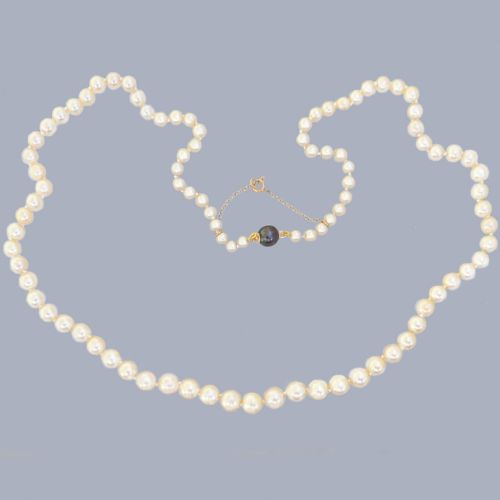
Retro pearl jewellery spans necklaces, rings, earrings, bracelets, brooches and pendants originating primarily from the mid-twentieth century. Buyers encounter single and multi-strand necklaces alongside structured gold rings and statement drop earrings.
The pieces on this page draw on styles from the 1940s, 1950s and 1960s, with additional Victorian revival and nineteenth-century examples appearing among the selections. Cultured pearls dominate the offerings, often paired with contrasting coloured gemstones and diamonds.
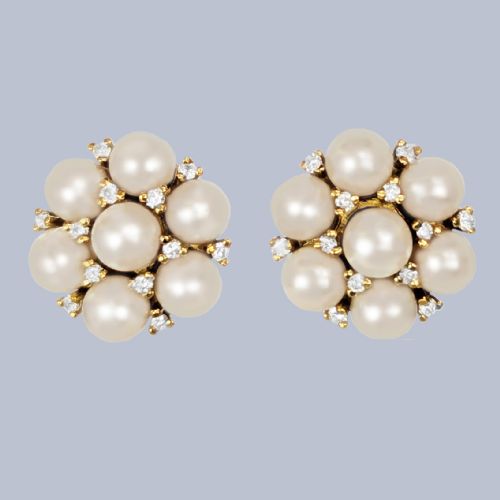
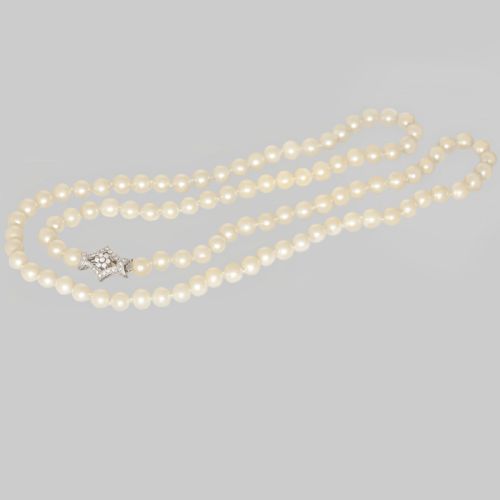
Earrings and rings form a large proportion of the available objects, frequently utilising screw backs, clip-on mechanisms or omega backs. Necklaces range from long graduated strands to elaborate bow designs with gem-set clasps.
Materials and construction methods
Metals such as 18ct white gold, 14ct yellow gold and 9ct gold provide the structural framework for settings and clasps. Mabe pearls, cultured pearls, seed pearls and natural pearls are mounted alongside diamonds, rubies, emeralds, garnets, sapphires and turquoise.
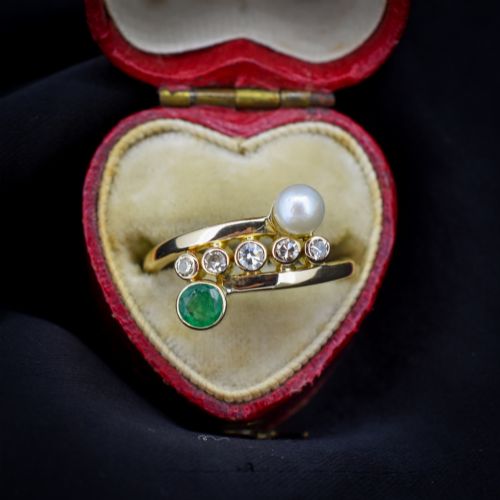
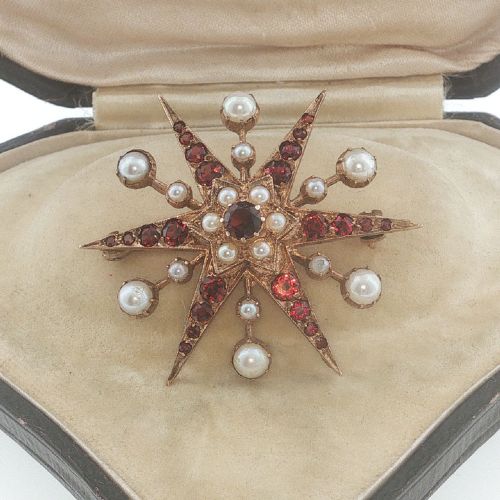
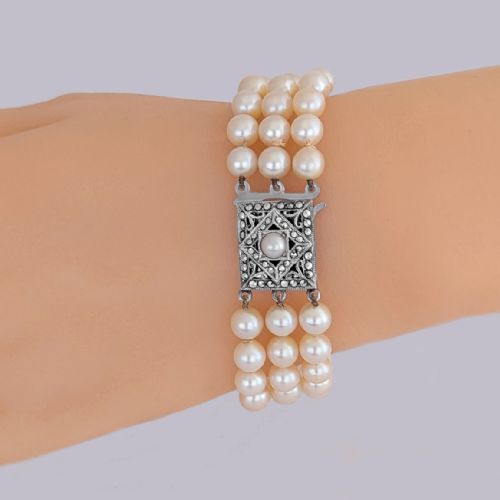
Goldsmiths employed techniques like bypass twists, starburst arrangements and cluster settings to showcase the central pearls. Clasps often double as decorative design elements, incorporating marcasite or intricate gemstone clusters into sterling silver and gold backdrops.
Listings feature items from the 19th Century, 1940, 1950 and 1960 periods, utilising cultured pearl, mabe pearl, diamond, ruby, emerald and 18ct white gold.
Distinguishing quality across pieces
The standard of materials and the complexity of the mountings determine where a piece sits in the range. Objects combining multiple gemstone varieties, such as diamonds and rubies alongside pearls, reflect higher manufacturing ambition.
The uniformity of cultured pearl strands and the weight of the gold content in settings dictate the overall substance of the item. Secure closures, omega backs and original boxes further distinguish the finer examples.
Christian Dior
The Retro Pearl Jewellery Glossary
- Cultured pearl
- A pearl created by the introduction of an irritant into an oyster or mollusc by human intervention. These form the majority of pearls found in mid-century items.
- Mabe pearl
- A cultured blister pearl grown against the inside shell of an oyster rather than within the tissue. This produces a hemispherical pearl commonly set into earrings and rings.
- Seed pearl
- A very small natural or cultured pearl, often pierced and threaded onto silk or wire. They frequently appear in starburst or floral cluster motifs.
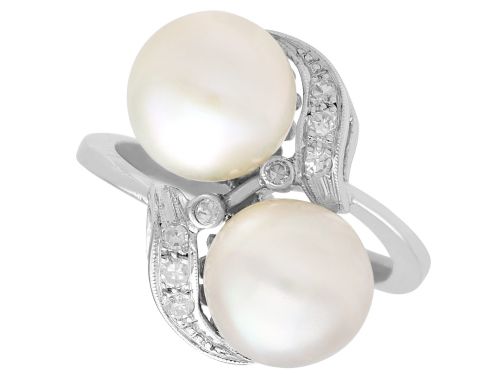
- Bypass ring
- A ring design where the shank wraps around the finger and crosses over itself rather than forming a complete closed circle. This style appears frequently in mid-century gemstone rings.
- Omega back
- A hinged clip backing used on earrings shaped like the Greek letter omega. This mechanism provides a secure fit for non-pierced or pierced ears alike.
Retro Pearl Jewellery: Frequently Asked Questions
What defines retro pearl jewellery?
Retro pearl jewellery encompasses rings, necklaces and earrings created during the mid-twentieth century, typically featuring cultured pearls set in yellow or white gold.
These items often incorporate geometric or floral motifs popular during the 1940s, 1950s and 1960s.
How do I care for pearls?
Pearls require gentle cleaning with a soft, damp cloth and should be stored away from hard gemstones to prevent scratching.
Perfumes, hairsprays and cosmetics can damage the nacre over time, so apply them before putting on your jewellery.
Are these pearls natural?
Most pearls from this era are cultured pearls produced through farmed intervention, though specific pieces may specify natural pearls.
Gem lab certificates sometimes accompany higher-end pieces to verify their origin and classification.
What metal is commonly used?
Makers frequently utilised 9ct gold, 14ct yellow gold and 18ct white gold for settings and mountings.
Sterling silver also appears occasionally, particularly in clasps alongside materials like marcasite.